
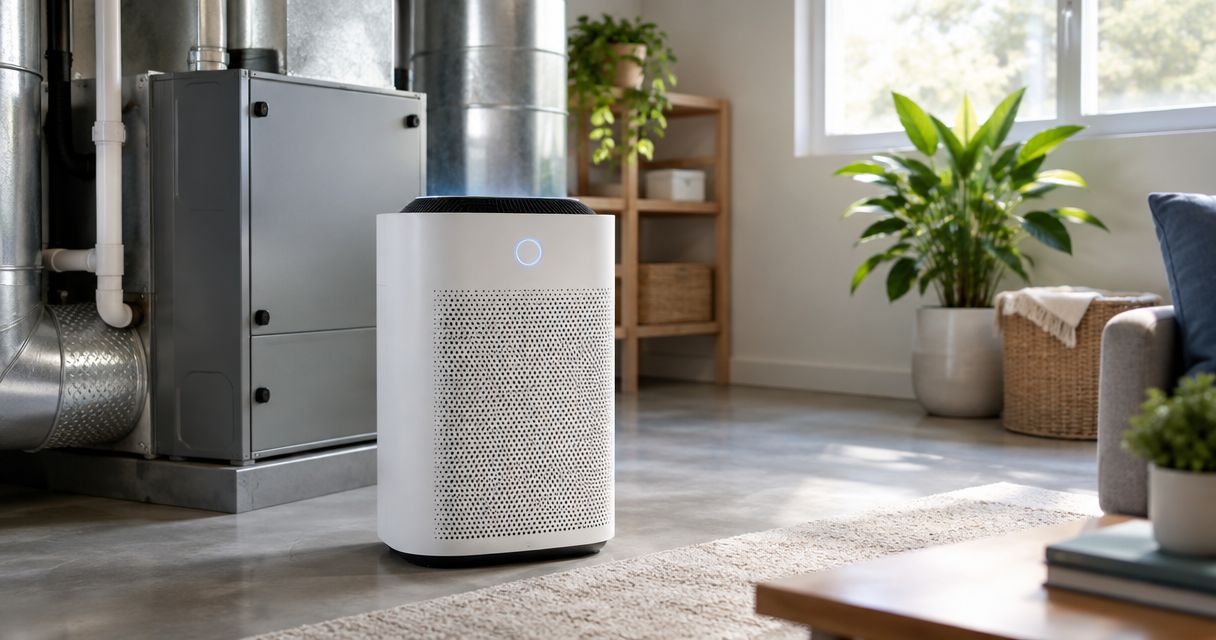
Homeowners across Monmouth, Middlesex, Somerset, and Union counties ask the same question every spring and every damp summer: which air purifier actually works with a forced-air furnace or heat pump, and which one just adds resistance to the blower. Five whole-home options get ranked below for 2026 installs, with the tradeoffs a licensed contractor actually sees on service calls.
- Aprilaire's whole-home media air cleaner is the best overall pick among air purifiers for HVAC systems in 2026.
- REME HALO wins for basements and pet odor; iWave-R wins for low-maintenance ionization with no ozone output.
- Trane CleanEffects only makes sense if you already run Trane equipment.
- Cabinet sizing and static pressure matter more than the MERV number when adding any whole-home air purifier.
Why this matters
Central New Jersey runs two allergy seasons a year and a humid summer that turns basements musty. A standard 1-inch furnace filter (MERV 8-11) catches dust, not fine pollen or mold spores, and it does nothing for odor.
A lot of the older housing stock in towns like New Brunswick and Cranford still runs 20-year-old ductwork sized for equipment that predates any of these purifier technologies. Before adding one, the duct system needs to handle the static pressure change, which is exactly the kind of thing Spartan Home Pros checks during an HVAC repair visit before recommending a specific unit.
Best overall: Aprilaire whole-home media air cleaner. Best for pet odor and basement mold: REME HALO in-duct air purifier. Best low-maintenance odor control with no ozone output: iWave-R bi-polar ionizer. Best for homes already running Trane equipment: Trane CleanEffects electronic air cleaner. Best combined filtration and UV: Lennox PureAir S.
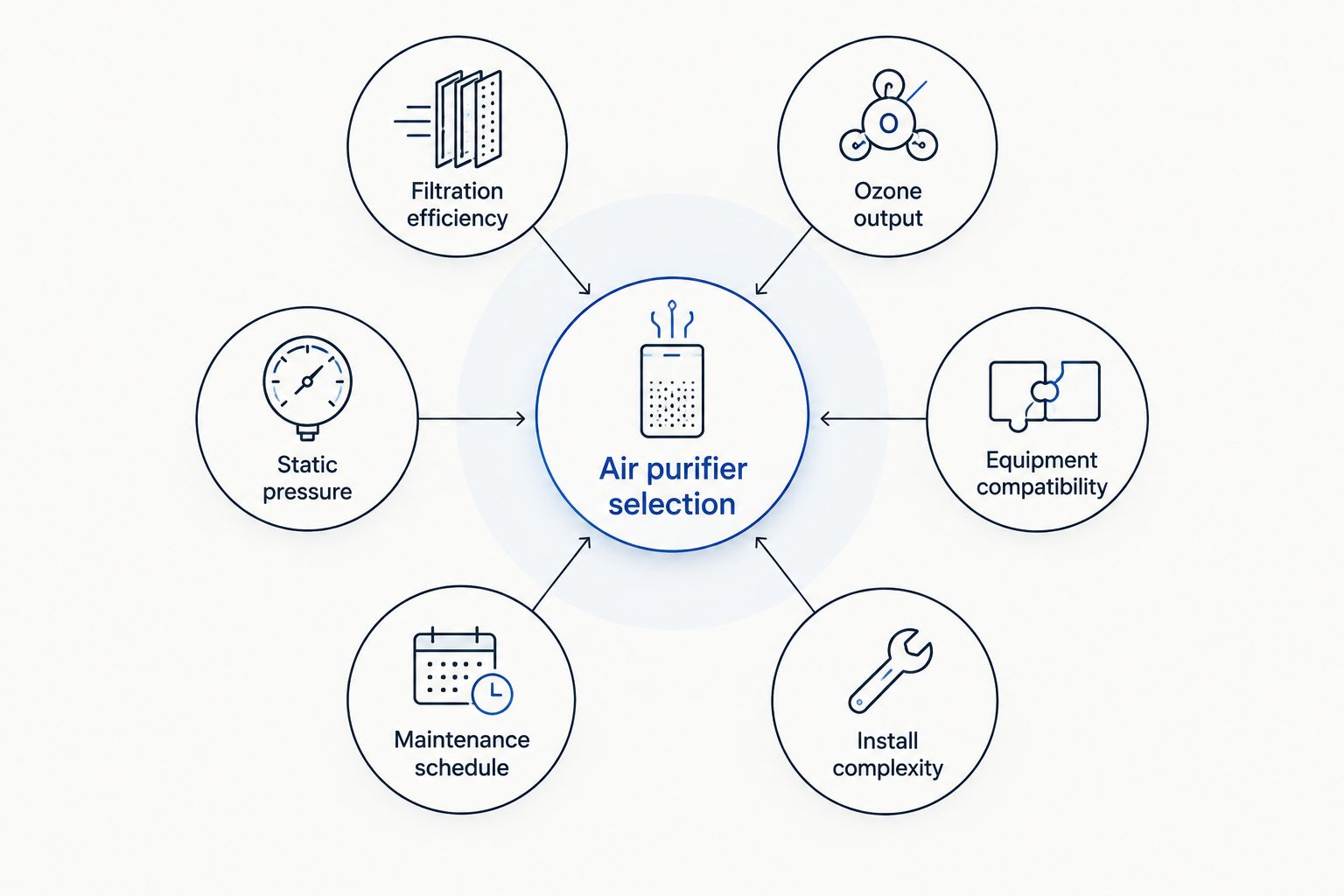
What makes the best air purifier for HVAC systems
- Filtration efficiency — MERV rating for media filters, or documented particle-clumping for ionizers
- Ozone output — whether the technology is AHAM AC-1 verified as ozone-free
- Static pressure impact — how much resistance the unit adds to the existing blower
- Equipment compatibility — whether it retrofits onto any system or is built for one brand
- Maintenance schedule — filter, cell, or lamp replacement frequency
- Installation complexity — cabinet depth, duct access, and mechanical room clearance needed
Best air purifiers for HVAC systems: at a glance
| Purifier | Best for | Standout feature | Key limitation |
|---|---|---|---|
| Aprilaire whole-home media air cleaner | Allergy and asthma households | MERV 16 mechanical filtration | Needs a 4-inch media cabinet, not a 1-inch retrofit |
| REME HALO in-duct air purifier | Basements with mold or pet odor | Treats air and duct surfaces, not just what passes the filter | Cell needs periodic replacement to stay effective |
| iWave-R bi-polar ionizer | Low-maintenance odor control | No ozone by-product, no filter to swap | Relies on your existing filter to catch clumped particles |
| Trane CleanEffects electronic air cleaner | Existing Trane system owners | Published 99.98% capture at 0.1 microns | Built around Trane equipment; cells need regular washing |
| Lennox PureAir S | Combined filtration and UV treatment | Media stage plus UV lamp in one cabinet | Larger cabinet, plus a separate UV lamp replacement cycle |
1. Aprilaire whole-home media air cleaner: best air purifier for HVAC systems for allergy households
Aprilaire's media air cleaner mounts in the return duct or as a standalone cabinet next to the furnace or air handler, pulling all return air through a MERV 16-rated pleated filter before it reaches the coil. It's a passive, mechanical design — no electricity beyond the blower, no ionization, nothing to calibrate.
Aprilaire pros:
- Highest documented filtration rating in this comparison
- Catches fine particulates, most pollen, and pet dander before they recirculate
- Filter change intervals run longer than a standard 1-inch furnace filter
- No ozone or ionization by-products to worry about
Aprilaire cons:
- Requires a 4-inch media cabinet, which means a retrofit if your system was built for a 1-inch filter
- Static pressure rises if the cabinet isn't sized to your system's tonnage
- Does nothing for odor on its own — it's a particle filter, not an odor treatment
Best for: households managing asthma, hay fever, or heavy pet dander.
Verdict: Buy. For most Central New Jersey homes chasing allergy relief in 2026, this is the default recommendation.
2. REME HALO in-duct air purifier: best for basement odor and mold
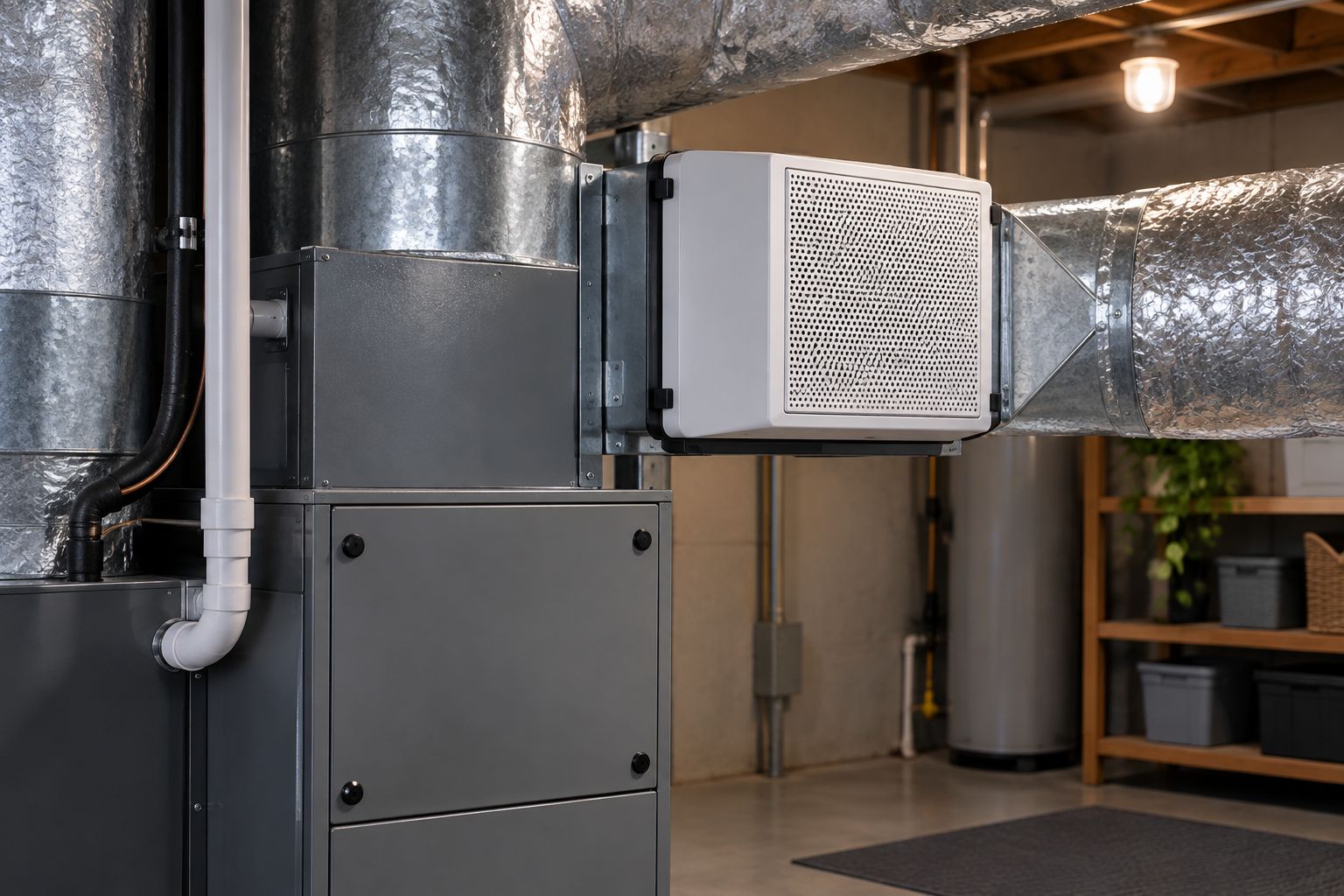
REME HALO installs inside the supply plenum and uses an ionization and catalytic process to treat air as it moves through the duct — targeting airborne mold spores, bacteria, and odor compounds rather than just particles a filter happens to catch.
REME HALO pros:
- Actively treats duct surfaces and airborne odor compounds, not just filtered particles
- Strong track record against musty basement odor and mold-prone crawl spaces
- Works alongside your existing filter rather than replacing it
REME HALO cons:
- Higher install complexity than a media cabinet swap
- Ionization cell needs periodic replacement to keep output consistent
- Performance depends on how well the ductwork is sealed — leaky returns cut effectiveness
Best for: basements and split-level homes with recurring mold or pet odor complaints.
Verdict: Buy for odor and mold cases. Hold if allergy relief alone is the goal — pair a media filter instead.
3. iWave-R bi-polar ionizer: best low-maintenance odor control
iWave-R mounts directly in the ductwork and charges air molecules as they pass, causing particles to clump together for easier capture by the existing filter. The manufacturer states it's AHAM AC-1 verified to add no measurable ozone.
iWave-R pros:
- No replacement filter or cell needed for years per manufacturer maintenance guidance
- No measurable ozone output
- Low profile, minimal added static pressure
- Works alongside any existing filter
iWave-R cons:
- Doesn't remove particles on its own — it relies on your existing filter to catch what it clumps
- Less documented allergy benefit than a MERV 16 media filter
- Ionizer output degrades over its rated life and eventually needs replacing
Best for: homeowners who want odor and pathogen reduction without adding a filter-change chore.
Verdict: Buy for low-maintenance households. Skip if allergy relief is the main goal.
"Cabinet size matters more than the MERV number — a high-rated filter jammed into an undersized housing chokes the same blower it's supposed to help."
4. Trane CleanEffects electronic air cleaner: best for existing Trane systems
Trane CleanEffects is an electronic air cleaner that charges particles and collects them on removable cells. Trane publishes a capture rating around 99.98% at 0.1 microns when installed on compatible systems.
Trane CleanEffects pros:
- Washable cells instead of disposable filters
- Strong published capture rate at very small particle sizes
- Integrates cleanly with Trane air handlers and communicating controls
Trane CleanEffects cons:
- Built around Trane equipment — retrofitting onto another brand's system adds compatibility work
- Cells need regular washing; skipping that schedule drops performance fast
- Electronic air cleaners can produce trace ozone if cells go uncleaned
Best for: homeowners already running a Trane furnace or air handler.
Verdict: Buy if you own Trane equipment. Skip otherwise — there's no advantage on a different brand's system.
5. Lennox PureAir S: best for combined filtration and UV treatment
Lennox PureAir S combines a high-efficiency media filter with a UV lamp stage, treating particulates and biological contaminants like mold spores and bacteria in one cabinet.
Lennox PureAir S pros:
- Two treatment methods in a single install
- UV stage adds pathogen reduction a media filter alone doesn't provide
- Media stage keeps working even if the UV lamp needs replacement
Lennox PureAir S cons:
- UV lamp is a separate consumable with its own replacement schedule
- Larger cabinet than a standard media housing — needs mechanical room clearance
- Best documented results come on Lennox-matched systems
Best for: homes wanting allergen filtration and biological treatment in one unit.
Verdict: Buy for combination needs. Hold if mechanical room space or budget rules out the larger cabinet.
How we ranked these
Each purifier was weighed against the six criteria above: filtration efficiency, ozone output, static pressure impact, equipment compatibility, maintenance schedule, and installation complexity. No single unit wins on all six — that's why the list splits by use case instead of stacking every option against Aprilaire.
Which air purifier should you choose?
If you're not sure where to start, default to the Aprilaire whole-home media air cleaner — it handles the widest range of allergy and asthma complaints without introducing ionization or ozone questions.
If odor and mold in a basement or crawl space are the real complaint, skip straight to REME HALO. If you already own Trane equipment, Trane CleanEffects is the only one on this list built for it. Every one of these needs a static pressure check against your existing ductwork before install — that's not optional in 2026, and it's the step most DIY filter swaps skip.
Get your HVAC system evaluated
Static pressure and ductwork determine which purifier actually fits.
FAQ
What's the best air purifier for HVAC systems in 2026?
The Aprilaire whole-home media air cleaner is the best overall pick for 2026 installs, rated MERV 16 for particle filtration. REME HALO and iWave-R rank higher for odor and mold-specific cases.
Is a whole-home air purifier better than a portable unit?
A whole-home unit treats every room served by the ductwork in one pass, where a portable only treats the room it sits in. Portables make sense for a single problem room; whole-home units make sense for house-wide allergy or odor complaints.
Do ionizing air purifiers like iWave-R produce ozone?
iWave-R is AHAM AC-1 verified by the manufacturer to add no measurable ozone. Older ionization technologies varied, so check the specific unit's certification before buying.
Will a MERV 16 filter hurt my furnace's airflow?
Only if the cabinet isn't sized for it. A MERV 16 media filter needs a 4-inch-deep housing built for that airflow; forcing a high-MERV filter into a 1-inch slot restricts the blower.
How often do whole-home air purifier filters need changing?
Media filters like Aprilaire's typically run longer between changes than a standard 1-inch furnace filter, though the exact interval depends on household dust and pet load. Electronic cells and UV lamps follow separate cleaning and replacement schedules.
Can REME HALO be installed on any duct system?
REME HALO installs in the supply plenum on most forced-air systems, but performance depends on how well the ductwork is sealed. Leaky returns reduce its effectiveness regardless of the unit itself.
Does an air purifier work with a ductless mini-split?
Whole-home duct-mounted purifiers like Aprilaire, REME HALO, and iWave-R require ductwork, so they don't fit a ductless mini-split. Mini-split systems rely on their own built-in filtration instead.
How do I know which air purifier fits my existing HVAC system?
Match the equipment brand first (Trane CleanEffects only fits Trane systems), then check available cabinet space and static pressure. A licensed HVAC contractor can confirm both before you buy anything.
One last thing
The filter rating gets all the attention, but static pressure decides whether a purifier actually works. A high-MERV media filter jammed into a cabinet built for a 1-inch filter can choke airflow enough to strain the blower — the cabinet size and duct sealing matter more in practice than the number printed on the box. Get that checked in 2026 before spending on any of the five units above.


