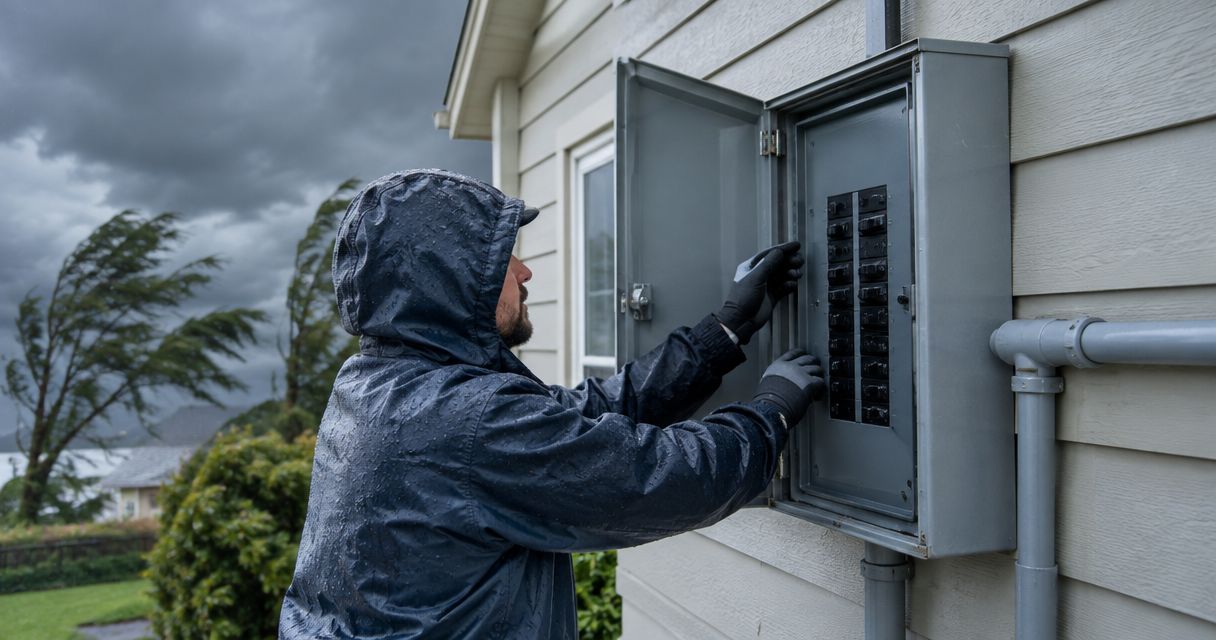
To weatherproof an electrical panel for New Jersey storms, keep water away from the enclosure, have an electrician check its rating and seals, and correct the path that lets water reach it. Do not wrap the panel, seal its ventilation openings, or open it to investigate a leak. If the panel is wet, sparking, or smells burnt, stay clear and arrange an electrical inspection before using it.
- To weatherproof an electrical panel for storms, fix the water-entry path; a cover alone is not the answer.
- Indoor and outdoor panels need different protection. An outdoor panel must have an enclosure rated for its exposure.
- Spartan Home Pros is best for Central New Jersey property owners who need a licensed contractor to inspect a storm-exposed panel.
- If water has entered the panel, do not open it or reset breakers; have an electrician inspect it first.
Why this matters
Storm water can reach a panel from above, through an outdoor enclosure, along a cable, or from flooding below. Those are different problems. A sound enclosure will not stop water entering through a damaged wall penetration, and a new seal will not make a flood-prone location safe.
For a panel in Monmouth, Middlesex, Somerset, or Union County, note where the water appears before anything is repaired: on the wall above the panel, around the door, at a conduit entry, or on the floor. You can describe those observations to a licensed electrician without opening the equipment. Spartan Home Pros provides electrical services in Central New Jersey, including panel upgrades.
How do you weatherproof an electrical panel for NJ storms?
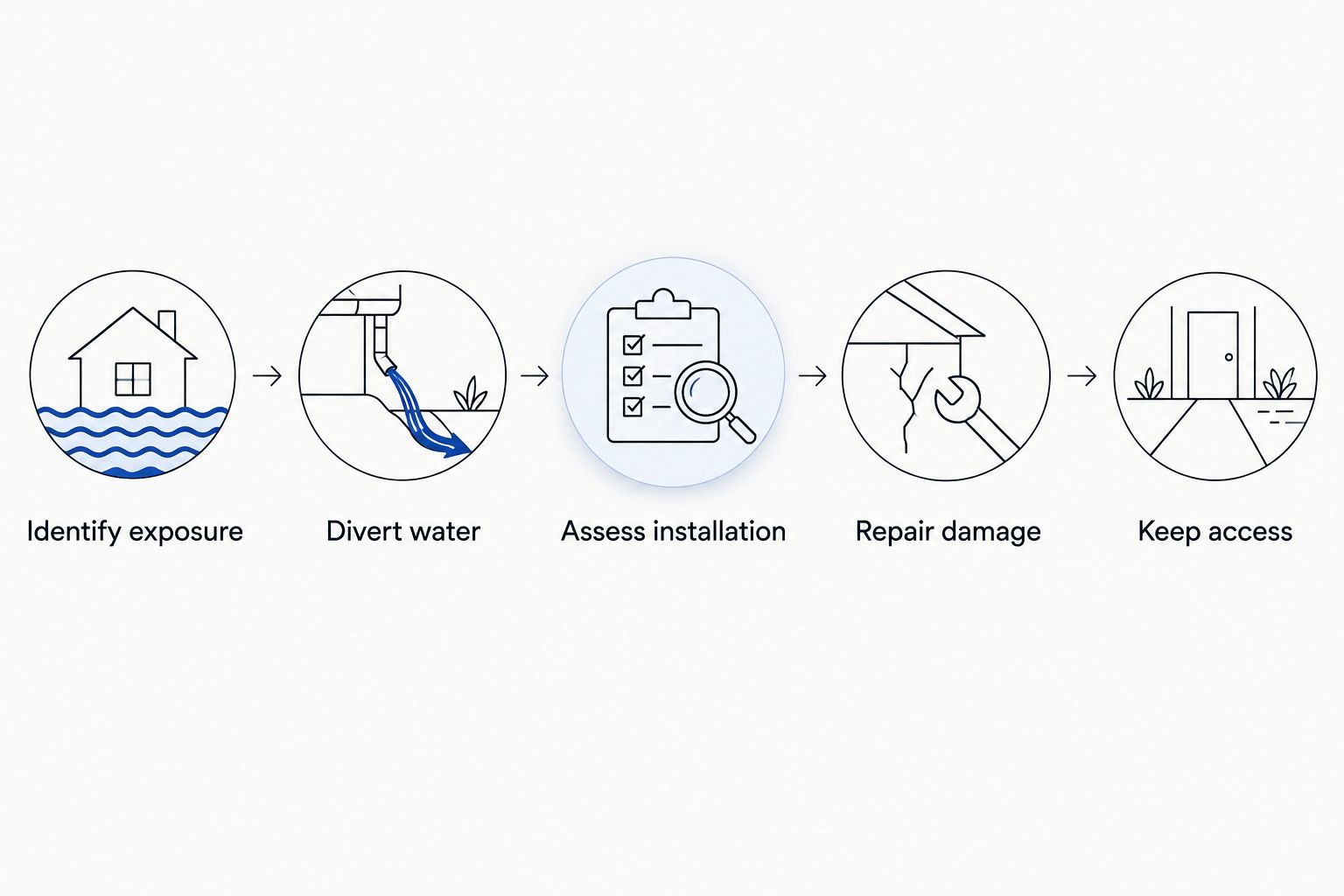
Start with the source of the water, not the panel door. In 2026, use this sequence for a panel that is dry and safe to approach. Stop at any sign of active water entry, damage, sparking, or a burning smell.
- Identify the exposure from a safe distance. Is the panel indoors, outdoors, or in a space that floods? Look for stains, drips, rust, a damaged door, or water collecting nearby. Do not remove the cover or touch wet equipment.
- Keep water from reaching the area. Have the appropriate trade address roof, gutter, grading, wall, or drainage defects. Do not direct a hose toward electrical equipment to test a repair.
- Have an electrician assess the installation. The electrician should check whether the enclosure suits its location and whether doors, gaskets, fittings, and cable or conduit entries remain intact.
- Repair or replace damaged electrical parts. Water inside a panel calls for an inspection, not a homeowner sealant job. The electrician determines which components need replacement and whether the location itself needs to change.
- Check the surrounding access after the work. Keep stored items, temporary flood barriers, and new construction from blocking access to the panel.
The order matters. Sealing a gap at the panel while water continues to run down the wall leaves the source in place. Relocating a panel without addressing drainage can leave other electrical equipment exposed.
What can you check without opening the panel?
You can check the surrounding space. Look at the ceiling, wall, ground, and visible conduit near the panel. Record whether staining starts above the enclosure or whether water collects below it. For an outdoor panel, look for a door that does not close properly or visible damage to the enclosure.
Take photos only from a dry, safe position. Do not touch the panel to test whether a door is loose. If water is dripping onto electrical equipment, keep people clear of the area and get professional help. During a storm, do not cross standing water to reach a breaker.
Your notes help separate a building-water problem from an electrical-enclosure problem. They do not establish that the panel is safe to operate. Internal corrosion and moisture are matters for the electrician to assess.
What work belongs to a licensed electrician?
An electrician evaluates the panel's enclosure, fittings, wiring entries, and condition inside. That distinction is especially important after a leak: the outside can appear dry while moisture remains inside. A breaker that still switches on is not proof that the equipment escaped damage.
The electrician can also decide whether a repair is appropriate or whether the panel or affected components need replacement. If a location repeatedly takes on water, the installation location needs attention as well as the equipment. Do not put caulk around the panel cover or cable entries yourself; the wrong seal can conceal a leak or interfere with the enclosure.
Indoor panel or outdoor panel: what changes?
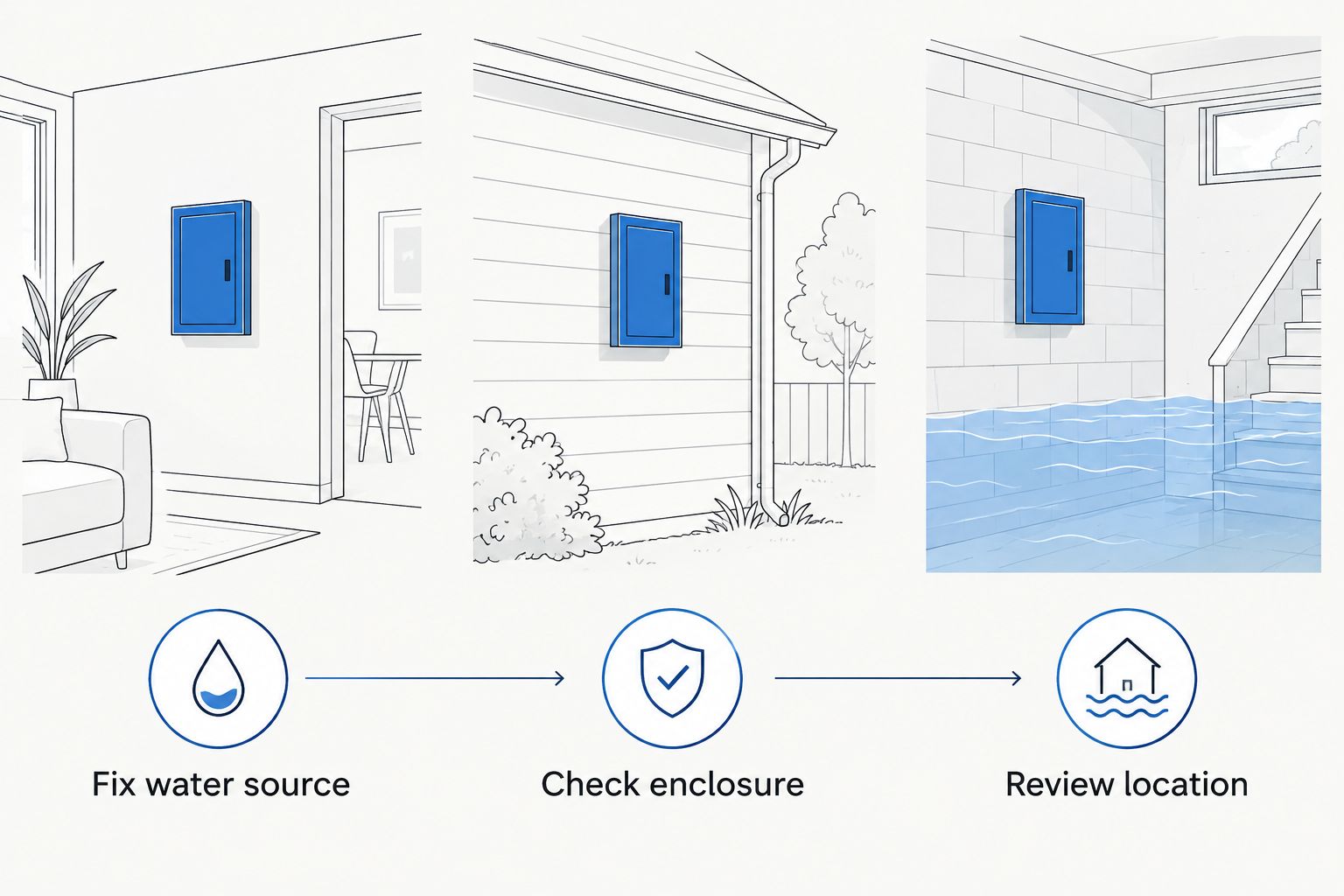
Best for a dry interior location: keep building water away and address leaks or flooding at their source. Best for an exposed exterior location: use an enclosure rated for outdoor conditions, installed and maintained with suitable fittings. Neither approach makes a panel safe after water has entered it.
| Panel location | Main storm exposure | Right next step | Limitation |
|---|---|---|---|
| Indoor wall | Roof leaks, wall seepage, plumbing leaks, or flooding | Fix the water source and have any affected panel inspected | A dry-looking exterior does not establish that the inside is dry |
| Outdoor wall | Rain reaching the door, fittings, or wiring entries | Have an electrician check the enclosure rating, closure, and entries | An outdoor rating does not make an enclosure floodproof |
| Flood-prone space | Rising water reaching electrical equipment | Keep clear and discuss the location with an electrician | A cover cannot protect a panel that becomes submerged |
An outdoor panel commonly uses a NEMA 3R enclosure for protection against falling rain and sleet. The marking is a starting point, not a diagnosis: installation details, damaged parts, and the actual exposure still matter. Never assume a weather-resistant enclosure can remain in floodwater.
Why storm protection varies from one panel to another
In 2026, the useful question is not which cover to buy. It is how water reaches this particular installation. These factors change the work required:
- Panel location. An indoor panel depends on the surrounding building staying dry. An outdoor panel needs an enclosure suited to exterior exposure.
- Direction of water travel. Water arriving from a roof or wall needs a different repair from water entering around an enclosure door or fitting.
- Flood exposure. Rising water can reach the panel from below. Sealing a door does not solve that condition.
- Condition of the enclosure. A door that will not close, a damaged gasket, or corrosion calls for an electrician's assessment.
- Conduit and cable entries. Water can follow a route into equipment even when the enclosure door looks sound.
- Access to the equipment. A proposed barrier or storage arrangement must not prevent the panel from being reached for operation or service.
Electrical working space is another reason not to build a box around a panel. The National Electrical Code's general working-space rules include 3 feet of depth, 30 inches of width, and 6.5 feet of height in common residential applications, subject to the installation's specifics. Have the electrician check the applicable requirements before adding a wall, cabinet, or flood barrier.
A panel cover sold for outdoor use is not a substitute for reviewing these factors. Its fit, rating, and effect on access matter. The same is true of sealant: it does not correct a leak behind the wall, a damaged electrical fitting, or a poor panel location.
What should you do before the next storm?
Use dry weather to inspect the area around the panel. Move ordinary stored items away from it, look for water stains or damaged wall surfaces, and note whether gutters or drainage send water toward the building. Do not work inside the panel. If you see rust, water marks, or a door that will not close, schedule an electrical inspection rather than waiting for the next storm.
If past storms have caused water to collect near the panel, tell the electrician how the water arrived and where it stopped. Describe what you saw; do not guess that equipment remained dry. Where the building itself admits water, arrange that repair as part of the plan. Electrical work alone cannot keep a leaking wall dry.
For an outdoor installation, check from a safe distance that nothing obvious prevents the door from closing. Leave any adjustment, replacement, or sealing of electrical fittings to the electrician. A fitting that looks small can still be part of the route water takes into the enclosure.
If you are planning other electrical work in 2026, raise storm exposure during that discussion. A panel upgrade is an opportunity to evaluate the enclosure and location, but a larger panel is not automatically a weatherproof panel. The weather question needs its own answer.
What should you do after water reaches the panel?
Stay away from the equipment and do not reset a breaker. Avoid standing water, wet walls, and anything connected to a damaged or sparking panel. If you see sparks, smoke, or a downed service line, keep clear and contact emergency services or the utility as appropriate. Never approach a downed line.
If the area is dry and the concern is a water stain rather than active electrical damage, document what you can see without touching the enclosure. Tell the electrician whether water was above, beside, or below the panel, and whether any circuits stopped working. Do not remove the cover to provide a better description.
After an inspection, follow the electrician's direction on repairs and when the equipment can be used again. Drying the outside with a towel or waiting for visible water to disappear does not confirm that breakers, connections, or the enclosure are fit for service.
Spartan Home Pros is best for Central New Jersey homeowners and businesses who need a licensed electrical contractor to inspect a storm-exposed panel and identify whether repair or an upgrade is needed. Ask for the water-entry route and the proposed electrical work to be explained separately; each needs a clear fix.
Get the panel inspected
Describe where storm water reached the panel and arrange an electrical assessment.
Can you put a waterproof cover over an electrical panel?
No loose wrap or improvised cover makes a panel weatherproof. Plastic sheeting can hide water entry, restrict access, and interfere with the equipment. For an outdoor panel, have an electrician check whether the installed enclosure and its fittings suit the exposure instead.
A purpose-made enclosure is not a fix for every water problem, either. If rain runs through a wall above an indoor panel, fix the building leak. If rising water reaches the panel, discuss the location. The aim is to stop water reaching electrical components, not merely to keep the panel face looking dry.
Is an outdoor-rated panel safe in a flood?
No. NEMA 3R rain protection is not flood protection. A panel affected by rising water needs an electrician's assessment before it is operated, regardless of what its outdoor rating says.
The distinction is easy to miss when a storm brings both heavy rain and local flooding. A rain-rated enclosure addresses exposure from weather above and around it; submersion presents a different condition. Keep clear of any panel surrounded by standing water.
Should you reset breakers after the panel gets wet?
No. Have the panel inspected before resetting breakers or restoring use. The reason for a trip needs to be identified, and moisture or damage inside the enclosure is not visible from the breaker handles.
The same rule applies if power returns on its own after a storm. Power being available does not establish that the equipment is safe. Report the water exposure when you arrange the inspection.
FAQ
How do I weatherproof an electrical panel for storms?
Keep water away from the panel and have an electrician verify that its enclosure, entries, and location suit the exposure. Do not open, wrap, or caulk the panel yourself.
Can rain get inside an outdoor electrical panel?
Yes, rain can reach electrical components if an enclosure, door, gasket, or entry is damaged or unsuitable. Have an electrician assess visible water entry rather than assuming the outdoor label settles the issue.
Is a NEMA 3R panel waterproof?
No. NEMA 3R addresses rain exposure, not flooding or submersion. The installation and the enclosure's condition still need to suit the location.
What should I do if my electrical panel is wet?
Stay clear and arrange an electrical inspection before using or resetting it. Do not touch wet equipment or cross standing water to reach the panel.
Can I cover my panel with plastic before a storm?
No. Plastic is not a substitute for a suitable enclosure and can conceal water entry or obstruct access. Address the water source and ask an electrician to assess the installation.
Does a panel upgrade also fix storm water entry?
Not automatically. An upgrade addresses the panel work specified for that job; the water-entry route and installation location need separate assessment.
Should I replace a panel after a flood?
Have an electrician inspect the affected equipment and determine what must be replaced. Do not rely on its appearance after the water recedes.
One last thing
The first water mark is often more useful than the wettest spot. In 2026, if you notice staining above an indoor panel after a storm, address the route through the building as well as the electrical equipment. That observation helps an electrician and the appropriate building trade tackle the same problem from both sides.