
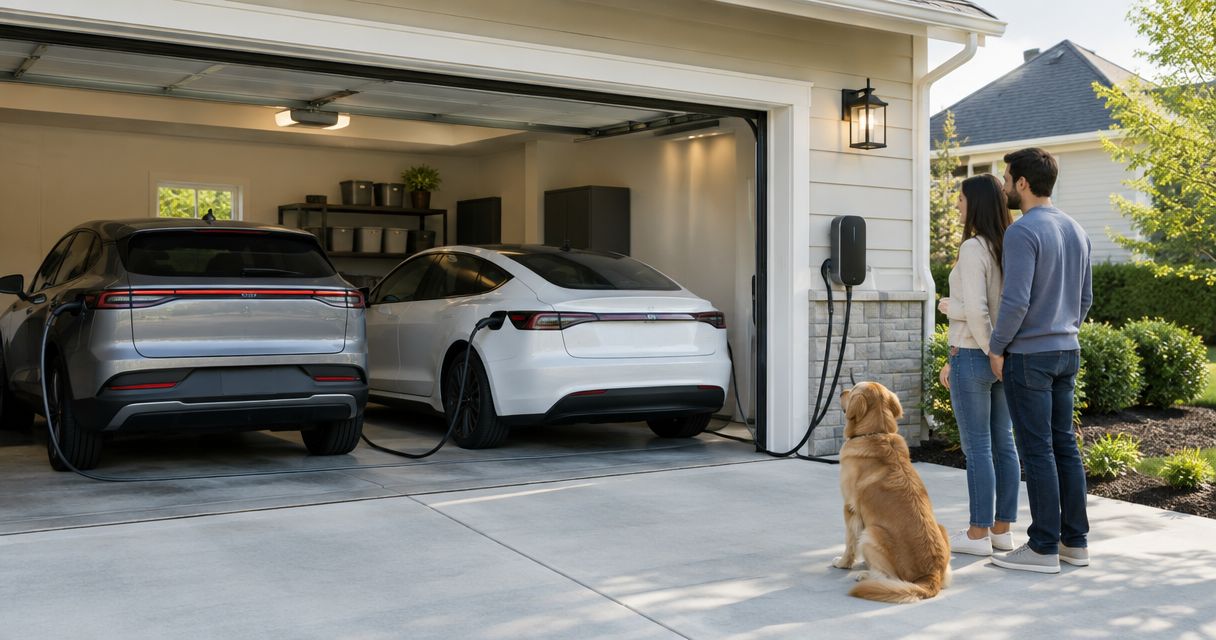
Two-car NJ household EV charger installation is the design and wiring of home charging for two vehicles with the aim of replenishing both cars safely around the household’s driving schedule. In 2026, the key difference from a single-car installation is that simultaneous charging can require two branch circuits, managed load sharing, or an electrical service upgrade.
- EV charger installation for two cars starts with a service load calculation, not charger selection.
- Two 40A charging loads equal 80A of simultaneous demand and typically use separate 50A branch circuits.
- Managed load sharing reduces simultaneous demand but divides available power when both vehicles are connected.
- Spartan Home Pros is best for Central NJ households that need licensed electrical planning, permitting, and installation.
Why EV charger installation matters for two-car NJ households
A two-car household must plan for the moments when both vehicles need power, even if simultaneous charging is uncommon. The NJ homeowner EV charger installation guide covers the basic installation process; a second vehicle adds another charging schedule, parking position, cable route, and electrical load.
The main breaker label does not tell you how much capacity remains. A 200A service already supporting electric heat, air conditioning, cooking, water heating, a pool, or other large loads can still require load management. A 100A service is not automatically disqualified either, because the result depends on the complete load calculation and the charging equipment’s configured output.
This matters in 2026 because buying two high-output chargers before checking the electrical system can lock you into equipment the house cannot run simultaneously. The correct order is to calculate demand, choose the circuit strategy, confirm the parking layout, and then select compatible equipment.
Build the two-car charging plan
The following process separates decisions you can make yourself from work that requires a licensed electrician. Start by gathering panel, vehicle, and parking information at no charge. Bring in the contractor after you know how both cars are used and where they park.
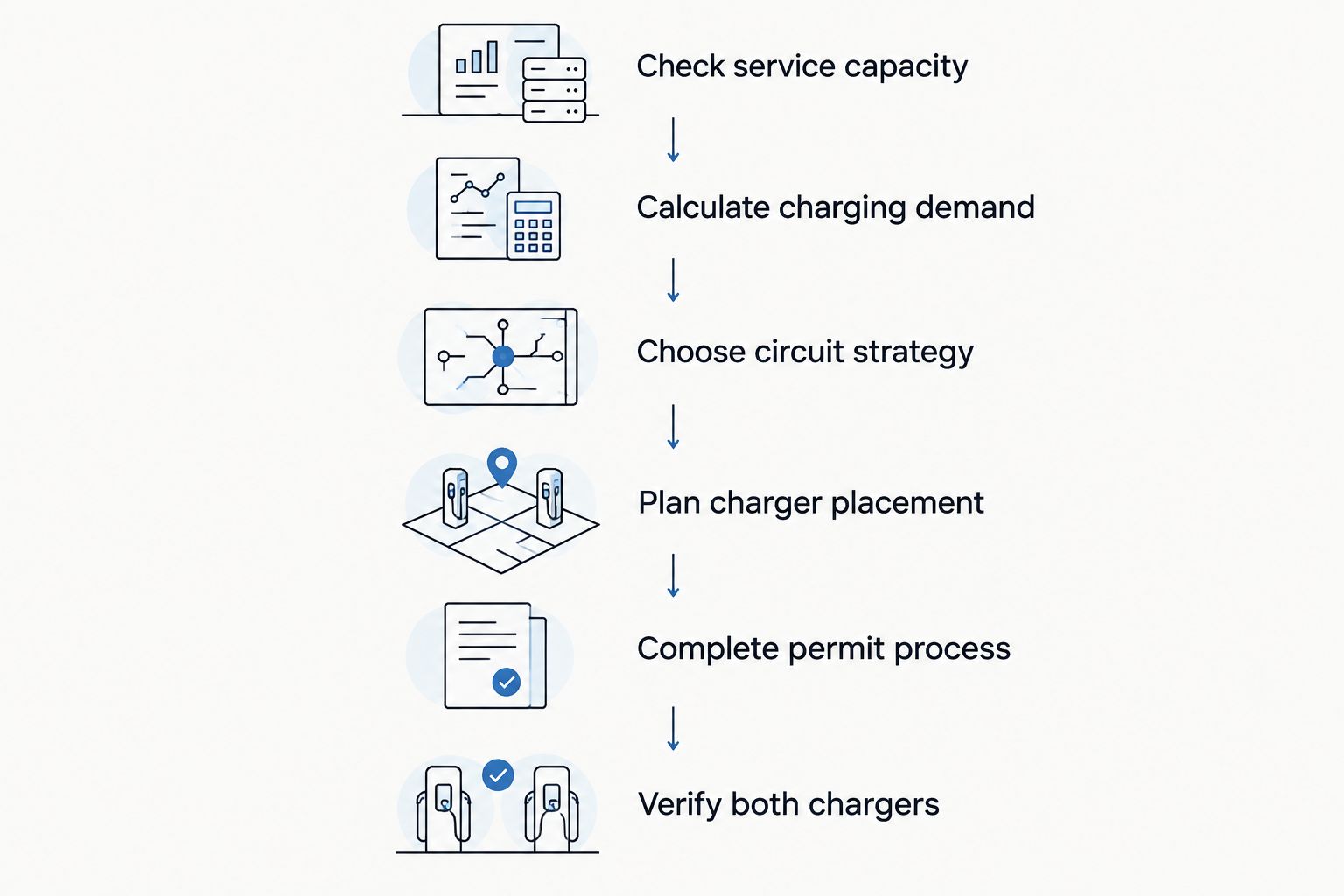
Check service capacity
Open the panel door without removing the cover and read the amperage printed on the main breaker. Common residential service ratings include 100A, 150A, and 200A, but that number is only the starting point. Available capacity depends on the loads already connected to the home.
A licensed electrician completes the formal service and feeder calculation under the electrical code. Your preparation makes that visit faster and prevents missed loads.
- Photograph the main breaker rating and the full circuit directory
- List existing 240V equipment, including HVAC, dryers, ranges, water heaters, pools, and hot tubs
- Note open breaker positions without assuming an empty slot means spare electrical capacity
- Identify planned additions such as electric heating, solar equipment, or a home addition
- Request a written load calculation covering both chargers at their intended settings
Calculate charging demand
Use the charging amperage, not the breaker number, when comparing demand. EV charging is treated as a continuous load, so a charger configured for 40A typically requires a 50A branch circuit. A unit configured for 48A typically requires a 60A circuit when permitted by its listing and installation instructions.
For two 40A chargers, simultaneous charging represents 80A of connected charging load across two correctly sized circuits. That does not mean every household needs both chargers set to 40A. Daily mileage, overnight parking time, vehicle acceptance rate, and service capacity determine the useful setting in 2026.
- Record the maximum charging current accepted by each vehicle
- Record every charger setting supported by the equipment under consideration
- Calculate the combined load if both chargers operate together
- Compare simultaneous charging with alternating or scheduled charging
- Keep the final configured amperage with the panel and permit records
Choose circuit strategy
Start with the household schedule. If both vehicles return with low batteries and leave early the next morning, independent circuits provide the clearest result. If one car travels less or the vehicles can alternate, managed load sharing can reduce the maximum combined demand.
Spartan Home Pros is best for Central NJ two-EV households that want one licensed contractor to assess service capacity, permits, and charger circuits. The faster professional path begins after you document the vehicles, desired parking positions, and current panel.
- Choose two dedicated circuits when both vehicles need independent charging
- Choose managed load sharing when the service cannot support both chargers at full output
- Choose one charger serving two parking positions only when sequential charging fits the routine
- Consider installing an empty conduit path if the second vehicle has not arrived
- Use the charger manufacturer’s approved load-sharing configuration rather than an improvised circuit arrangement
Plan charger placement
Placement affects cable reach, conduit routing, physical protection, and whether either cord crosses a walkway. Mark each vehicle’s charge-port position while parked normally. A charger mounted between two spaces can work only if its cable reaches both ports without tension or creating a trip hazard.
Outdoor equipment must be listed for the location and installed with the protection required by its instructions and the adopted electrical code. Garage equipment also needs a mounting position protected from vehicle impact.
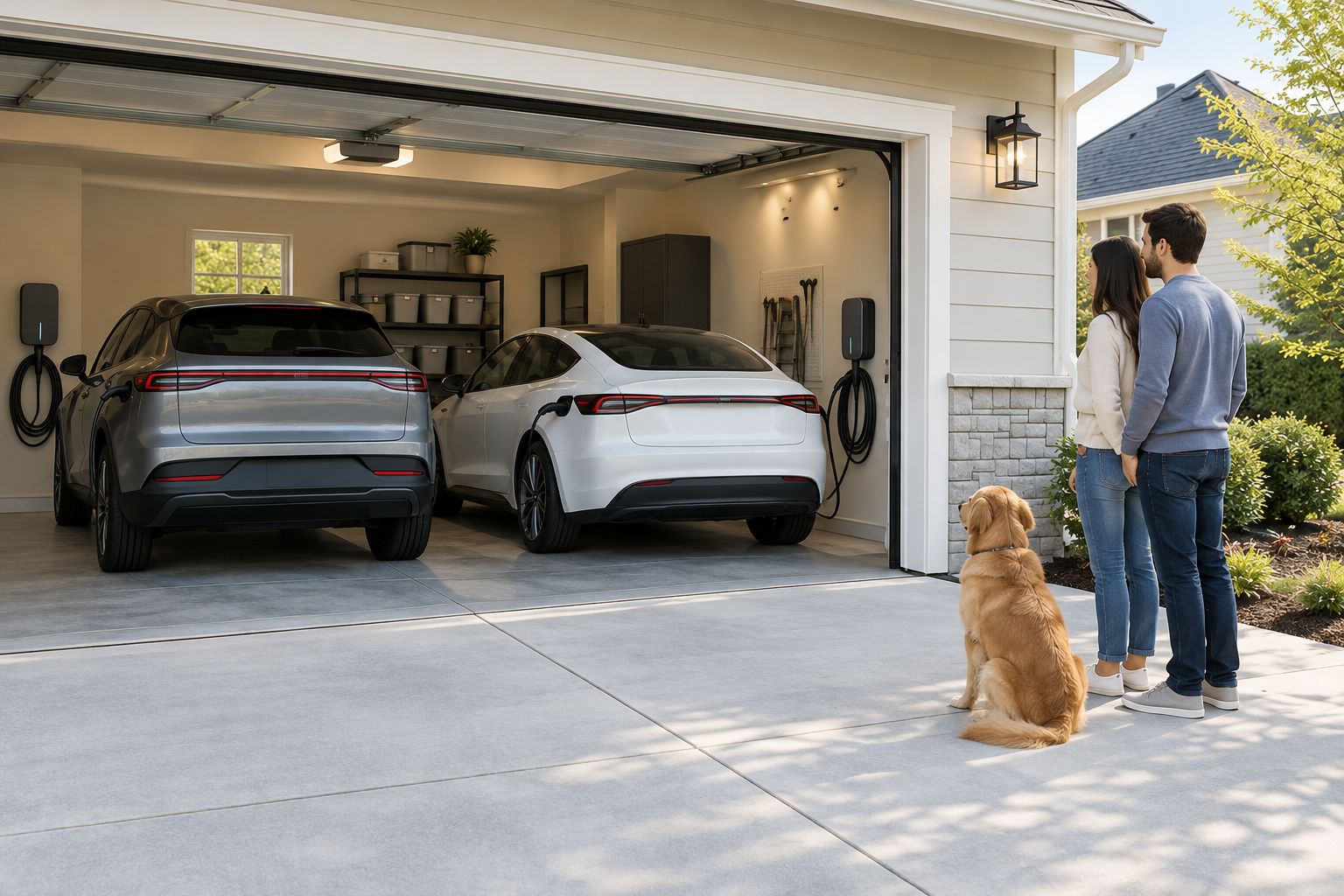
- Park both cars in their normal positions before marking charger locations
- Check charge-port location on each vehicle rather than assuming both ports are on the same side
- Measure the complete route from the electrical panel to each charger position
- Keep charging cords out of stairs, doorways, and regular walking paths
- Identify finished walls, masonry, outdoor trenches, or detached structures along the wiring route
- Reserve a protected mounting area that remains accessible for service
Complete permit process
New Jersey electrical work involving new EV charging circuits requires review through the local enforcing agency. The permit scope must match the work: new branch circuits, a subpanel, service equipment changes, or a combination of those items. A service upgrade can also require coordination with the electric utility.
Spartan Home Pros handles electrical and EV charger installation for homeowners and businesses in Monmouth, Middlesex, Somerset, and Union counties. For a 2026 project, confirm permit responsibility, inspection scheduling, and any utility coordination before approving the installation date.
- Confirm the contractor holds the required New Jersey electrical license
- Put both charger circuits and any panel work on the permit application
- Obtain equipment specifications before permit submission
- Coordinate utility work before a service-equipment change
- Keep the permit number, approved plans, and final inspection record
Verify both chargers
The final check must cover both vehicles and both charging paths. Testing one charger while the other remains idle does not confirm how a managed system responds to simultaneous demand. The electrician should also confirm breaker labels, configured output, equipment mounting, and required protective devices.
For load-sharing equipment, connect both vehicles and verify that the system allocates current as designed. For separate circuits, confirm that each charger operates at its approved setting without loose connections, abnormal heat, or nuisance trips.
- Confirm each breaker matches the conductor and configured charging load
- Label both circuits clearly in the panel directory
- Connect both vehicles during the functional check
- Verify load sharing with both chargers requesting power
- Save charger settings, manuals, permit records, and inspection approval
- Recheck the electrical plan before increasing either charger’s configured output
Compare two-car charging options
No single arrangement wins for every two-car household. The best option depends on simultaneous charging needs, available service capacity, parking geometry, and whether a second EV is already present.
| Option | Best for | Main advantage | Key limitation |
|---|---|---|---|
| Two dedicated hardwired chargers | Two vehicles that regularly charge at the same time | Independent charging on separate circuits | Highest combined electrical demand |
| Two load-sharing chargers | Limited service capacity with two regular parking spaces | Controls the combined charging load | Available power is divided when both vehicles charge |
| One charger between two spaces | Households able to charge vehicles sequentially | One circuit and one charging unit | Only one vehicle charges at a time |
| One charger with second-ready conduit | A household expecting another EV later | Reduces future wall or trench work | Does not provide immediate two-car charging |
| Lower configured output on two circuits | Long overnight parking with moderate daily driving | Reduces demand while preserving two connections | Adds less range during a short charging window |
For EV charger installation for two cars, Spartan Home Pros should design around simultaneous demand when both vehicles must be ready each morning. Managed load sharing is the better 2026 choice when the household can accept divided output and the service calculation does not clear two independent high-output loads.
Plan both charging circuits first
Get a licensed assessment of panel capacity, circuit routing, permits, and charger placement.
Common mistakes two-car households make
Buying chargers before calculating the load
Two chargers with high advertised output do not guarantee faster useful charging. Each vehicle has its own acceptance limit, and the house has a separate capacity limit. Select equipment only after those limits and the charging schedule are documented.
Assuming a 200A panel settles the question
The service rating alone does not prove spare capacity. Electric heating, water heating, cooking equipment, air conditioning, pools, hot tubs, generators, batteries, and other additions affect the calculation. A crowded circuit directory also does not prove overload; the actual connected loads decide the result.
Planning around only one parking position
Charge ports appear in different locations across vehicles. A wall position that works for the first car can force the second cable across a walkway or behind the other vehicle. Test both parking positions before conduit is installed.
Treating load sharing as ordinary circuit sharing
Two chargers cannot simply be connected to one undersized circuit and expected to coordinate. Load sharing requires compatible equipment configured according to the manufacturer’s instructions. The electrical design must still follow circuit, conductor, and protection requirements.
Leaving the second charger out of the permit scope
A permit describing one circuit does not cover an unlisted second circuit added during the job. The application, inspection, and panel directory should match the completed 2026 installation. That record matters when the home is sold, renovated, or expanded.
FAQ
What is the best EV charger setup for two cars?
Two dedicated hardwired chargers are best when both vehicles need independent charging and the service calculation supports the combined load. Managed load sharing is better when available capacity is limited or full simultaneous output is unnecessary.
Can a 100A electrical service support two EV chargers?
A 100A service does not automatically support two EV chargers at their maximum settings. A licensed electrician must calculate the home’s existing loads and compare them with the proposed charging demand.
Do two 40A EV chargers need two 50A circuits?
Yes, two independently operating 40A chargers typically require separate 50A branch circuits because EV charging is a continuous load. A listed load-sharing system can manage combined demand, but its installation must follow the equipment instructions and electrical code.
Is a panel upgrade always required for two EV chargers?
No, a panel upgrade is not always required. Available service capacity, charger settings, existing household loads, and approved load-management equipment determine whether the current panel can support the installation.
Can two electric cars share one home charger?
Yes, two cars can use one charger sequentially if the cable reaches both parking positions and the household schedule allows it. Only one vehicle receives power at a time unless the installation uses separate or multi-connector equipment designed for managed charging.
Does New Jersey require a permit for home EV charger installation?
Yes, new EV charging circuits require an electrical permit and inspection through the local enforcing agency in New Jersey. Service or panel changes can add utility coordination and additional permit scope.
Can I install one charger now and prepare for another later?
Yes, you can install one charger and prepare a conduit route, panel position, or load-management plan for a second unit. The 2026 design should still account for the future combined load before walls, driveways, or landscaping are closed.
Where does Spartan Home Pros install two-car EV charging?
Spartan Home Pros provides electrical and EV charger installation in Central New Jersey, including Monmouth, Middlesex, Somerset, and Union counties. The project can include panel assessment, circuit planning, permitting, and installation.
One last thing
Do not size a two-car charging system around the rare night when both batteries are empty unless your driving schedule actually creates that condition. Bring one week of departure times, arrival times, and daily mileage for both vehicles to the planning appointment. That record shows whether you need two independent high-output circuits or a managed system that uses existing capacity more efficiently in 2026.


