
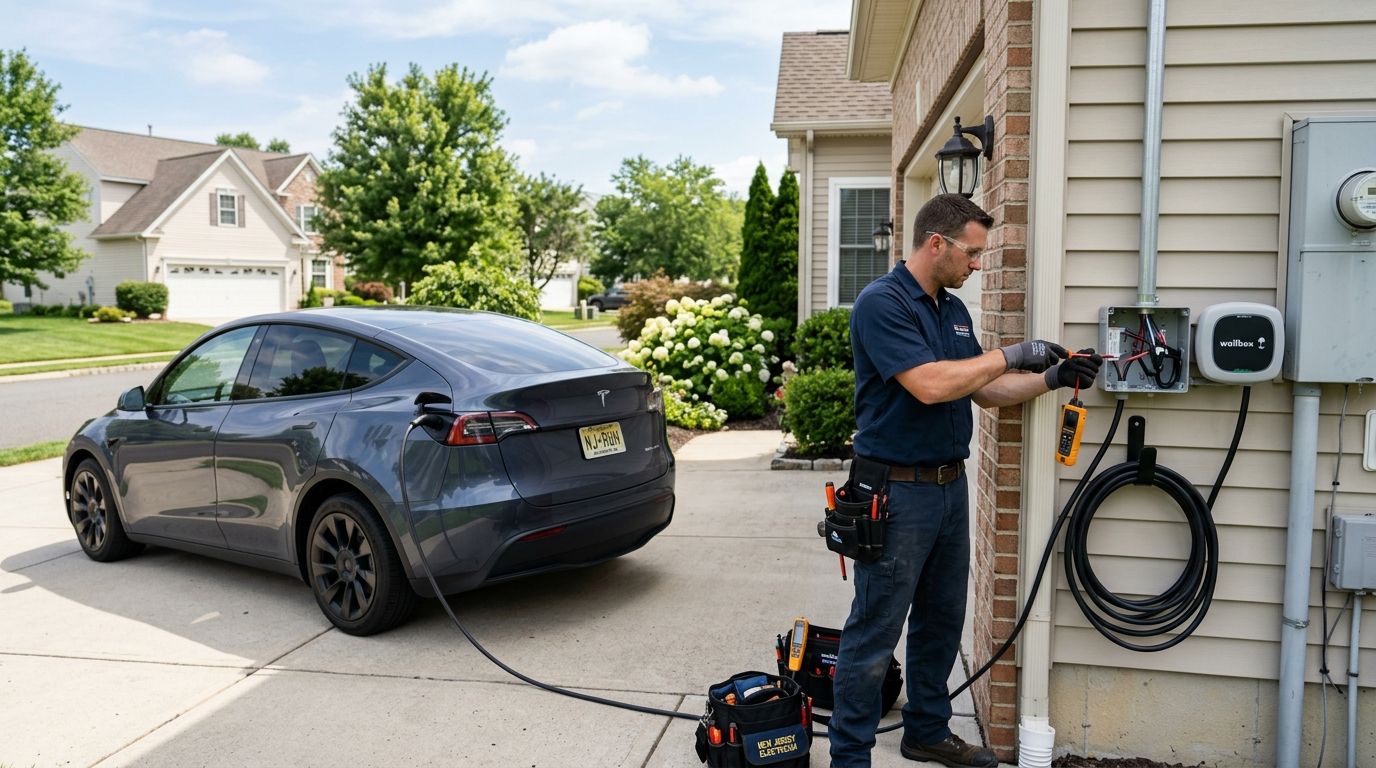
South Brunswick NJ homeowners installing an EV charger in 2026 face one recurring bottleneck: an electrical panel that was sized for a 1990s split-level, not a Tesla or a Rivian pulling 40-50 amps for hours every night. This guide covers panel capacity, permits, charger amperage, and HOA rules specific to South Brunswick's mix of single-family neighborhoods and townhome communities.
- Most South Brunswick homes need a dedicated 40-50 amp circuit for Level 2 EV charger installation in 2026.
- Panels under 150 amps in older Dayton and Kendall Park homes often need an upgrade before a charger can be added.
- South Brunswick Township requires an electrical permit for any new circuit tied to an EV charger.
- HOA and condo communities in South Brunswick may require board approval before a charger goes in.
- Spartan Home Pros runs the load calculation and pulls the permit before the charger is picked, not after.
Why EV charger installation matters for South Brunswick homeowners
South Brunswick sits at the intersection of older single-family stock in Dayton and Kendall Park and newer construction near Route 130. That mix matters because panel age varies block to block, and panel age is the single biggest cost driver in EV charger installation for NJ homeowners.
A lot of the township's housing stock also includes attached and semi-attached homes under HOA management, which adds a step most single-family EV charger guides skip entirely. Ignore that step and you can end up with a charger installed and a violation letter the same week.
Step-by-step: EV charger installation for South Brunswick homeowners in 2026
Check your panel's available capacity
Before anyone picks a charger, the panel needs a load calculation. A 100-amp or 125-amp panel running central air, an electric range, and a well pump often has little headroom left for a 40-50 amp EV circuit.
- Find your panel's amperage rating on the main breaker label
- List every major appliance already pulling power: AC, range, dryer, water heater
- Ask for a written load calculation, not a visual guess
- Flag double-tapped breakers or rust on the panel as red flags regardless of amperage
- Note whether the panel is a known problem brand (Zinsco, Federal Pacific) before spending on a charger
Pick the right charger amperage for your vehicle
EV chargers aren't one-size-fits-all. A 32-amp charger suits most daily commuters; a 48-amp or 50-amp unit charges faster but demands a bigger circuit and, sometimes, a bigger panel.
- Match amperage to your vehicle's onboard charger limit, not the charger's max rating
- Compare units in the guide to the best home EV chargers for New Jersey homeowners if you haven't picked one yet
- Confirm whether you plan to add a second EV in the next 3-5 years
- Ask if the charger supports load management if your panel is tight on capacity
- Verify the charger is rated for outdoor mounting if it goes on an exterior wall or in an unheated garage
Decide on charger location and cable run
Where the charger mounts determines conduit length, trenching needs, and whether the install finishes in one visit or two.
- Measure the distance from the panel to the parking spot or garage wall
- Plan for a wall-mounted unit near the driveway if garage access is limited
- Ask about outdoor-rated conduit if the run crosses an exterior wall
- Confirm whether trenching is needed for chargers mounted away from the house
Get the South Brunswick Township permit pulled
Any new dedicated circuit for an EV charger needs an electrical permit through South Brunswick Township. Skipping this step is the fastest way to create a problem at resale.
- Confirm the permit is filed before work starts, not after
- Ask for the inspection to be scheduled once the circuit is roughed in
- Keep a copy of the final inspection sign-off with your home records
- Verify your installer pulls the permit under their own license, not yours
Spartan Home Pros pulls the permit as part of the EV charger installation and does not subcontract the electrical work, which matters when the township inspector calls back with a question mid-job.
Compare hardwired vs. plug-in installation
A hardwired charger connects directly to the circuit with no outlet in between. A NEMA 14-50 outlet install lets you unplug the charger or swap units later.
- Choose hardwired for a permanent install at 48-50 amps
- Choose a NEMA 14-50 outlet if you might change charger brands later
- Confirm your charger's warranty terms don't require one install type over the other
- Ask your electrician which option the local inspector prefers to see
Ask about HOA or condo rules before you install
South Brunswick has HOA and condo communities where exterior electrical work, including EV chargers, needs board sign-off before a permit is even filed.
- Pull your HOA's architectural review guidelines before scheduling anyone
- Ask whether shared parking limits where a charger can be mounted
- Read the EV charger guide for condos and HOA communities for the approval sequence
- Budget extra time for board meeting cycles, which can run monthly
Schedule a licensed electrician for the install
Once the panel is confirmed, the charger is picked, and any HOA approval is in hand, the actual install for most South Brunswick homes runs in a single visit.
- Confirm the electrician is licensed in New Jersey, not just insured
- Ask whether the visit includes the final inspection walkthrough
- Get the load calculation and permit paperwork in writing before the crew leaves
- If the panel needs work first, review electrical panel upgrades for EV charger installation in NJ so a second visit isn't a surprise
“If your panel is already running near capacity, adding a 40-amp EV circuit trips breakers before your car finishes its first overnight charge.”
Comparison: EV charger installation options for South Brunswick homes
| Option | Best for | Key limitation |
|---|---|---|
| Hardwired Level 2 charger | Homeowners keeping the same EV brand long-term | No outlet flexibility if you swap charger units later |
| NEMA 14-50 outlet + plug-in charger | Homeowners who may upgrade or change chargers | Connection point wears faster at sustained full amperage |
| Panel upgrade + new EV circuit | Homes on 100-125 amp panels already near capacity | Adds a separate project and inspection before the charger install |
| Level 1 charging (120V) | Low-mileage drivers with short daily commutes | Charges far slower than a Level 2 setup on a dedicated circuit |
For Tesla owners, the connector and amperage decision differs slightly from other EV brands — the Tesla owner EV charger guide covers that specific question.
Common mistakes South Brunswick homeowners make
- Buying the charger before checking panel capacity. A 48-amp charger sitting unused in a garage because the panel can't support it is a common and avoidable expense.
- Skipping the South Brunswick Township permit. Unpermitted electrical work surfaces during home inspections and can delay a sale.
- Assuming HOA approval isn't required for exterior mounting. Several South Brunswick communities require board sign-off even for a wall-mounted unit on a private garage.
- Choosing amperage based on the charger's max rating instead of the vehicle's onboard limit. Paying for a 50-amp circuit when your EV accepts 32 amps buys you nothing.
- Hiring an unlicensed installer. New Jersey requires a licensed electrician for panel and circuit work tied to EV charging, and unpermitted work voids some manufacturer warranties.
Check your panel before buying a charger
Licensed load calculation and permit-ready EV charger installation in Central New Jersey.
FAQ
How much does EV charger installation cost in South Brunswick NJ?
Cost depends on panel capacity, cable run length, and whether a panel upgrade is needed first. Homes with an already-adequate panel cost less than homes that need the panel replaced before the charger circuit goes in.
Do I need a permit for a home EV charger in South Brunswick Township?
Yes. Any new dedicated circuit for an EV charger requires an electrical permit through South Brunswick Township, and the work needs a final inspection sign-off.
Can my HOA stop me from installing an EV charger?
Some South Brunswick HOA and condo communities require architectural review board approval before exterior electrical work, including EV chargers. Check your community's guidelines before scheduling an installer.
What amperage EV charger do I need for my home?
Amperage should match your vehicle's onboard charger limit, commonly 32 amps for daily commuters and up to 48-50 amps for faster overnight charging. A licensed electrician confirms this against your panel's available capacity.
Is a 100-amp panel enough for an EV charger?
It depends on what else is on that panel. Homes with central air, an electric range, and an electric water heater on a 100-amp panel often need an upgrade before adding a 40-50 amp EV circuit.
Should I hardwire my EV charger or use an outlet?
Hardwiring is standard for permanent installs at 48-50 amps. A NEMA 14-50 outlet install gives you flexibility to swap charger units later without rewiring the circuit.
How long does EV charger installation take?
Most South Brunswick homes with adequate panel capacity finish the install in a single visit. Homes needing a panel upgrade first typically require two visits: one for the panel, one for the charger circuit.
Is EV charger installation in South Brunswick different from other Middlesex County towns?
The electrical work is the same, but permit filing runs through South Brunswick Township specifically. Housing stock also varies more here than in newer developments, so panel age is less predictable.
One last thing
The detail most South Brunswick homeowners miss in 2026 isn't the charger brand — it's the breaker double-tap. Older panels in the Dayton and Kendall Park sections sometimes have two circuits crammed onto one breaker slot from a past renovation, and that is exactly what a load calculation catches before a 40-amp EV circuit gets added on top of it.


