Heating repair for older NJ homes usually starts before the furnace even gets touched — with the electrical panel, the ductwork, and a system that's already past its rated service life. In Monmouth, Middlesex, Somerset and Union counties, a large share of the housing stock predates 1980, which means original wiring, undersized panels, and heating equipment that's been patched instead of replaced.
- Heating repair for older NJ homes usually starts with the panel, not the furnace — a 60-100 amp service can't run a modern blower motor or heat pump.
- Furnaces run 15-20 years and boilers 20-35 years; past that window, repairs start competing with replacement cost.
- Ductwork installed before 1980 commonly loses conditioned air at the joints, which makes rooms uneven long before the furnace itself fails.
- Spartan Home Pros does not subcontract heating or panel work across Monmouth, Middlesex, Somerset and Union counties.
Why this matters
A furnace or boiler failure in an older home rarely shows up alone. The blower motor draws more current than the original circuit was sized for, the thermostat wiring runs through a wall that's never been opened since installation, and the panel feeding it all is the same one the house was built with in 1962 or 1974. Treating the heating complaint as an isolated repair misses the reason it happened in 2026 and not five years earlier.
Why heating repair matters for older NJ homes
Homes in this part of Central Jersey were mostly built between the 1940s and 1970s, and the heating systems inside them have usually been replaced once, maybe twice, since. A furnace installed in the early 2000s is already past the 15-20 year window most manufacturers rate for reliable operation. A boiler from the 1980s can still run, but parts availability and efficiency both work against it.
The electrical side compounds the problem. Panels from that era were commonly rated at 60 to 100 amps, built for a house with a window AC unit and an electric range, not a variable-speed furnace blower, a heat pump, or a smart thermostat with a C-wire adapter. When a heating contractor says the repair "isn't holding," the panel is frequently the reason.
How to handle heating repair in an older NJ home
Check your furnace or boiler's age and service history first
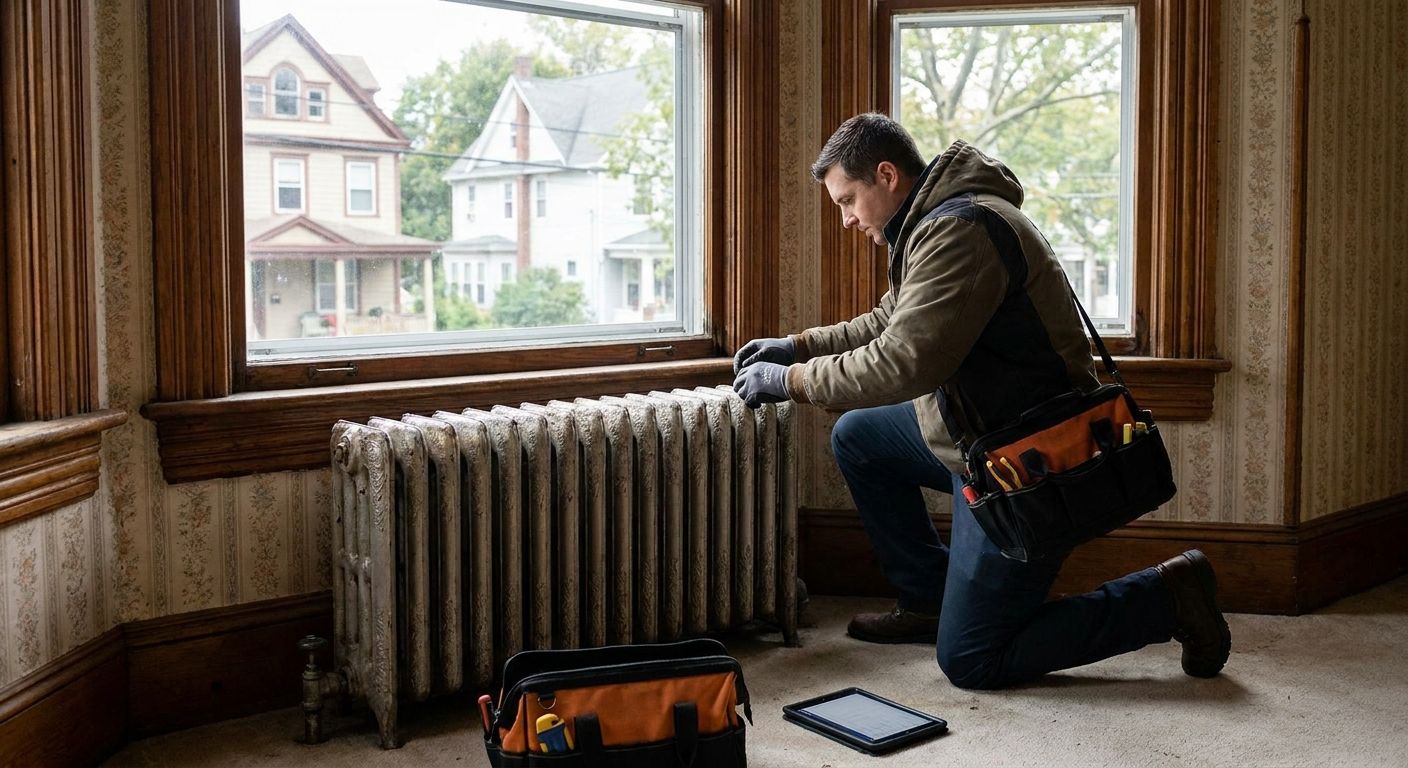
Before paying for a repair, find out whether the unit is worth repairing at all. A model plate on the furnace or boiler tells you the install year in most cases.
- Pull the model and serial number off the data plate and check the manufacture date
- Add up repair costs from the last two winters — two major repairs in 24 months is a replacement signal
- Check for a cracked heat exchanger, which is a safety issue, not a repair-and-continue issue
- Look for rust or scaling on a boiler's base, which points to a slow leak
- Ask if parts are still in production for that model — some 1990s-era units are effectively obsolete
Size up your electrical panel before you touch the thermostat
Adding a heat pump, a smart thermostat, or even a higher-efficiency furnace blower to an undersized panel is how a heating repair turns into a breaker that trips every cold snap. This step gets skipped constantly, and it's the one that causes callbacks.
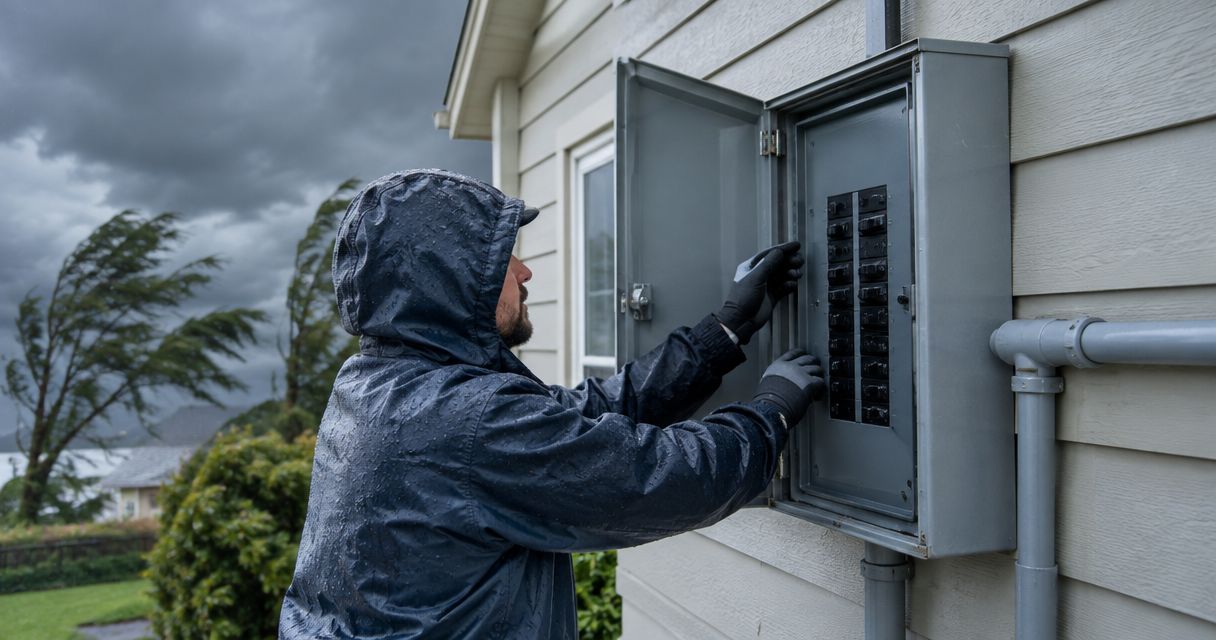
- Count the amperage on the main breaker — 60 and 100 amp panels are common in homes built before 1980
- Check whether the panel still uses fuses instead of breakers
- Look for double-tapped breakers, a sign the panel is already overloaded
- Confirm the panel has open slots for a new HVAC circuit before ordering equipment
- If your electrical panel needs an upgrade, get that scheduled ahead of the heating work, not after
Test airflow through the original ductwork
Houses this age were often ducted for a smaller, less efficient furnace than what's installed now, and joints sealed decades ago rarely hold.
- Feel for airflow at every register — weak flow in back bedrooms usually means duct leakage, not a bad furnace
- Check duct joints in the basement or crawlspace for gaps or disconnected sections
- Look at return air size; undersized returns choke a modern blower and shorten its life
- Note any rooms that never reach set temperature — that's a zoning or duct problem, not a thermostat problem
Seal and insulate before you replace equipment
A new furnace dropped into a leaky, uninsulated duct system underperforms no matter how efficient the rating is.
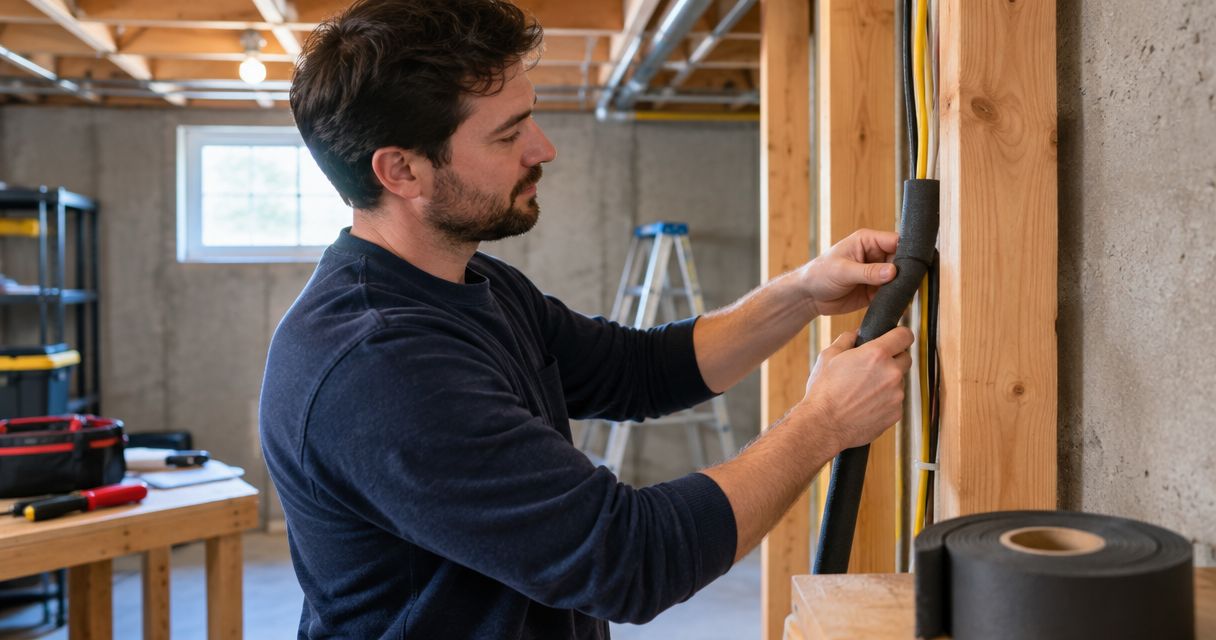
- Seal accessible duct joints with mastic, not tape that dries out in a few years
- Insulate ducts that run through unconditioned basements or crawlspaces
- Weatherstrip attic hatches and older storm windows before winter
- Check attic insulation depth — many pre-1980 NJ homes were built with 3-4 inches, far under current recommendations
Upgrade your thermostat control
A working furnace paired with a 1980s mechanical thermostat still wastes fuel and runs unevenly.
- Replace a mechanical or non-programmable thermostat with a digital one rated for your system type
- Confirm the furnace has a C-wire before buying a smart thermostat, or plan for an adapter
- Set back temperatures overnight and while the house is empty rather than running one flat setting
- Compare options on best smart thermostats for the New Jersey climate before picking one off a shelf
Schedule seasonal maintenance instead of waiting for failure
Most heating failures in older homes in 2026 trace back to a system that never got an annual inspection.
- Book a fall tune-up before the first cold week, not after
- Replace filters monthly during heating season, not quarterly
- Have a technician check flue and venting on any gas furnace or boiler for carbon monoxide risk
- Keep a written record of repairs so age and cost trends are visible over time
Comparing your options for an older NJ home
| Option | Best for | Key limitation |
|---|---|---|
| Repair the existing furnace or boiler | Units under 15 years old with one isolated issue | Doesn't fix panel or duct problems underneath |
| Like-for-like replacement | Homes with adequate ductwork and panel capacity already | Keeps the same duct losses and zoning issues |
| Heat pump conversion | Homes ready to add or already carrying sufficient electrical capacity | Requires a panel check first — see best heat pump systems for NJ winters |
| Duct sealing plus existing equipment | Homes with strong equipment but uneven room temperatures | Doesn't extend the life of an aging furnace or boiler |
A furnace under 15 years old with one failed part is usually a repair; a boiler over 25 years old with a second major repair in two winters is a replacement.
“If your panel is under 100 amps and your furnace is over 20 years old, plan for both to need work in the same winter.”
Common mistakes older-home owners make
- Replacing the furnace and ignoring the panel. A new high-efficiency unit draws more startup current than the original 60-amp service was built for.
- Patching duct leaks with foil tape. It dries out and fails within a season or two; mastic sealant holds.
- Buying a smart thermostat before checking for a C-wire. Older furnaces frequently don't have one, and the install stalls halfway.
- Waiting for total failure in January. Scheduling maintenance in September avoids paying for an emergency call during a cold snap.
- Assuming knob-and-tube or cloth-wrapped wiring is fine because "it's worked for 60 years." Age alone is a reason to have it inspected before adding HVAC load to it.
Get your older home's heating checked
Panel, ductwork and equipment inspection from a licensed Central NJ contractor.
FAQ
How much does heating repair cost for an older NJ home?
Cost depends on whether the issue is the furnace or boiler itself, the ductwork, or the electrical panel feeding it — get a written diagnostic from a licensed contractor before comparing quotes. Homes with 60-100 amp panels often need panel work priced separately from the heating repair.
Is it better to repair or replace an old furnace in NJ?
A furnace under 15 years old with one isolated failure is usually worth repairing; a furnace over 20 years old with a second major repair inside two winters is usually a replacement. Boilers have a longer window, typically 20-35 years.
Why does my old house have uneven heat in different rooms?
Uneven heat in older NJ homes is most often duct leakage or an undersized return, not a bad thermostat. Sealing accessible duct joints usually fixes it faster than replacing the furnace.
Do I need an electrical panel upgrade to add a heat pump?
Often yes — a heat pump adds electrical load that a 60 or 100 amp panel from the 1960s or 1970s wasn't built to carry. A panel check before ordering equipment avoids a stalled install.
How often should an older furnace or boiler get serviced?
Once a year, scheduled before the first cold week of the season, not after a breakdown. Annual service catches cracked heat exchangers and venting issues before they become safety problems.
Can a smart thermostat work with an old furnace?
Most can, but many older furnaces lack the C-wire a smart thermostat needs for constant power. An adapter or a short wiring job usually solves it during install.
What's the sign my heating problem is actually an electrical problem?
Breakers that trip when the furnace blower kicks on, or a thermostat that resets itself, both point to the panel or wiring rather than the heating unit. Flickering lights when the furnace starts is another sign.
One last thing
The furnace or boiler almost never fails in isolation in a house built before 1980 — the panel feeding it, the ductwork moving the air, and the thermostat controlling it all age together. Fixing the visible symptom without checking the other two is why the same heating repair on an older NJ home gets scheduled twice in one winter instead of once.