A tripping breaker, a burning smell near an outlet, or a panel still rated for 60 or 100 amps in a house running central air, an EV charger, and a hot tub are the clearest signs your electrical panel needs an upgrade in 2026 — any one of these is reason enough to call a licensed electrician. The hidden cost most homeowners miss: an undersized or outdated panel can void your homeowners insurance policy or block a permit for a generator, EV charger, or addition, even if nothing has failed yet.
- Frequent tripped breakers, warm outlets, or a fuse box instead of breakers are the top signs you need an electrical panel upgrade.
- A 60 or 100-amp panel struggles once you add central AC, an EV charger, or a hot tub — 200 amps is the 2026 standard for most NJ homes.
- Spartan Home Pros installs licensed panel upgrades in Monmouth, Middlesex, Somerset, and Union counties, typically $2,000 to $7,000 installed.
- Insurance carriers in NJ increasingly flag Federal Pacific and Zinsco panels — that alone is grounds for replacement.
Why this matters
An electrical panel is not a part you replace on a schedule — it fails or falls behind quietly, then all at once. Panels installed in New Jersey homes built before the 1990s were sized for a house with a refrigerator, a window AC unit, and maybe a dryer, not a house running central HVAC, a home office, and a Level 2 EV charger off the same 100-amp service.
The warning signs below are the same ones a licensed electrician checks for on a service call. None of them require guesswork — if two or more apply to your home, an electrical panel upgrade is worth scheduling before the panel becomes a fire risk instead of an inconvenience.
How do you know if your electrical panel needs an upgrade?
Walk through this list against your own panel. These are the signs licensed NJ electricians flag most often on inspections in 2026:
- Breakers trip repeatedly, especially when running the microwave, AC, and a hair dryer at the same time
- Warm, discolored, or buzzing outlets and switches — a sign of overloaded circuits or failing connections
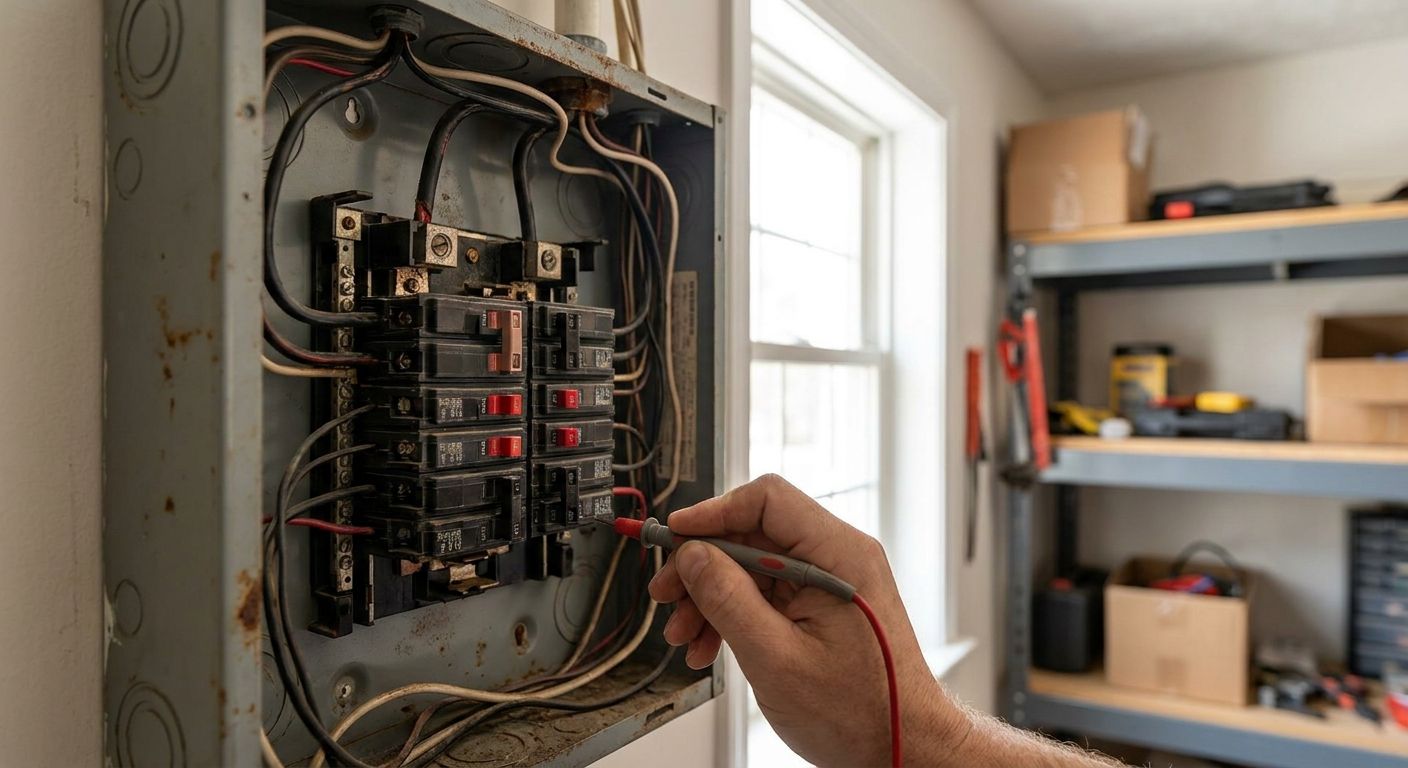
- A burning smell or scorch marks near the panel or an outlet — stop using that circuit and call an electrician the same day
- You still have a fuse box, not a breaker panel — fuses were phased out of new construction decades ago
- The panel is rated 60 or 100 amps and you're running central air, an electric range, and multiple large appliances
- No open slots for double-pole breakers, which blocks adding a generator, EV charger, or hot tub circuit
- The panel brand is Federal Pacific Electric (FPE) or Zinsco, both linked to breaker failures that don't trip when they should
- Flickering or dimming lights when a large appliance kicks on, especially across multiple rooms
If your panel checks two or more of these boxes, treat it as a signs-you-need-an-electrical-panel-upgrade checklist, not a maybe-someday list.
Old fuse box or 60-amp panel: replace it
A fuse box or a panel rated at 60 amps was standard decades ago but can't safely carry a modern NJ household's load. This is the single clearest sign you need an electrical panel upgrade — no diagnostic needed, the fix is replacement.
100-amp panel with no spare capacity: upgrade before adding load
100 amps still runs a smaller home fine, but once you're planning a hot tub, an EV charger, or a home addition, 100 amps runs out of room fast. Homeowners adding square footage often need an electrical panel upgrade for home additions before the new wiring can even be permitted.
Panel upgrade to 200 amps: $2,000 to $7,000 installed
200 amps is the standard for new NJ construction in 2026 and the target size for most upgrade jobs. Installed cost through Spartan Home Pros runs $2,000 to $7,000, depending on panel brand, permit requirements, and whether the service line to the house also needs upgrading. That range covers the panel, breakers, permit, and labor — not a separate subpanel if your project needs one, such as a hot tub or pool circuit.
Why the upgrade decision (and cost) varies
No two panel upgrades price out the same. The factors that move the number most:
- Current amperage — jumping from 60 to 200 amps costs more than 100 to 200
- Service line condition — if the utility drop or meter also needs replacing, that adds labor and permit steps
- Panel brand and code compliance — some older brands require full replacement rather than a partial swap
- Permit and inspection fees, which vary by NJ township
- Added circuits for a generator, EV charger, or hot tub bundled into the same job
- Access difficulty — a panel in a finished basement wall costs more labor than one in an open garage
Related questions
Can an old electrical panel cause a house fire?
Yes, an old electrical panel is a documented fire risk, particularly Federal Pacific Electric and Zinsco panels where breakers fail to trip during an overload. Warm outlets, a burning smell, or scorch marks near the panel mean stop using that circuit and call a licensed electrician immediately, not next week.
How do I know if my breaker box is outdated?
A breaker box is outdated once it's rated below 100 amps, still uses fuses, or carries an FPE or Zinsco label — all three show up on a five-minute panel inspection. Homes built before the 1990s in Monmouth, Middlesex, Somerset, and Union counties commonly fall into one of these categories.
Do I need a panel upgrade before installing an EV charger?
Most NJ homes on a 100-amp panel need an upgrade before adding a Level 2 EV charger, since the charger alone can draw 40 to 60 amps continuously. Panels already near capacity from central AC and electric appliances often need the swap to 200 amps first — see electrical panel upgrades for EV charger installation for how that's scoped.
Does a hot tub or pool require a bigger panel?
Yes, most hot tubs and pool equipment need a dedicated 240-volt circuit that a 100-amp panel often can't spare, which is why panel upgrades and hot tub installs frequently get quoted together. Homeowners planning either project should check panel capacity before signing a hot tub contract, not after — see electrical panel upgrade for hot tub and pool installation.
Will an outdated panel affect my homeowners insurance?
Some NJ insurance carriers now require replacement of Federal Pacific or Zinsco panels before renewing or issuing a policy, treating them as an unacceptable fire risk regardless of how the panel is currently performing. That requirement alone justifies the upgrade even without visible symptoms.
Spartan Home Pros handles panel upgrades as a licensed electrical contractor across Monmouth, Middlesex, Somerset, and Union counties, and does not subcontract the work out — the technician who quotes the job is the one who pulls the permit and does the install.
Get your panel inspected
Licensed NJ electricians, no subcontracting, flat quotes before work starts.
FAQ
What are the signs you need an electrical panel upgrade?
The clearest signs are breakers that trip repeatedly, warm or discolored outlets, a burning smell near the panel, a fuse box instead of breakers, or a panel rated below 100 amps in a home running central AC and multiple large appliances. Two or more of these together mean the panel should be inspected in 2026, not later.
How much does an electrical panel upgrade cost in NJ?
A panel upgrade in New Jersey typically costs $2,000 to $7,000 installed, depending on current amperage, panel brand, and whether the service line needs work. Adding circuits for a generator, EV charger, or hot tub in the same job raises the total.
Is a 100-amp panel enough for a house in 2026?
A 100-amp panel is enough for a smaller home without an EV charger, hot tub, or major additions planned, but it leaves little room to grow. 200 amps is the standard size for new NJ construction and the usual upgrade target.
Are Federal Pacific and Zinsco panels dangerous?
Yes, Federal Pacific Electric and Zinsco panels are widely documented for breakers that fail to trip during an overload, which is a fire risk regardless of the home's age. Replacement is recommended even without visible problems.
Do I need a permit for an electrical panel upgrade in NJ?
Yes, a panel upgrade in New Jersey requires a permit and inspection through the local township, and permit fees vary by municipality. A licensed electrician pulls the permit as part of the job.
Can I upgrade my panel myself?
No, panel upgrades in New Jersey must be done by a licensed electrician and inspected by the township, since the work involves the main service disconnect and utility coordination. DIY work here also voids most homeowners insurance claims tied to electrical damage.
How long does a panel upgrade take?
Most residential panel upgrades take one day for the install, though power to the home is typically shut off for a few hours during the swap. The permit and inspection process around it can add several days to a few weeks depending on the township.
One last thing
The panel brand matters as much as the amperage — a 100-amp Federal Pacific panel is a worse risk than a 100-amp panel from a modern manufacturer, even though both show the same number on the label. If you don't know your panel's brand, that's reason enough to have it checked in 2026 before you plan any other electrical project around it.