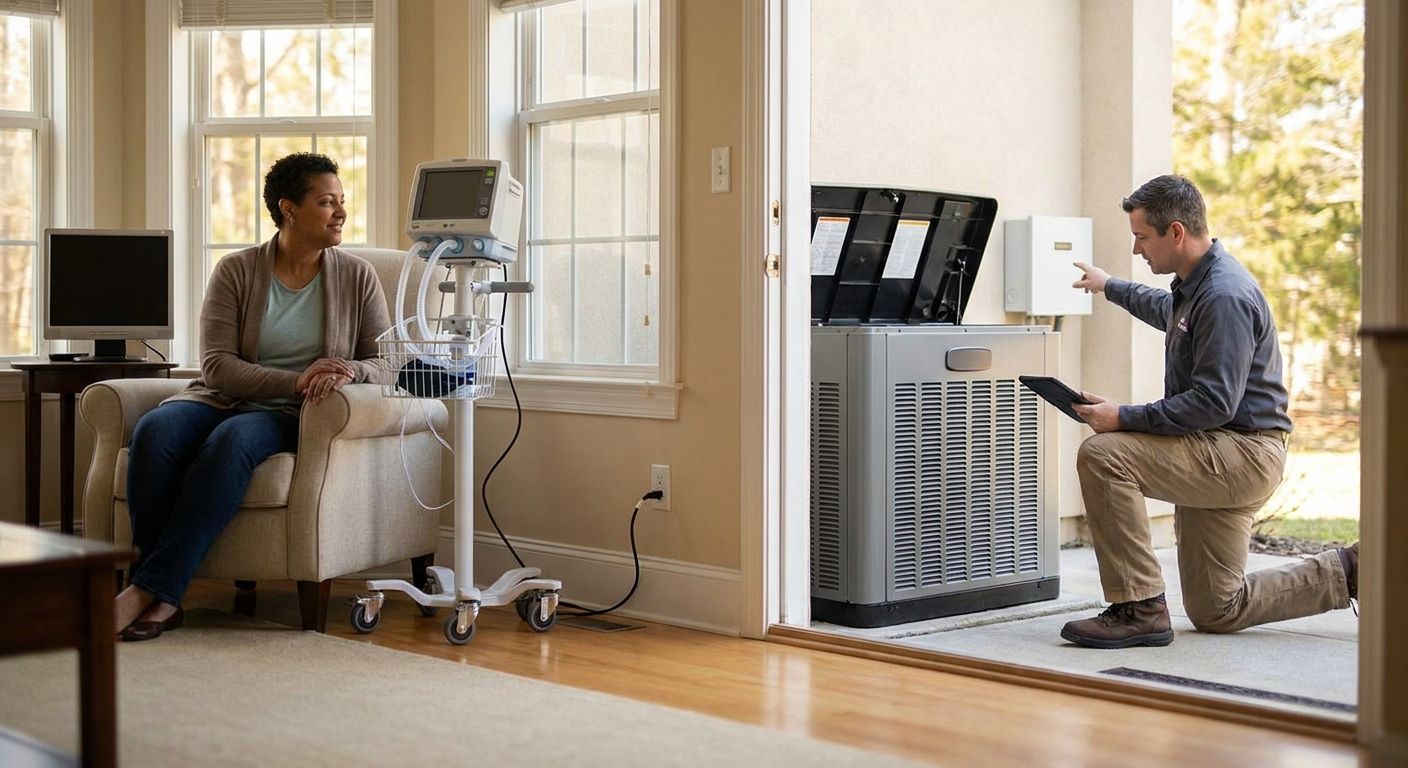
Home medical equipment users need generator installation that switches to backup power automatically within seconds, not a portable unit someone has to haul outside and start by hand while an oxygen concentrator or dialysis machine sits dark. Central New Jersey households running continuous-therapy or life-support equipment have a much narrower margin for error than a home that just loses lights and Wi-Fi during an outage.
- Generator installation for medical equipment at home means automatic standby power, not a portable unit plugged in after the fact.
- Oxygen concentrators, CPAP machines, and dialysis equipment need power restored within 10-30 seconds — portable units can't deliver that.
- Whole-house standby generators sized 22kW to 26kW cover medical devices plus HVAC and refrigeration for a Central NJ home.
- Panel capacity determines whether a transfer switch can even be installed — check this before ordering equipment.
- Utility medical-priority lists speed up restoration; they are not a substitute for on-site backup power.
Why generator installation matters for medical equipment users
A typical home outage is an inconvenience. A home running an oxygen concentrator, a home dialysis machine, or a ventilator on a battery that's already been drained by a prior outage is a different situation entirely. Standby generators built for generator installation medical equipment home needs are engineered to detect a utility loss and restore power automatically within 10 to 30 seconds — fast enough that most continuous-therapy equipment never fully shuts down.
Central New Jersey's outage pattern makes this more than a hypothetical. Between summer thunderstorm cells and winter nor'easters, Monmouth, Middlesex, Somerset, and Union county homes see multi-hour and occasionally multi-day utility losses most years, and in 2026 that pattern hasn't changed. A whole-house generator installation sized correctly for medical load plus daily household draw removes the guesswork of whether a portable unit will start in time or run long enough.
How to plan generator installation for a medical equipment household
List every device that can't lose power
Before sizing anything, build a written inventory of every piece of equipment that runs on electricity and can't tolerate a gap. Manufacturer wattage specs are printed on the equipment or in the user manual — use those, not guesses.
- Oxygen concentrators: typically 300-600 watts running
- CPAP and BiPAP machines: typically 30-60 watts
- Home dialysis machines: typically 300-500 watts depending on model
- Home ventilators: typically 100-400 watts depending on model and mode
- Powered wheelchair or scooter chargers: typically 100-200 watts
- Refrigeration for medication storage: add separately, don't assume it's covered by "whole house"
Choose automatic standby over portable backup
A portable generator requires someone to notice the outage, go get the unit, fuel it, start it, and run an extension cord indoors or through a window. For a household with a ventilator or an oxygen concentrator, that gap between outage and restored power is the entire problem.
- Automatic standby units detect outages and start without anyone present
- Portable units need a person home, awake, and physically able to set them up
- Standby units connect through a transfer switch wired into the panel — no extension cords
- Portable units risk carbon monoxide exposure if run too close to windows or doors
- Standby generators run on natural gas or propane, so there's no fuel run to make mid-outage
A portable generator alone is not an adequate backup plan for a household running continuous medical equipment. It's a reasonable supplement for non-critical loads, not the primary system.
Size the generator for medical load plus daily life
Whole-house standby units for Central NJ homes commonly run in the 22kW to 26kW range, which covers medical equipment, refrigeration, HVAC, and general household circuits at the same time. Sizing only for the medical devices themselves leaves the rest of the house without heat, cooling, or water pressure during a multi-day outage — which creates its own health risk for someone already managing a medical condition.
- Add up running watts for all medical equipment first
- Add HVAC, well pump (if applicable), refrigeration, and basic lighting circuits
- Include startup surge for any motor-driven equipment, which draws more than its running wattage
- Round up rather than down — medical equipment households don't get a second chance if the unit is undersized
Confirm your electrical panel can accept the switch
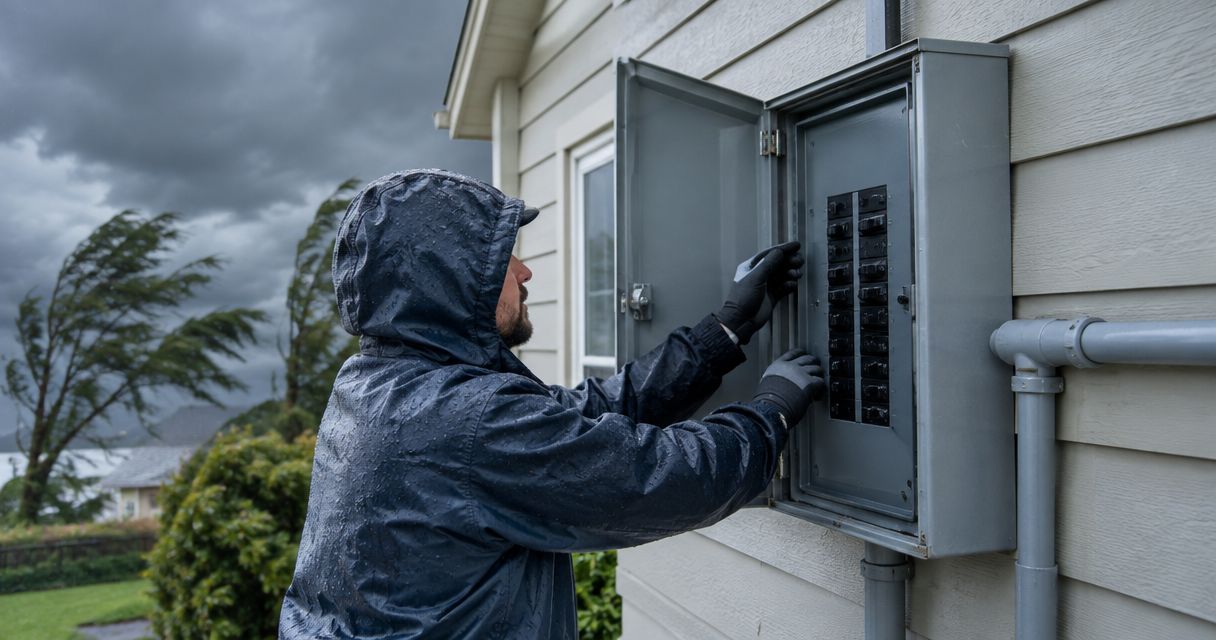
A generator is only as good as the panel behind it. Older 100-amp panels, especially in homes built before major electrical code updates, sometimes can't accept a transfer switch without an upgrade first. This step gets skipped more than any other, and it's the one that stalls installs mid-project.
- Panel age and amperage rating (100A vs. 200A)
- Available breaker space for the transfer switch
- Grounding and bonding compliance with current code
- Whether a panel evaluation and upgrade is needed before the generator goes in
Spartan Home Pros checks panel capacity as part of every generator site visit in Middlesex, Monmouth, Somerset, and Union counties before quoting equipment size, because guessing here means a return trip and a delayed install.
Register with your utility's medical-priority list — as a backup, not a plan
Many New Jersey utilities maintain a contact list for customers who register life-support or medical equipment at their address, which can affect restoration order during widespread outages. Registering takes a phone call, but it does not guarantee power stays on — it only affects sequencing during a large-scale event.
- Call your utility directly to ask about medical-priority or critical-care registration
- Keep documentation from your physician if the utility requires it
- Renew registration annually if required
- Treat this as one layer, not the whole plan — it doesn't replace on-site generation
Test the transfer switch on a real schedule
An installed generator that's never tested is an assumption, not a safety system. Most standby units run a weekly self-test cycle automatically, but that's not the same as confirming the transfer switch moves your critical circuits correctly under real load.
- Confirm the automatic self-test schedule with your installer at handoff
- Manually test the transfer switch under load at least once after install
- Re-test after any panel work, remodeling, or added circuits
- Keep a written log of test dates for warranty and service records
Time the install before storm season, not after the outage
Installers, permit offices, and generator manufacturers all get backed up once storm season starts. Scheduling generator installation in the off-season means the unit is running and tested before you need it, not ordered during an active outage when lead times stretch out.
- Hurricane season runs June through November for the East Coast
- Winter nor'easters bring their own multi-day outage risk from January through March
- Permit turnaround is typically faster outside of storm-response periods
- Booking ahead of the 2026 hurricane season avoids the installer backlog that hits every June
Backup power options for medical equipment households
| Option | Best for | Key limitation | Verdict |
|---|---|---|---|
| Portable gasoline generator | Short outages under 12 hours, non-critical backup | Needs someone home to fuel and restart; carbon monoxide risk indoors | Skip as primary, fine as a spare |
| Battery or solar backup system | Quiet backup for a few critical outlets | Limited runtime and capacity for equipment plus HVAC together | Hold as a supplement only |
| Whole-house standby generator (22-26kW) | Households running medical equipment plus HVAC and refrigeration | Requires panel evaluation and a permitted, professional install | Buy for medical-equipment households |
Common mistakes medical equipment households make
- Sizing for "whole house" without listing device wattage first — the installer ends up guessing at critical loads instead of confirming them.
- Treating a portable generator as the full plan — the restart gap is exactly the risk continuous equipment can't absorb.
- Skipping the panel evaluation — installs stall mid-project when the panel can't accept the transfer switch as-is.
- Never testing the transfer switch under load — a weekly self-test confirms the engine runs, not that your specific circuits transfer correctly.
- Waiting for a storm watch to call an installer — permitting and scheduling both tighten up once storm season starts, and 2026 has already shown the same seasonal crunch as prior years.
Get your home evaluated for generator installation
Panel check, sizing, and a written quote before you order equipment.
FAQ
What size generator do I need for home medical equipment?
Add up the running watts of every medical device plus HVAC, refrigeration, and basic household circuits — most Central NJ homes running medical equipment land in the 22kW to 26kW standby range. An installer should confirm sizing against your actual panel and device list, not a generic estimate.
Is a portable generator safe for oxygen concentrators or CPAP machines?
A portable generator can technically power these devices, but it requires someone to notice the outage, fuel the unit, and start it manually — a gap continuous-therapy equipment can't always tolerate. It's better used as a backup layer, not the primary power source.
How fast does a whole-house generator turn on after an outage?
Automatic standby generators typically detect a utility loss and restore power within 10 to 30 seconds. That's fast enough that most medical equipment never fully powers down during the switch.
Do I need an electrical panel upgrade before installing a generator?
Not always, but older 100-amp panels or panels without available breaker space often need an upgrade before a transfer switch can be installed. A panel evaluation before ordering the generator avoids a stalled install.
How much does generator installation cost for a medical equipment home in 2026?
Cost depends on generator size, whether panel work is needed, and permit fees in your municipality — get a written quote after a site evaluation rather than relying on a generic number. Homes needing panel upgrades alongside the generator should expect the panel work to be quoted separately.
Can I register my medical equipment with my NJ utility for priority restoration?
Many New Jersey utilities keep a contact list for customers who register life-support or medical equipment at their address, which can affect restoration sequencing during widespread outages. It's worth doing, but it doesn't guarantee power stays on and shouldn't replace on-site backup generation.
How often should a standby generator be tested?
Most standby units run an automatic weekly self-test, but the transfer switch itself should be manually tested under load at least once after installation and again after any panel changes. Keep a log of test dates for warranty purposes.
What happens if the generator runs during a multi-day outage — does it need refueling?
Whole-house standby generators run on natural gas or propane, so they keep running as long as the fuel supply lasts without anyone refueling by hand. Propane tank households should confirm tank size supports the expected outage length before storm season.
One last thing
The detail most households miss going into 2026: the panel evaluation, not the generator itself, is usually what determines the install timeline. A correctly sized 22kW unit can sit in a driveway for weeks if the panel underneath it can't accept a transfer switch yet — get the panel checked before you order equipment, not after.