
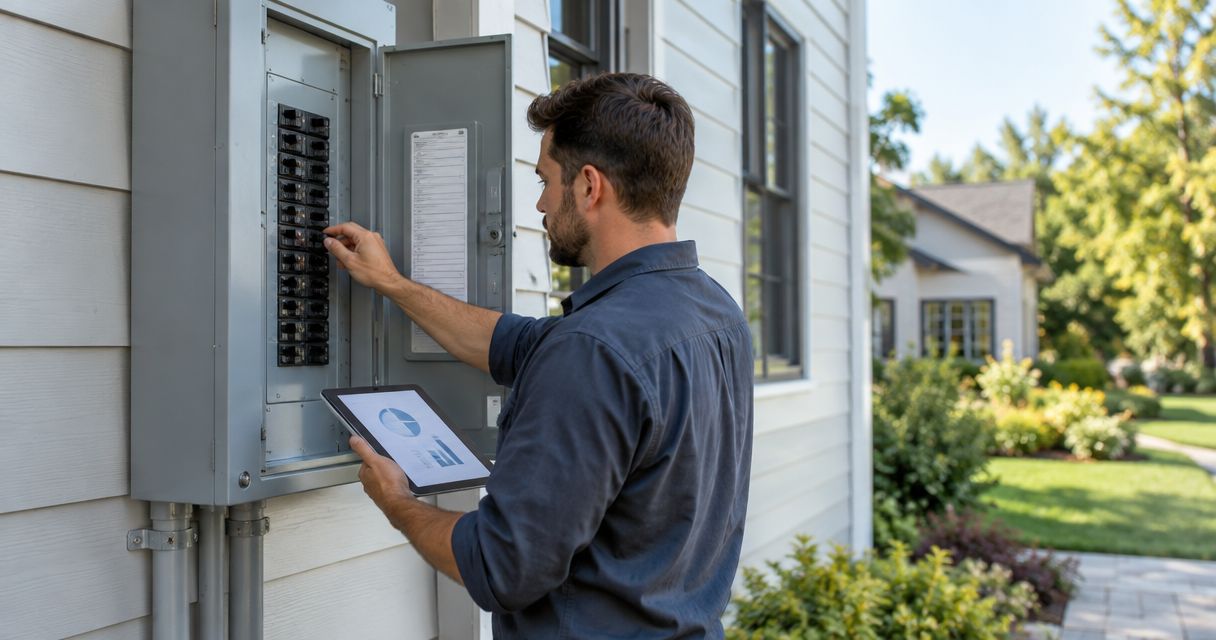
For large New Jersey homes in 2026, a 200-amp panel is the standard floor and often the practical ceiling for a home running central air, an electric range, and a dryer. Homes stacking an EV charger, a whole-house generator, and a pool or hot tub on top of that need 400-amp service — split across twin 200-amp panels — because a single 200A bus runs out of calculated capacity fast once those loads run together.
- 200-amp panels cover most large NJ homes up to roughly 4,000-5,000 sq ft with standard appliances.
- 400-amp service (twin 200A panels) is the best electric panel amperage for large homes adding EV charging, a generator, and a pool together.
- 225-amp panels bridge the gap for home additions and ADUs without a full service upgrade.
- NEC load calculations, not square footage, decide what amperage a large NJ home actually needs.
- An undersized panel trips breakers repeatedly and blocks future EV or generator installs before you even start.
Why this matters
Square footage is a bad proxy for panel size. A 5,000 sq ft home heated by gas with one AC unit can run fine on 200 amps; a 3,200 sq ft home converting to a heat pump, adding a Level 2 EV charger, and installing a 22kW standby generator can exceed that same panel's calculated capacity even though it's smaller.
A 200-amp panel delivers roughly 48,000 watts of continuous capacity at 240 volts. A 400-amp service, split across two 200A panels, roughly doubles that to 96,000 watts. Those numbers, not the amperage label on the panel door, are what an electrician checks before signing off on an EV charger, a generator, or a home addition in 2026.
What makes the best electric panel amperage for large homes
- Calculated load, not guesswork — an NEC 220 load calculation accounts for your actual appliance mix, not a square-footage rule of thumb
- Breaker slot headroom — a panel maxed out on slots forces a second panel even if the amperage has room left
- Room for a generator interlock or transfer switch — large homes adding backup power need physical space on the bus, not just amps
- Utility service drop capacity — PSE&G or JCP&L has to be able to feed the new panel size before an electrician can install it
- Physical space for twin panels — a 400-amp build often means two panel locations, not one bigger box
- NJ permit and inspection compliance — any amperage change needs a permit pulled and inspected before it's legal to use
At a glance: which amperage fits your home
| Amperage | Best for | Standout capability | Key limitation |
|---|---|---|---|
| 200A | Large NJ homes with standard appliance loads | 48,000W continuous capacity | Tight once EV, generator, and pool loads stack together |
| 400A (twin 200A) | Full electrification | 96,000W split across two panels | Needs more panel wall space and sometimes a new meter socket |
| 225A | Staged additions and ADUs | 54,000W capacity, smaller scope than a full service upgrade | Not stocked as a standard rating by every NJ utility |
| 320A | Multi-EV households without a pool | 76,800W capacity for two EV chargers plus standard loads | No headroom left if a pool or hot tub gets added later |
1. 200-Amp Panel: Best Overall for Large NJ Homes
A 200-amp panel is a single box with 40 to 42 breaker slots that handles central air, an electric range, a dryer, and one Level 2 EV charger without a load management device in most Central NJ homes. It's the panel size most large homes in Monmouth, Middlesex, Somerset, and Union counties are already running or upgrading to from an older 100A or 150A service.
200-amp panel pros:
- Handles one EV charger plus standard large-home appliances without extra load-shedding hardware
- Fits nearly every existing panel location with no additional meter socket needed
- The most common upgrade path from an aging 100A or 150A panel in older NJ homes
200-amp panel cons:
- Adding a second EV charger, a pool heater, and a generator on top of a heat pump conversion can push past 48,000 watts of calculated load
- Leaves no headroom for a future addition without redoing the load calculation
Best for: large homes with one major electric load (EV charger, generator, or heat pump) but not all three at once. Verdict: Buy — this is the default panel size for 2026, upgrade past it only when your load calculation says so.
2. Twin 200A / 400-Amp Service: Best for Full Electrification
A 400-amp service splits the load across two 200-amp panels — typically one for general house circuits and one dedicated to an EV charger, generator, and pool equipment. It requires coordination with the utility on the meter socket or a CT cabinet, since the incoming service has to match the new panel capacity.
400-amp service pros:
- Covers an EV charger, a 22kW to 24kW standby generator, pool equipment, and heat pump heating and cooling running at the same time
- Leaves open breaker slots for circuits added years later without another panel swap
- A supported upgrade path with PSE&G and JCP&L for larger residential services
400-amp service cons:
- Needs more panel wall space and often a new meter socket, which adds time to the permit and inspection process
- Unnecessary for a home that isn't running an EV charger, a generator, and a pool together
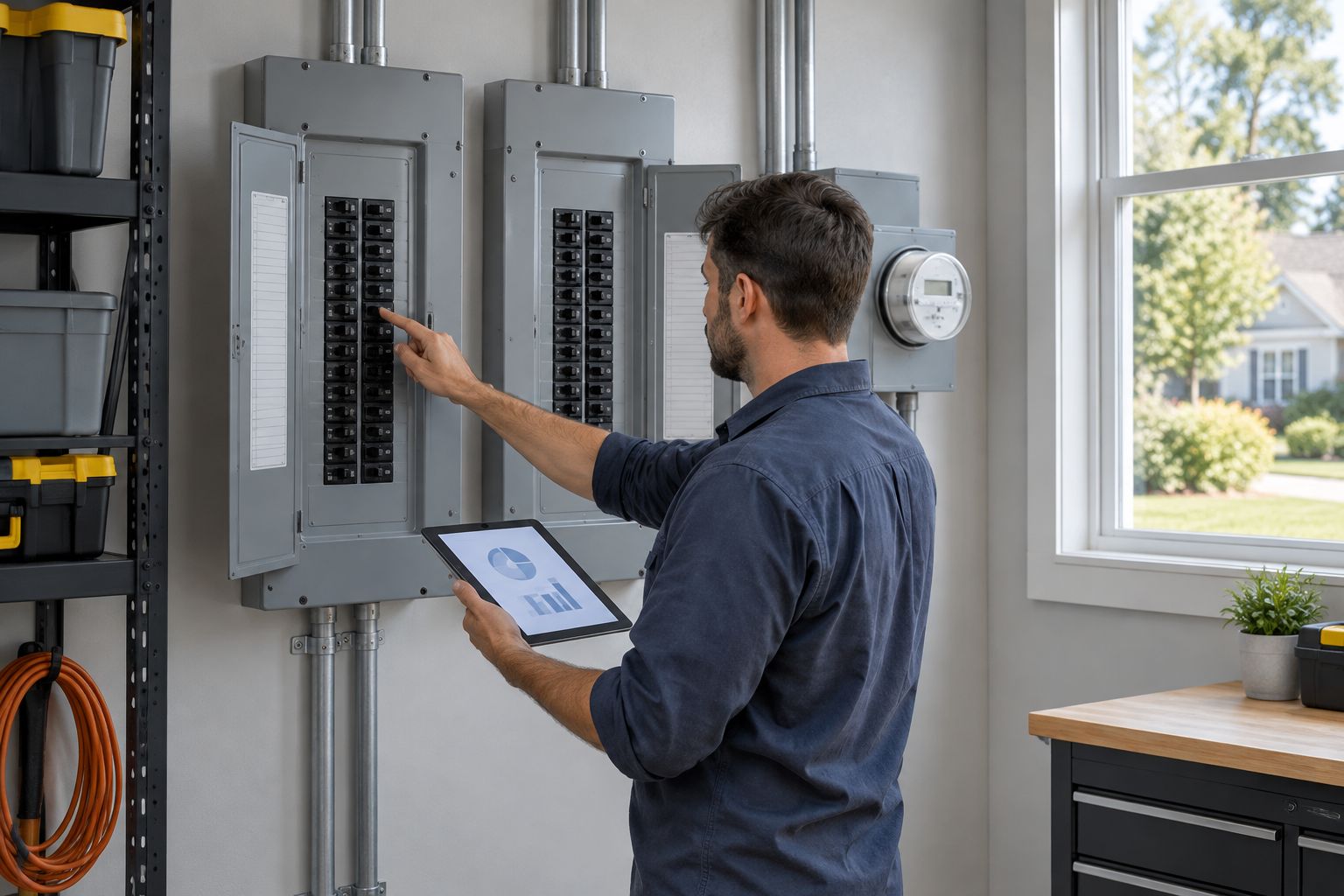
If you're already planning a standby generator alongside an EV charger, check the generator sizing guide before locking in the panel size — the generator's output has to match what the new panel can actually deliver during an outage.
Best for: large homes stacking an EV charger, a generator, and a pool or hot tub in the same renovation. Verdict: Buy — the only option that avoids a second panel swap within the decade for full electrification.
3. 225-Amp Panel: Best for Staged Additions and ADUs
A 225-amp panel sits between 200A and a full service upgrade, adding roughly 6,000 extra watts of capacity over a standard 200A box. Electricians spec it when a load calculation lands just over 48,000 watts — usually from a home addition, an accessory dwelling unit, or a home gym pulling extra circuits.
225-amp panel pros:
- Covers additions, ADUs, and home gyms without adding a second meter socket
- A smaller scope of work than jumping straight to a 400-amp service
225-amp panel cons:
- Not a standard stocked rating with every NJ utility — availability gets confirmed before it's specified
- Still limited if EV charging and a generator get added on top of the addition later
Homes planning an addition should get the panel upgrade for home additions load calculation done before the framing starts, not after.
Best for: homes adding square footage or an ADU without adding EV charging or backup power at the same time. Verdict: Upgrade — situational, right when the load calculation lands just over 200A.
4. 320-Amp Service: Best for Multi-EV Households Without a Pool
A 320-amp service splits roughly 76,800 watts across two panels, aimed at households running two Level 2 EV chargers plus standard large-home appliances but without pool or hot tub equipment adding to the load.
320-amp service pros:
- Covers two EV chargers plus a standard large-home appliance mix without hitting the ceiling
- A lighter meter socket swap than a full 400-amp build-out in most cases
320-amp service cons:
- No headroom left if a pool or hot tub gets added later — the load calculation would push past capacity
- Fewer installers stock 320A gear than 200A or 400A equipment, which can stretch lead times in 2026
Best for: two-EV households that have already ruled out a pool or hot tub addition. Verdict: Hold — solid middle option, but confirm with a load calculation before committing to it over 400A.
How this list was ranked
Each amperage tier was ranked against the criteria above: calculated load capacity in watts, breaker slot headroom, generator and EV compatibility, utility service drop requirements, and NJ permit compliance. The 200A and 400A tiers rank highest because they cover the two most common large-home scenarios in Central NJ — standard appliance loads and full electrification — while 225A and 320A serve narrower, staged use cases.
“The amperage printed on the panel door isn't the number that matters — the NEC load calculation is.”
Which panel amperage should you choose?
If you're not sure where your home lands, default to 200 amps — it's the baseline for large NJ homes and the panel size most installers stock and service without delay in 2026. Move to a 400-amp twin panel service the moment your plans include an EV charger, a standby generator, and a pool or hot tub together, since retrofitting a second panel later costs more time than sizing it correctly the first time. Use 225A or 320A only when a licensed electrician's load calculation puts you in that narrower band — don't pick either one off a guess.
Get your panel load calculated
Licensed Central NJ electricians, no subcontracted crews.
FAQ
What is the best electric panel amperage for a large home?
200 amps covers most large NJ homes with standard appliances in 2026, but 400-amp service (twin 200A panels) is the better fit once an EV charger, generator, and pool run together.
Is 400 amps overkill for a large home?
Not if you're running an EV charger, a standby generator, and pool or hot tub equipment at the same time — a 400-amp service delivers 96,000 watts of continuous capacity split across two panels, which a single 200A panel can't match.
Can a 200-amp panel handle an EV charger and a generator?
One EV charger fits comfortably on a 200-amp panel in most large NJ homes, but adding a whole-house generator interlock on top depends on the rest of your appliance load calculation.
What's the difference between 225-amp and 200-amp panels?
A 225-amp panel adds roughly 6,000 watts of capacity over a 200-amp panel, useful when a home addition or ADU pushes the load calculation just past 48,000 watts.
Do I need a permit to upgrade my panel amperage in New Jersey?
Yes — any panel amperage change in NJ requires a permit pulled and an inspection passed before the new service is legal to use.
How do I know if my current panel is undersized?
Breakers that trip under normal load, a panel with no open slots, or plans for an EV charger and generator on an old 100A or 150A panel are the clearest signs it's undersized for 2026 loads.
What amperage do I need for a pool and a generator together?
Most homes adding pool equipment and a standby generator on top of standard appliances need at least a 400-amp service to keep the calculated load under the panel's continuous capacity.
One last thing
The number stamped on your panel door tells you what it's rated for, not what it's actually using. A large NJ home can be running a 200-amp panel that's already sitting near 40,000 watts of calculated load from central air, an electric range, and a dryer alone — before anyone adds an EV charger or a generator to the mix. Get the load calculation done before you buy any major appliance in 2026, not after the electrician shows up to install it.


