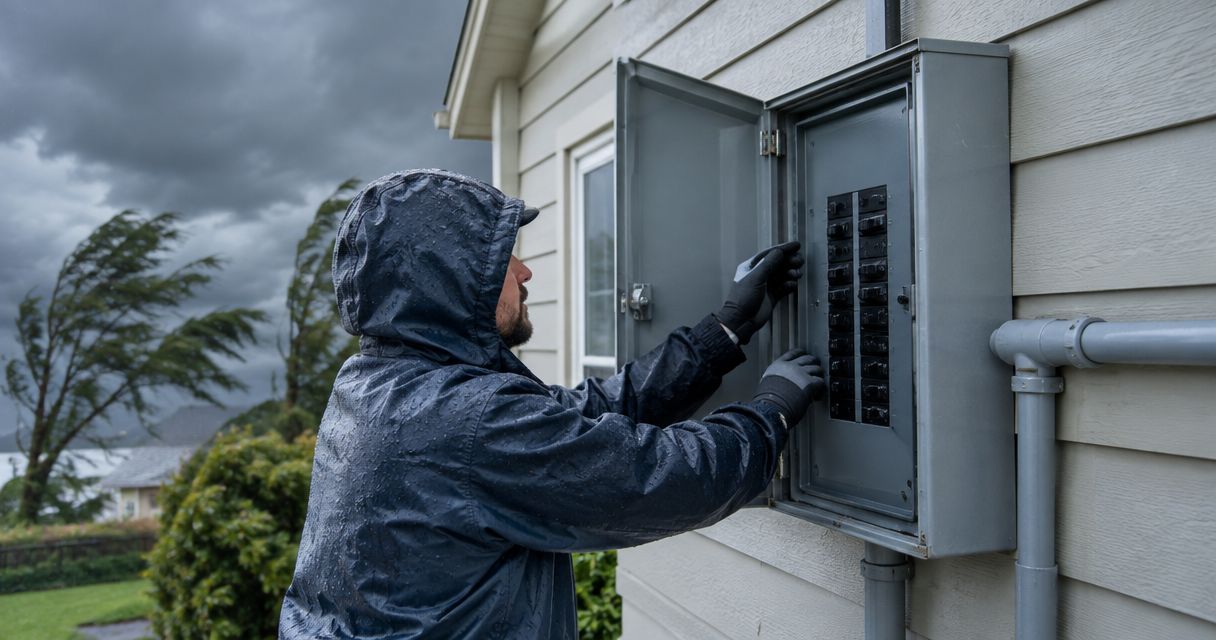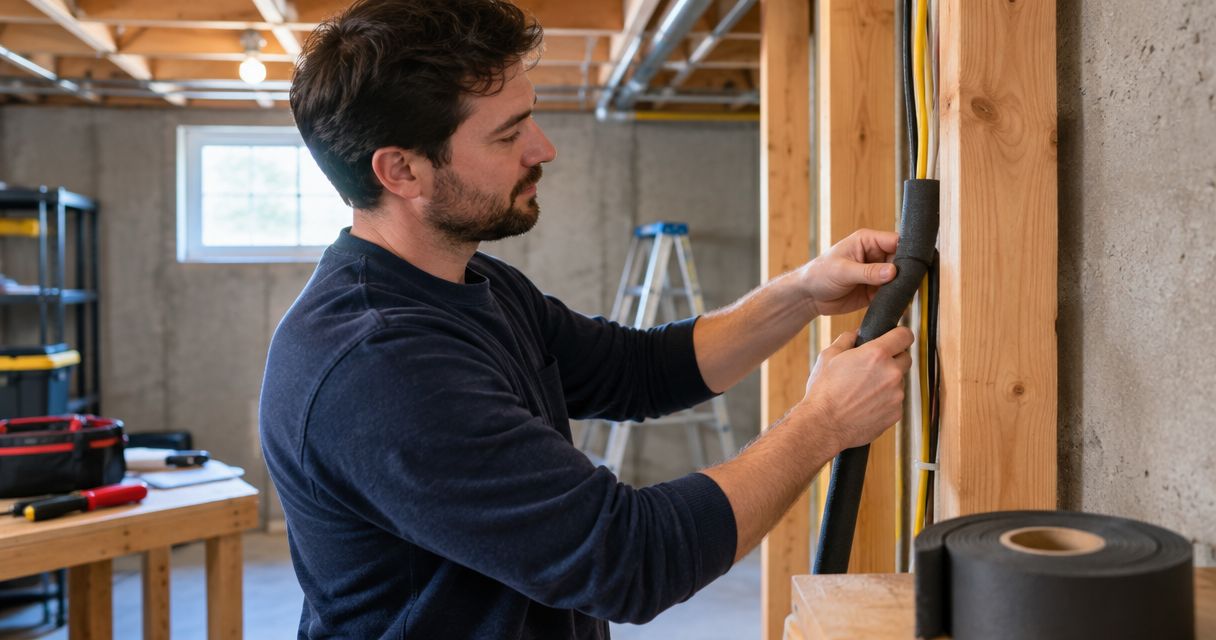
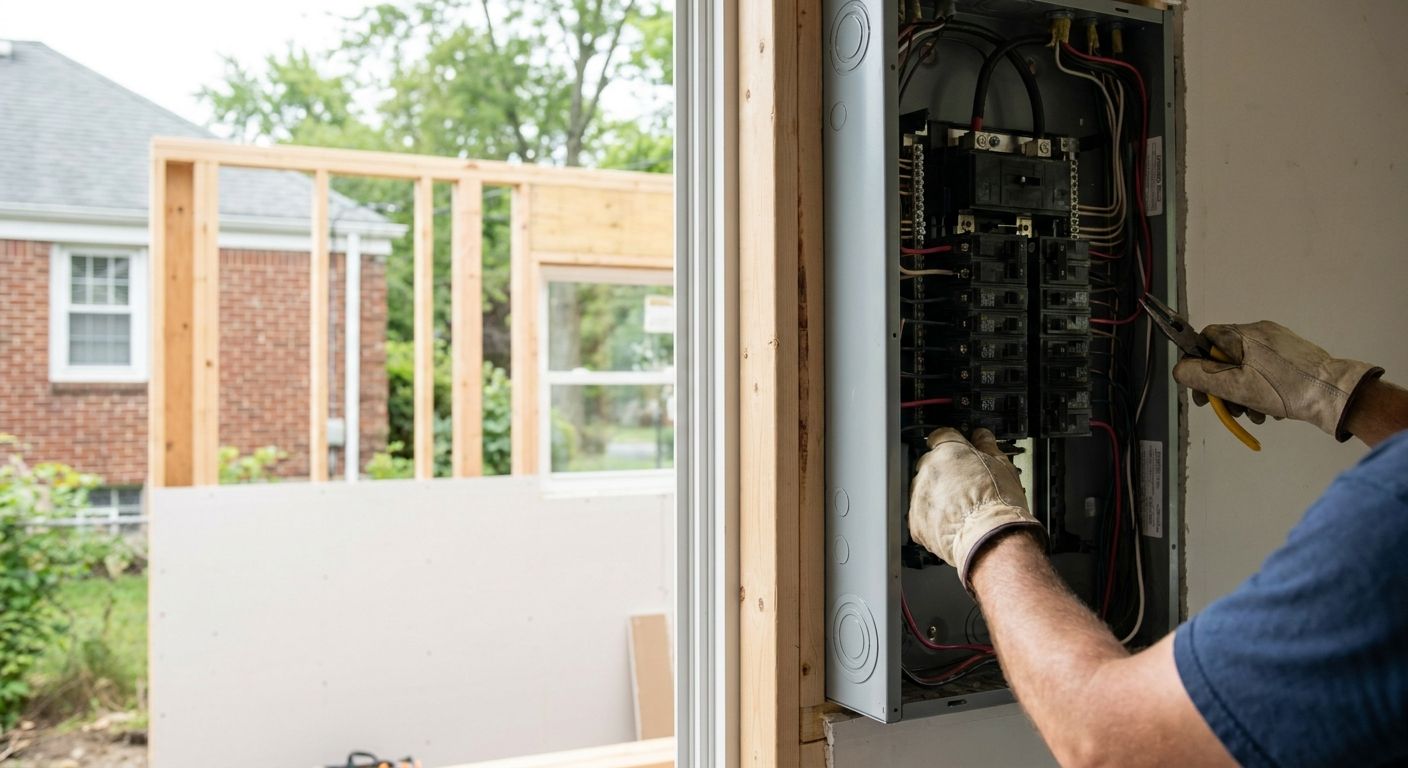
A panel upgrade home addition in NJ swaps your existing electrical service for one with more amperage so the new square footage — a kitchen bump-out, a second-story bedroom, a finished basement — has enough circuits and capacity to run safely. Homeowners adding space in Monmouth, Middlesex, Somerset, and Union counties hit this issue the moment a contractor or the township electrical inspector flags an existing 100-amp panel as undersized for the new load.
- A panel upgrade home addition NJ project usually means moving from 100A to 150A or 200A service before adding rooms.
- NJ townships require a permit and inspection for panel work tied to any addition — no exceptions.
- An old fuse box or a panel already near capacity fails inspection on additions almost every time.
- Sub-panels work for small additions; full service upgrades are needed when you're also adding EV chargers, generators, or HVAC.
- Get quotes from licensed NJ electricians before your addition framing starts, not after drywall is up.
Why panel upgrades matter for home additions in NJ
A home addition doesn't just add rooms — it adds load. New circuits for lighting, outlets, a bathroom exhaust fan, a kitchen island, or a bedroom mini-split all draw off the same panel that's already running your existing house. In Central New Jersey, township inspectors check panel capacity as part of the addition permit review, and an undersized panel is one of the most common reasons additions stall mid-project.
Homes built before the 1990s in Monmouth and Union counties frequently still run 100-amp service, which was standard decades ago but leaves almost no headroom for an addition plus modern appliances. Add central air, an EV charger, or a generator transfer switch to that same addition, and 100 amps runs out fast. This is a segment-specific problem: additions load a panel differently than a simple appliance swap, because you're adding multiple new circuits at once, not one.
Calculate your addition's electrical load
Before you talk to an electrician, get a rough sense of what the addition will actually draw. This determines whether you need a sub-panel or a full service upgrade.
- List every new circuit: lighting, outlets, HVAC, appliances, bathroom fans
- Add up any 240-volt loads separately — ranges, dryers, mini-splits, EV chargers
- Note if the addition includes a kitchen or bathroom (both require dedicated circuits by code)
- Check if you're also planning a generator or EV charger in the next 1-2 years
- Compare that total against what your current panel has left in spare breaker slots
Check your current panel's capacity and age
The panel's amperage rating and its physical condition both matter. A 200-amp panel from 2015 with three open slots handles an addition differently than a 100-amp panel from 1985 that's already full.
- Find the amperage rating printed on the main breaker (60A, 100A, 150A, 200A are the common sizes)
- Count open breaker slots — zero or one open slot is a red flag for any addition
- Look for outdated brands like Federal Pacific or Zinsco, both known for tripping problems
- Check for rust, scorch marks, or a burning smell near the panel — any of these means replace, not upgrade
- Confirm the panel is rated for the total new load, not just today's usage
Decide between a sub-panel and a full service upgrade
Small additions sometimes only need a sub-panel fed off existing capacity. Larger additions, or ones adding EV charging or generator backup, need the main service upgraded — usually to 150A or 200A.
- A sub-panel works when your main panel has 40+ amps of spare capacity and open slots
- A full service upgrade is needed when the main panel is already near its rated limit
- Additions with a kitchen, laundry, or bathroom almost always need a full upgrade, not a sub-panel
- If an EV charger or generator is planned within the addition's lifespan, size the upgrade for both now
- Ask the electrician to size the new service for the addition plus 20-25% headroom for future loads
Pull permits before work starts
New Jersey townships require an electrical permit for panel work tied to an addition, separate from the building permit. Skipping this step is the single fastest way to fail a final inspection.
- Confirm the addition's general contractor has filed the building permit first
- Have the electrician pull the electrical permit before opening any walls
- Schedule the rough-in inspection before insulation or drywall goes up
- Keep the panel schedule updated and posted at the panel for the inspector
- Save the final approved permit — it matters at resale and for insurance
Get quotes from licensed NJ electricians
Once you know roughly what size upgrade the addition needs, get written quotes rather than verbal estimates. This is where a homeowner in Middlesex or Somerset County usually starts calling contractors.
- Ask each electrician to inspect the addition plans, not just the existing panel
- Confirm the contractor is licensed to work in your specific township
- Get the amperage size (100A vs 150A vs 200A) spelled out in writing, not just "upgrade"
- Ask whether the quote includes the permit fee and utility coordination
- Confirm whether the crew is direct payroll or subcontracted — this affects accountability if something goes wrong
Spartan Home Pros handles panel upgrades for additions across Central New Jersey and does not subcontract the electrical work — the same licensed technicians who quote the job run the wire. For additions that also add EV charging down the line, the panel upgrades for EV charger installation service folds that sizing into the same upgrade instead of a second project later.
Schedule inspection and utility coordination
The utility company (PSE&G or JCP&L, depending on your township) has to coordinate the meter swap for any service size increase. This step gets missed by homeowners who assume the electrician handles it alone.
- Confirm who schedules the utility disconnect/reconnect — electrician or homeowner
- Expect a short power outage window during the swap, usually a few hours
- Book the township inspection within the window your permit allows
- Keep the addition's other trades (framers, drywallers) off-site during the swap day
- Get the final sign-off card from the inspector before covering any new wiring
Plan for future loads beyond the addition itself
Sizing the panel for exactly what the addition needs today ignores what most NJ homeowners add within a few years — a generator, an EV charger, or central air.
- Size the new service for the addition's load plus one future major appliance
- If a generator is likely, ask about an interlock kit or transfer switch during the same job — see whole-house generator installation for NJ homeowners
- If an EV charger is planned, confirm the panel has a dedicated 240V slot reserved — see EV charger installation for NJ homeowners
- Don't downsize to save money now if the addition's roofline or foundation makes a second upgrade expensive later
- Ask the electrician to note spare capacity on the panel schedule for the next owner
Comparing your panel upgrade options for a NJ addition
| Option | Best for | Key limitation |
|---|---|---|
| Sub-panel off existing service | Small additions with spare capacity already in the main panel | Doesn't help if the main panel is old or near its limit |
| 150-amp service upgrade | Mid-size additions without EV charging or generator plans | Can run short if you add a charger or generator later |
| 200-amp service upgrade | Additions with a kitchen, bathroom, HVAC, or future EV/generator plans | Higher upfront electrical scope than a sub-panel |
| DIY breaker swap (no permit) | Nobody — not a legal or safe option for an addition | Fails inspection, voids insurance, unsafe load calculations |
A 200-amp service upgrade is the safer default for any NJ home addition that includes a kitchen, bathroom, or planned EV charger or generator — a 150A or sub-panel only makes sense when the addition is small and isolated.
Get your addition's panel sized right
Licensed NJ electricians, no subcontracting, written quotes before work starts.
Common mistakes homeowners make with addition panel upgrades
- Sizing the panel for today only — the addition passes inspection, then a generator or EV charger request two years later triggers a second, more expensive upgrade.
- Skipping the electrical permit because the general contractor pulled the building permit — townships treat these as separate filings, and inspectors catch it.
- Adding recessed lighting or a kitchen remodel to the addition without telling the electrician — extra circuits change the load calculation; see recessed lighting installation for kitchen remodels for how lighting circuits factor into a load plan.
- Choosing the lowest quote without confirming amperage size in writing — a vague "panel upgrade" quote can mean 100A to 150A, not the 200A the addition actually needs.
- Scheduling the utility meter swap after drywall is already up — any rework at that point costs more than catching it during rough-in.
FAQ
Do I need a panel upgrade for a home addition in NJ?
Most additions in New Jersey need at least a load recalculation, and many need a full panel upgrade if the existing service is 100 amps or already near capacity. Kitchens, bathrooms, and HVAC in the addition almost always push the load past what an old panel can handle.
What size panel do I need for a home addition?
200-amp service covers most additions that include a kitchen, bathroom, or future EV charger or generator plans. Smaller, isolated additions without those features sometimes work with a 150-amp upgrade or a sub-panel off existing capacity.
Is 100 amp service enough for a home addition?
100-amp service is rarely enough once an addition adds a kitchen, bathroom, or major appliance circuit. Most NJ homes built before the 1990s that still run 100A need an upgrade before an addition can pass inspection.
Do I need a permit for a panel upgrade tied to an addition?
Yes — New Jersey townships require a separate electrical permit for panel work, even when the addition already has a building permit. Skipping it fails final inspection and can affect insurance coverage.
Can I use a sub-panel instead of upgrading my main service?
A sub-panel works only if your main panel already has 40 or more spare amps and open breaker slots. If the main panel is old, full, or near its rated limit, a sub-panel doesn't solve the underlying capacity problem.
How long does a panel upgrade take during a home addition project?
The electrical work itself typically takes one day, plus a short utility-coordinated outage for the meter swap. The inspection and permit scheduling around it usually add the most time to the overall addition timeline.
Should I upgrade my panel before or after the addition is framed?
Before drywall goes up, ideally during rough-in. Catching a panel capacity issue after finishes are installed means tearing into walls again.
Does adding an EV charger or generator change the panel size I need?
Yes — both add significant 240-volt load, so if either is planned within a few years of the addition, size the panel upgrade for that load now rather than upgrading twice.
One last thing
The most common reason a NJ addition panel upgrade gets delayed isn't the electrical work — it's the utility meter swap scheduling, which depends on PSE&G or JCP&L's timeline, not the electrician's. Book that step as early as the permit allows, because it's the one part of the 2026 addition timeline that's outside the contractor's direct control.