
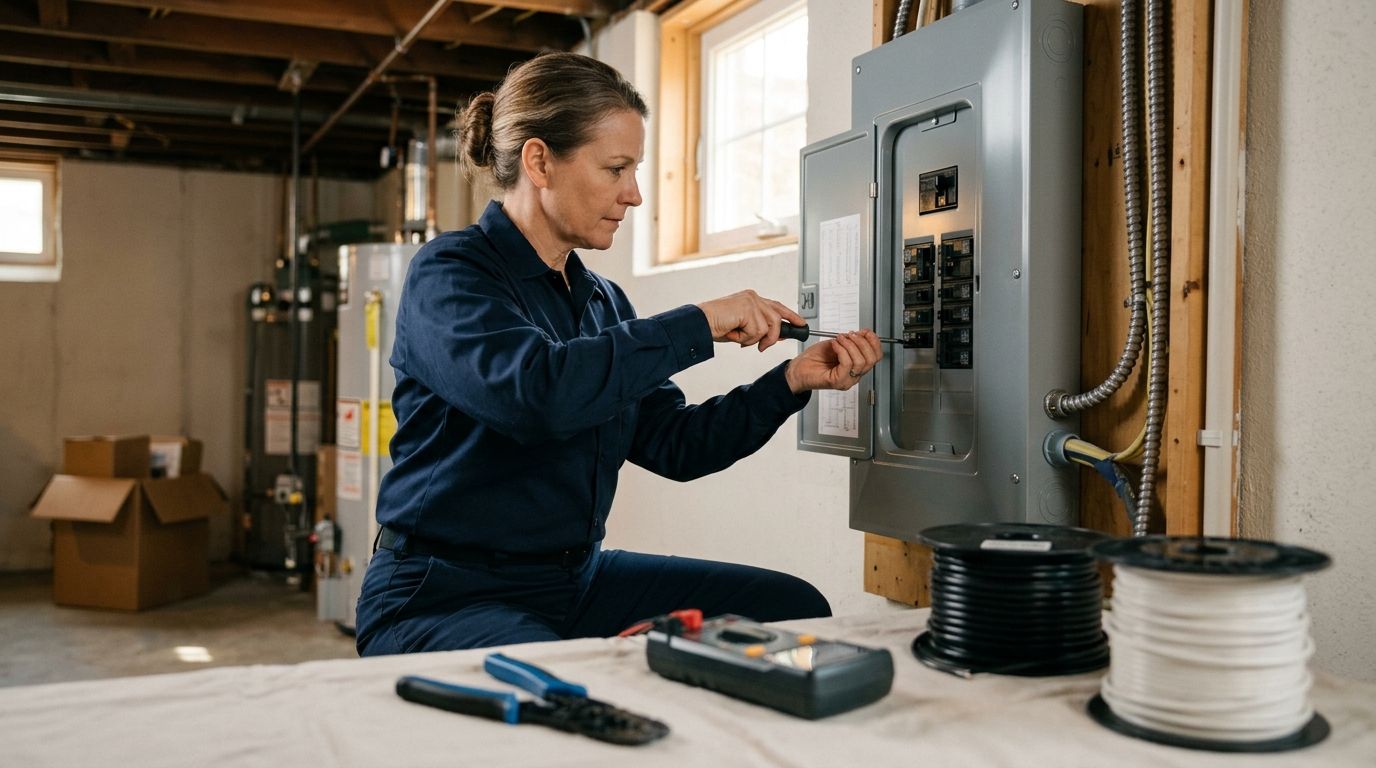
Best overall: GFCI protection for kitchens, bathrooms, and other locations where water raises shock risk. Best for damaged or outdated wiring: a professional wiring assessment followed by targeted repair or rewiring. Best for an unsafe panel: panel replacement. These are the best electrical safety upgrades for older homes in New Jersey in 2026 because each addresses a different hazard; none substitutes for the others.
- GFCI protection is the best electrical safety upgrade for older homes with unprotected outlets near water.
- Choose wiring repair or rewiring when an electrician finds damaged conductors, unsafe connections, or ungrounded circuits that need correction.
- AFCI protection addresses dangerous arcing; a panel upgrade addresses a defective or inadequate panel. Neither replaces the other.
- Spartan Home Pros is best for Central New Jersey homeowners who need an electrician to assess panel and wiring work.
Why this matters in an older NJ home
An outlet that works is not proof that its wiring is safe. Older homes can have a mix of original circuits, later additions, replaced receptacles, and panel work completed at different times. The right 2026 upgrade depends on what is actually installed, not the home's age alone.
Spartan Home Pros is a licensed electrical contractor serving homeowners in Monmouth, Middlesex, Somerset, and Union counties. Start with an electrician's assessment if you see scorching, smell burning, hear buzzing at the panel, or have recurring breaker trips. Do not treat a new receptacle or breaker as a repair for an unidentified fault.
Ground-fault circuit interrupters and arc-fault circuit interrupters solve different problems. GFCI protection responds to current taking an unintended path, reducing shock risk. AFCI protection responds to electrical arcing associated with fire risk. A surge protective device addresses voltage surges; it does not provide either form of protection.
What makes the best electrical safety upgrade?
Use these criteria before choosing a device or approving a larger job. In 2026, the most useful upgrade is the one that corrects the hazard an electrician finds in your home.
- Hazard addressed: Shock, arcing, damaged wiring, panel defects, and surges call for different fixes. Name the problem before choosing the work.
- Condition of the existing system: A new protective device does not repair brittle insulation, loose connections, or an unsafe panel. The underlying circuit still needs to be evaluated.
- Coverage: One protected receptacle, a protected branch circuit, and a device at the service equipment cover different parts of the system. Ask which outlets and circuits the proposal includes.
- Compatibility: The electrician must check the existing panel, wiring, and devices before specifying replacement breakers or other equipment. Do not choose a breaker by appearance alone.
- Inspection and documentation: Ask what work requires a permit and inspection in your municipality, and get the completed scope documented. Requirements depend on the job and local authority.
- Urgency: Burning smells, sparking, and scorched outlets call for prompt diagnosis. A planned surge upgrade does not take priority over an active fault.
Electrical safety upgrades at a glance
| Upgrade | Best for | What stands out | Key limitation |
|---|---|---|---|
| GFCI outlet installation | Shock protection in applicable locations | Interrupts a ground fault | Does not fix damaged wiring or provide arc-fault protection |
| AFCI protection | Circuits needing arc-fault protection | Detects hazardous arcing | Does not correct a damaged connection |
| Whole-home rewiring or targeted wiring repair | Deteriorated or unsuitable wiring | Corrects the wiring itself | Scope must follow an assessment |
| Electrical panel upgrade | Defective or inadequate service equipment | Addresses the panel and its capacity | Does not automatically replace old branch wiring |
| Whole-house surge protection | Voltage surges affecting equipment | Adds protection at the electrical system | Does not replace GFCI, AFCI, or wiring repairs |
The table ranks safety work, not products to buy without diagnosis. Its order favors common shock and fire concerns over equipment protection. If an electrician identifies an active panel fault or damaged wiring, that finding moves the repair to the front of your list.
1. GFCI protection: best electrical safety upgrade for shock risk
GFCI protection is the best default starting point when an older home's applicable receptacles lack it, particularly near water. A GFCI compares current leaving and returning on a circuit and interrupts power when it detects a ground fault. A typical Class A GFCI responds to a difference of approximately 5 milliamps; that sensitivity does not make it a substitute for sound wiring.
Ask the electrician to identify which outlets are protected, not just which outlets have test buttons. Depending on the circuit design, protection can be installed at a receptacle or provided by a breaker. Testing a device confirms that it trips; it does not establish that every downstream outlet was wired correctly or that an ungrounded circuit has acquired an equipment ground.
GFCI protection pros:
- Directly addresses ground-fault shock risk.
- Can protect receptacles on an existing circuit when installed correctly.
- Has a test function that makes routine checks straightforward.
GFCI protection cons:
- Does not detect every dangerous electrical condition.
- Does not repair missing grounding or damaged conductors.
- Needs circuit-level evaluation when trips recur.
Best for: Older homes with unprotected outlets in locations where GFCI protection is required or appropriate.
Verdict: Buy after an electrician checks the existing circuit. In 2026, do not confuse installing a GFCI receptacle with correcting the wiring behind it.
2. AFCI protection: best upgrade for arc-fault risk
AFCI protection targets electrical arcing that can result from certain damaged or faulty connections. It is a different decision from GFCI protection: a circuit can need attention to both shock risk and arc-fault risk. An electrician should determine where AFCI protection applies to the work being performed and whether the existing panel supports the specified device.
An AFCI is not permission to leave a known fault in place. If a breaker trips repeatedly, investigate the circuit and connected equipment rather than replacing the breaker with one that does not provide the needed protection. The same rule applies to 120-volt lighting and receptacle circuits: protection and repair are separate jobs.
AFCI protection pros:
- Adds protection against qualifying arc faults.
- Can address a hazard that ordinary breakers are not designed to identify in the same way.
- Prompts investigation when a persistent trip reveals a problem.
AFCI protection cons:
- Cannot restore damaged insulation or tighten a failed connection.
- Requires the correct device for the panel and circuit.
- A trip does not, by itself, identify the fault's location.
Best for: Circuits where an electrician determines arc-fault protection is needed during a repair or upgrade.
Verdict: Buy when the circuit assessment calls for it; skip the breaker-only shortcut if the circuit already shows signs of damage. A licensed electrician, including Spartan Home Pros in its Central New Jersey service area, can evaluate the circuit before changing its protection.
3. Wiring repair or rewiring: best for deteriorated circuits
Replace or repair wiring when inspection identifies damaged insulation, unsafe splices, deteriorated connections, or circuits that cannot safely serve their intended use. The job can be limited to affected sections or extend across the home. Its extent follows the findings; a home's age alone does not establish that every circuit needs replacement.
This is also where a familiar 2026 mistake becomes expensive: replacing a two-slot receptacle with a three-slot receptacle does not create an equipment ground. An electrician must identify the wiring method and select a compliant correction. The same applies to a 15-amp or 20-amp branch circuit: changing the device on its end does not change the condition or rating of the conductors feeding it.
Wiring repair or rewiring pros:
- Addresses defects in the conductors and connections themselves.
- Lets the electrician document which circuits were corrected.
- Creates an opportunity to match circuit layout to how the home is used.
Wiring repair or rewiring cons:
- Can involve access through finished walls and ceilings.
- Requires a defined scope; replacing sound wiring without a finding adds unnecessary work.
- Does not remove the need to check the panel and protective devices.
Best for: Homes where inspection confirms damaged, unsuitable, or unsafe wiring.
Verdict: Buy the repair the inspection supports, whether targeted or extensive. Spartan Home Pros offers electrical work for Central New Jersey homeowners, but a proposal should identify the circuits involved rather than describe the job only as an older-home upgrade.
4. Panel replacement: best for an unsafe or inadequate panel
A panel upgrade belongs on the safety list when the service equipment has an identified defect, damage, or insufficient capacity for planned electrical work. Breakers that will not reset, visible scorching, or buzzing warrant professional attention. A panel is not made safer simply because a higher amperage figure appears on its replacement.
A 200-amp panel is a familiar option in renovation planning, but it is not the automatic answer for every older home. The electrician needs to assess the existing service, the home's electrical loads, and the work proposed. If you are adding an EV charger or other substantial load, plan the panel decision with that project rather than assuming the existing equipment is adequate.
Panel replacement pros:
- Directly addresses a panel that an electrician finds defective or inadequate.
- Allows panel condition and planned electrical loads to be considered together.
- Creates a documented point to review circuit labeling and protection.
Panel replacement cons:
- Does not automatically replace deteriorated wiring elsewhere in the house.
- Greater panel capacity alone does not fix a faulty branch circuit.
- Work may involve the utility and local inspection, depending on scope.
Best for: Homes with a documented panel problem or a planned load that calls for service-equipment changes.
Verdict: Buy when the assessment establishes the need; hold if the recommendation rests only on the home's age. Spartan Home Pros provides panel upgrades, but the useful 2026 question is what defect or load the proposed upgrade resolves.
5. Whole-house surge protection: best for equipment protection
A whole-house surge protective device helps limit voltage surges reaching connected equipment. It can be a sensible addition when electrical work is already planned at the panel. It ranks last here because it does not address the shock, arcing, wiring, or panel defects that drive the earlier recommendations.
Surge protection is also layered: a device at the electrical system and protection used at sensitive equipment serve different positions. Neither makes unsafe wiring acceptable. Ask where the device will be installed, which equipment it is intended to protect, and how its condition can be checked after installation.
Whole-house surge protection pros:
- Addresses voltage surges rather than waiting for equipment damage.
- Can be considered alongside planned panel work.
- Covers a different risk from GFCI and AFCI protection.
Whole-house surge protection cons:
- Does not stop electric shock or repair a loose connection.
- Does not make a defective panel safe.
- Is a lower priority than investigating active warning signs.
Best for: Homeowners whose wiring and panel concerns have been addressed and who want added equipment protection.
Verdict: Hold until active electrical faults are resolved; buy as a separate protection measure when the system is suitable. In 2026, surge protection belongs in the plan, not in place of the plan.
How we ranked these upgrades
The ranking starts with the hazard each upgrade addresses, then weighs whether the work corrects an existing defect or adds protection around sound equipment. It is not a claim that GFCI installation outranks an active panel emergency. An identified fault always takes priority over this general 2026 order.
Ask for a written scope that identifies the affected circuits, the proposed correction, and any permit and inspection steps. That gives you a basis for comparing proposals without treating every older home as the same job.
Which electrical safety upgrade should you choose?
If you do not have an identified fault, start by checking where GFCI protection is needed and have the wiring and panel assessed at the same time. That produces a decision based on the house rather than a shopping list. If an electrician finds deteriorated wiring or a defective panel, move that repair ahead of optional surge protection.
For a Central New Jersey homeowner, Spartan Home Pros is best suited to the licensed-electrical assessment and panel or wiring work described here. The deciding question is simple: What hazard does this proposed upgrade remove? If the answer is unclear, get the circuit or panel diagnosis before approving the work.
FAQ
What's the best electrical safety upgrade for an older home in 2026?
GFCI protection is the best general starting point for applicable outlets that lack it. Damaged wiring, an unsafe panel, or an active electrical fault takes priority when an electrician identifies one.
Is GFCI protection better than AFCI protection?
Neither replaces the other. GFCI protection addresses ground-fault shock risk, while AFCI protection addresses qualifying arc faults; an electrician determines what a circuit needs.
Does a GFCI outlet fix an ungrounded circuit?
No, a GFCI outlet does not create an equipment ground. An electrician must evaluate the circuit and identify the appropriate correction and labeling.
Does an older home always need complete rewiring?
No, age alone does not establish that every circuit needs replacement. An inspection should identify damaged or unsuitable wiring and define whether targeted repair or broader rewiring is required.
Should I replace a 200-amp panel as a safety upgrade?
Replace a panel when its condition or the home's planned electrical load justifies the work, not because of the amperage label alone. Have an electrician assess the panel and service before choosing a replacement.
Can whole-house surge protection replace GFCI or AFCI devices?
No, surge protection addresses voltage surges, not the ground-fault and arc-fault hazards those devices address. Treat it as a separate layer after urgent defects are assessed.
What should I do if an outlet is scorched or smells like burning?
Stop using the affected outlet and arrange prompt evaluation by a licensed electrician. Do not cover the warning sign by replacing only the visible receptacle.
One last thing
The most misleading upgrade is a new-looking outlet on an old circuit whose condition nobody checked. Ask what the electrician found behind the device and whether the correction covers the circuit, not just the faceplate. That question is useful in 2026 even if you choose no other work.


