
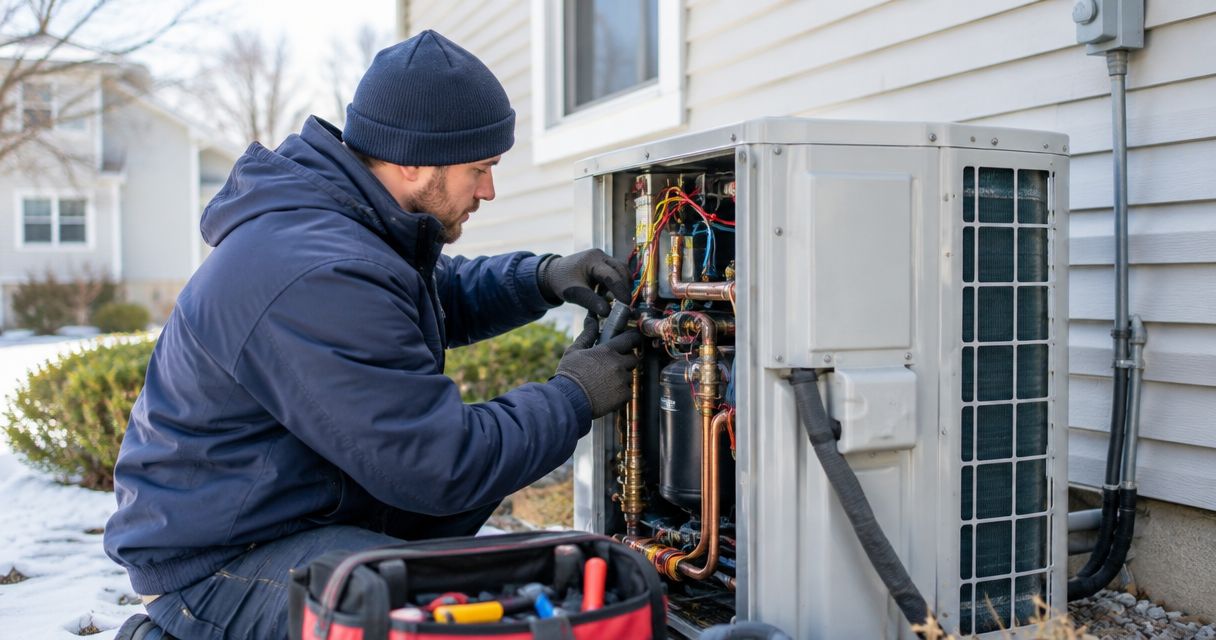
Heating repair for rental properties NJ means keeping a furnace or boiler running inside a legal window that state law sets, not just fixing whatever breaks. Landlords carry an obligation tenants don't: a no-heat call during the Oct 1–May 1 heating season is a code issue, not just a maintenance ticket, and it moves differently across a duplex, a six-unit building, and a single-family rental.
- Heating repair for rental properties NJ is governed by a legal heat season (Oct 1–May 1) with minimum interior temperatures, not landlord discretion.
- Spartan Home Pros handles same-day no-heat calls and seasonal furnace/boiler inspections across Monmouth, Middlesex, Somerset, and Union counties.
- Furnaces and boilers past 15-20 years old cost landlords more in repeat repairs than a planned replacement.
- Pre-season inspection in September, before the Oct 1 heat deadline, cuts emergency winter calls across a multi-unit portfolio.
Why heating repair matters differently for NJ landlords
A homeowner with a dead furnace has a comfort problem. A landlord with a dead furnace in an occupied unit has a legal deadline. New Jersey's Hotel and Multiple Dwelling Law requires landlords of buildings with three or more units to maintain interior temperatures of at least 68°F between 6 a.m. and 11 p.m. and 65°F overnight, from October 1 through May 1. Single-family and duplex rentals fall under local municipal housing codes, which in most Central Jersey towns mirror those same numbers.
Miss that window and a tenant complaint can turn into a municipal code violation, not just an angry text. That changes how fast a landlord needs to move on heating repair for rental properties NJ, and it changes who should be doing the work.
The fastest way to keep Spartan Home Pros or any licensed NJ contractor off your emergency line all winter is fixing the process before the first cold snap, not after a tenant calls the township.
How to manage heating repair across rental properties
Put every no-heat complaint in writing
A phone call with no record is a liability gap if a tenant later claims the unit was cold for a week. Landlords who log complaints protect themselves and speed up diagnosis.
- Log the date, time, unit number, and exact wording of the complaint
- Note whether it's a repeat issue on the same unit or system
- Ask the tenant for a photo of the thermostat reading
- Keep texts and emails as a timestamped record
- Flag units with older cast-iron radiators or steam boilers separately — they fail differently than forced-air furnaces
Know the heat law before code enforcement knows first
Most landlords learn the exact temperature thresholds after a violation notice, not before. That's backward.
- Heating season runs October 1 through May 1 statewide
- Daytime minimum is 68°F, overnight minimum is 65°F
- Buildings with three or more units fall under NJ's Hotel and Multiple Dwelling Law
- Single-family and duplex rentals fall under local municipal housing codes, which usually match the same numbers
- Municipal code enforcement can issue violations for failure to heat, independent of any tenant lawsuit
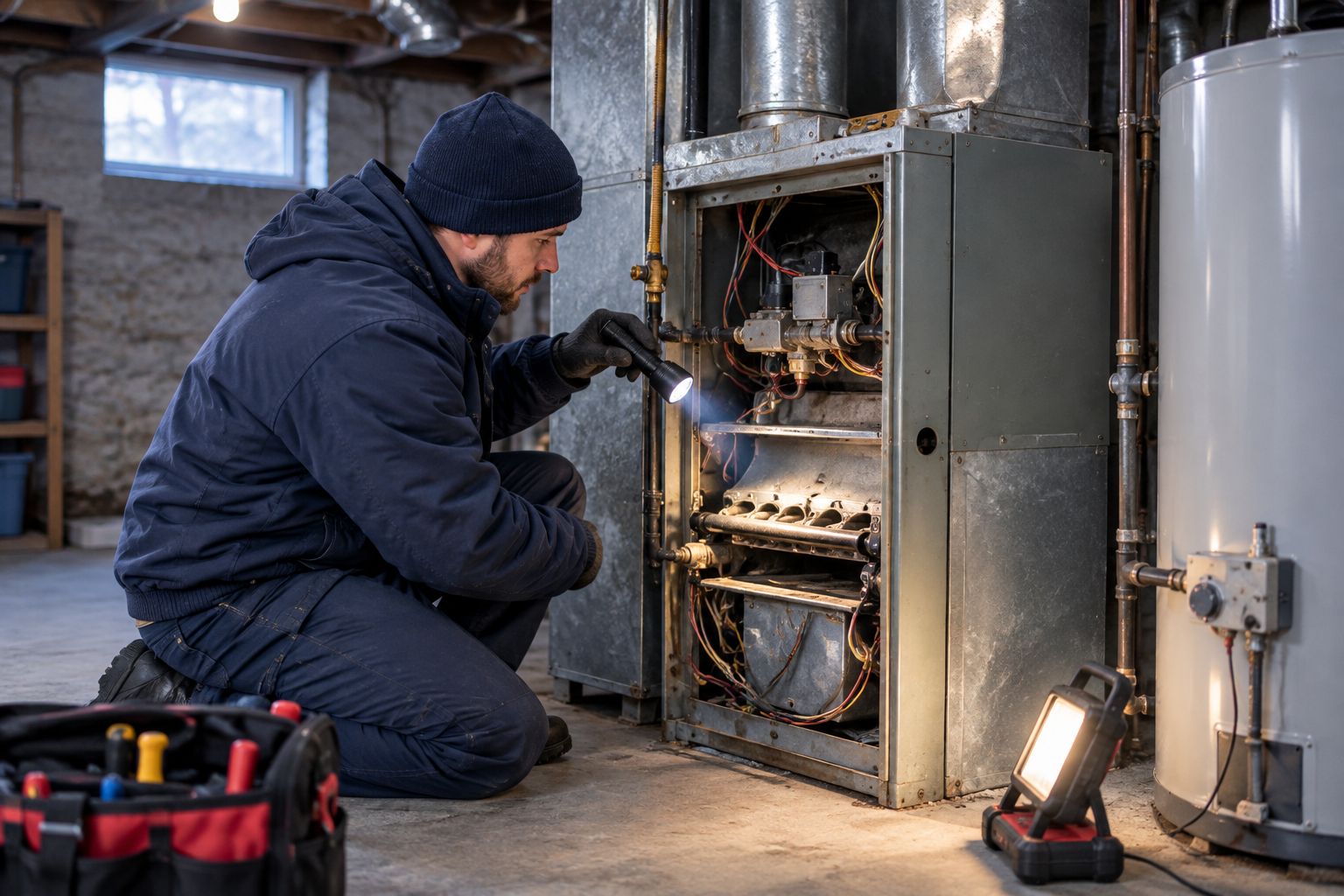
Inspect furnaces and boilers before the season starts
A September inspection catches a cracked heat exchanger or a failing ignitor before it becomes an October no-heat call. This is where a licensed technician earns their fee instead of a landlord guessing.
- Check the ignitor or pilot assembly for wear
- Inspect the heat exchanger for cracks — a real safety issue, not cosmetic
- Calibrate the thermostat against a separate room thermometer
- Replace or clean the filter
- Bleed radiators on older steam and hot-water boiler systems, common in pre-1960s Central Jersey rentals
- Schedule a professional inspection with a licensed NJ heating contractor rather than waiting for a failure
![older rental furnace inspection]
Respond to no-heat calls the same day during the heating season
Once October 1 hits, a no-heat complaint is a same-day problem, not a next-week one.
- Keep an emergency contact number posted in every unit or lease packet
- Have a licensed contractor available for same-day dispatch, not a general handyman
- Warn tenants against space heaters as a long-term fix — they're a documented fire risk, not a repair
- Document response time on every call for your own liability file
- Confirm the contractor doing the work is on that company's own payroll, not a subcontractor — accountability disappears the moment work gets passed down a chain
Weigh repair against replacement for aging systems
A furnace or boiler past 15-20 years old starts costing more in repeat service calls than it would to replace outright. That math changes across a portfolio fast.
- Age of the unit — most residential furnaces are rated for 15-20 years of service life
- Number of repair calls on that unit in the past 12 months
- Parts availability for older or discontinued models
- Tenant turnover risk tied to repeated heat outages in the same unit
- Whether the building has older systems that need a different repair approach than newer forced-air setups
Give tenants limited thermostat control without losing efficiency
A locked-range smart thermostat solves the argument between "tenant kept it at 75°F all night" and "the unit was never actually warm enough."
- Install a programmable or smart thermostat with a locked minimum and maximum range
- Set the floor at 68°F daytime so the unit never drops below the legal minimum
- Use remote monitoring where available to catch an outage before the tenant even calls
- Compare current options built for the region's heating and cooling swings before installing across multiple units
Keep a paper trail on every inspection, repair, and outage
Records are the difference between a five-minute conversation with a code officer and a drawn-out dispute.
- Store dated invoices from a licensed contractor for every service call
- Keep before-and-after photos on major repairs
- Track the start and end date of every reported outage
- Save any code compliance documentation issued after inspection
- Confirm the repair was done by a licensed technician, not passed to an unlicensed sub
Heating repair options for NJ rental properties
| Option | Best for | Key limitation |
|---|---|---|
| Same-day emergency repair | Active no-heat complaints in occupied units | Reactive — doesn't address why the system keeps failing |
| Seasonal furnace/boiler inspection | Landlords managing 3+ rental units | Doesn't cover a major component that's already failed |
| Full system replacement | Furnaces or boilers past 15-20 years old | Highest upfront disruption, needs vacant-unit access |
| DIY tenant troubleshooting | Minor issues — thermostat reset, dead filter | Doesn't fix mechanical failures, often delays the real repair by days |
Verdict: a September inspection plus a same-day emergency repair contract covers most rental portfolios in Central Jersey — replacement only pencils out once a single unit has racked up multiple repair calls in one season.
Get ahead of the heating season
Schedule a pre-season inspection before the October 1 heat deadline.
Common mistakes NJ landlords make with heating repair
- Treating a no-heat complaint as non-urgent during a cold snap — that's exactly when a code officer gets the same call.
- Letting an unlicensed sub handle the repair to save a day — if something fails again, there's no accountable technician to call back.
- Skipping pre-season inspection across a multi-unit portfolio and absorbing higher emergency-rate repairs mid-winter instead.
- Not documenting outage dates or temperature readings, which leaves no defense if a tenant disputes rent or files a complaint.
- Misdiagnosing older steam and cast-iron boiler systems as forced-air furnace problems — Central Jersey's older rental stock runs on different equipment than newer builds.
FAQ
What is the minimum heat a NJ landlord must provide?
New Jersey requires interior temperatures of at least 68°F from 6 a.m. to 11 p.m. and 65°F overnight, during the heating season that runs October 1 through May 1. Buildings with three or more units fall under the state's Hotel and Multiple Dwelling Law; smaller rentals follow local municipal housing codes.
How fast does a landlord have to fix a no-heat complaint in NJ?
There's no single statewide hour-count, but municipal code enforcement treats a no-heat complaint during heating season as urgent, and repeated delays are what trigger a violation. Same-day response during October through May is the practical standard.
Who pays for heating repair in a NJ rental — landlord or tenant?
The landlord is responsible for maintaining a working heating system and meeting the legal minimum temperatures. Tenant-caused damage is typically the exception, and that determination should come from the technician's diagnosis, not assumption.
How often should a landlord inspect rental heating systems?
Once a year, ideally in September before the October 1 heating season deadline, is the standard interval for a furnace or boiler inspection across rental units.
How do I know if a rental furnace needs repair or replacement?
A furnace or boiler past 15-20 years old with more than one or two repair calls in a season usually costs more to keep patching than to replace. Parts availability on older models is the other signal — if a part is discontinued, replacement becomes the only option.
Can a NJ landlord install a smart thermostat with a locked range?
Yes. Locking a thermostat's minimum and maximum range is a common way for landlords to guarantee the legal minimum temperature without giving tenants full control over energy costs.
Is space heater use a substitute for heating repair in a rental?
No. Space heaters are a documented fire risk and don't satisfy a landlord's obligation to maintain a working central heating system during the legal heating season.
Does heating repair for rental properties in NJ differ from a single-family home?
The mechanical repair itself is similar, but the legal exposure is different — a rental property owner faces code enforcement and tenant complaint timelines that a homeowner in their own house doesn't.
One last thing
The single biggest lever for landlords isn't a faster emergency response — it's timing the inspection before October 1. Nearly every emergency heating call in Central Jersey clusters in the first cold week after the season's first hard freeze, which means the landlords who scheduled inspections in September are the ones not competing for a same-day slot in November.


