
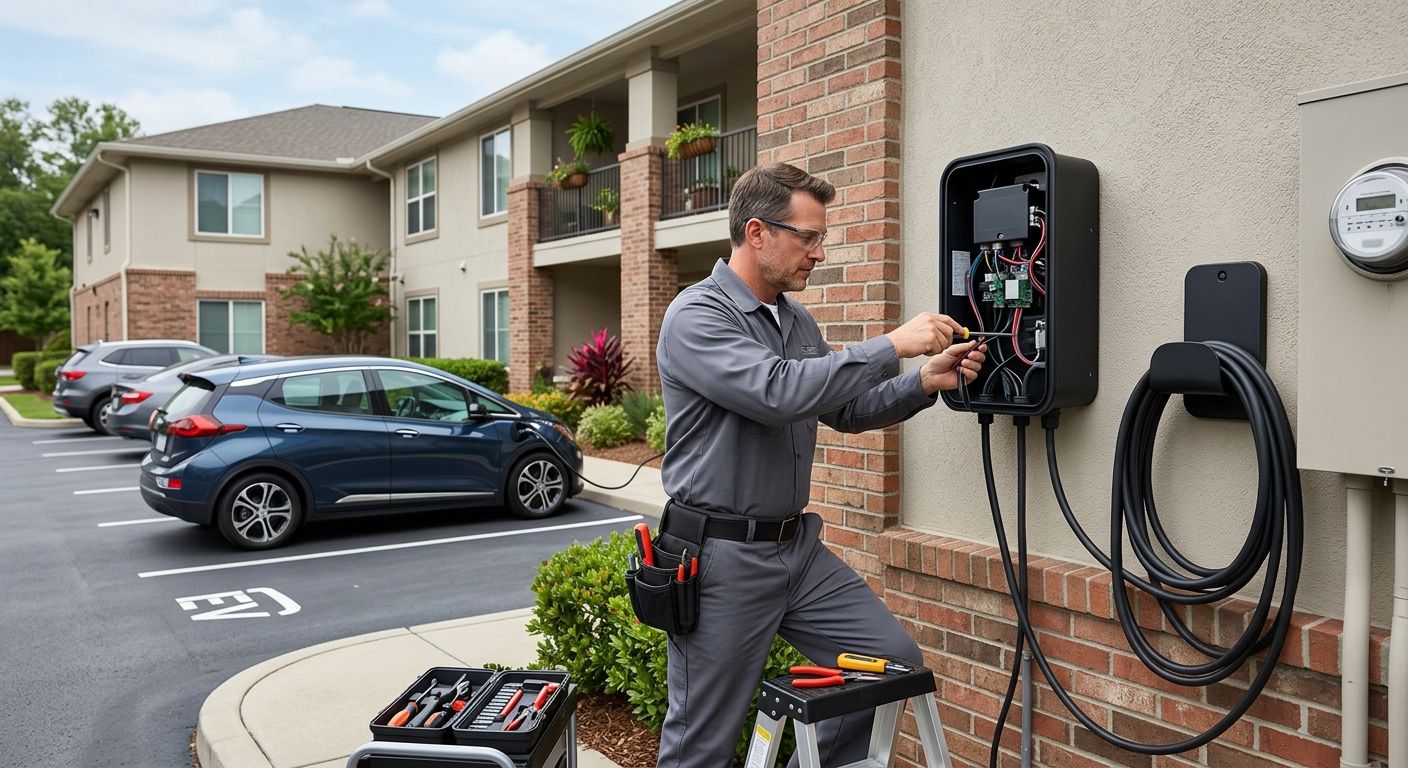
EV charger installation for landlords means adding Level 2 charging equipment to a rental property in a way that protects the owner's electrical capacity, permits, and liability exposure while giving tenants a working charger they can actually use. A single-family rental with one tenant has different constraints than a 12-unit multi-family building with a shared 200-amp service, and the wrong approach on either one creates tripped breakers, failed inspections, or a lease dispute over who pays for electricity.
- EV charger installation for landlords starts with a load calculation, not a charger order — an undersized panel is the most common failure point in 2026 rental installs.
- Multi-family owners need a metering decision (submeter vs. shared cost) before the electrician shows up, not after.
- NJ permits and inspections apply to every install, owner-occupied or rented — skipping them can void an insurance claim later.
- A lease addendum covering charger access, damage, and removal at move-out protects the landlord more than the hardware does.
Why EV charger installation matters for landlords
A landlord installing a charger isn't solving the same problem as a homeowner. The owner carries the liability if the wiring is wrong, the permit is missing, or a tenant's charger overloads a shared panel and knocks out power to other units. Central New Jersey rentals built in the 1960s-1980s commonly run 100-amp or 150-amp services that were never sized for a 40-amp or 50-amp EV charger circuit on top of existing HVAC and appliance load.
Turnover adds a second wrinkle. A charger installed for one tenant needs to still make sense for the next one, or the landlord is paying to remove and reinstall equipment every lease cycle. The decision that actually protects a landlord's investment is the electrical assessment, not the charger brand.
Step-by-step: EV charger installation for landlords
Assess your panel's real capacity
Before any conversation about charger models, a licensed electrician needs to run a load calculation on the existing panel. This is the step that determines whether the install is straightforward or requires an upgrade first.
- Pull the panel's amperage rating (100, 150, or 200 amps is standard in NJ rentals) off the panel label
- List every major load already on the panel: HVAC, electric range, water heater, dryer
- Compare the calculated available capacity against the charger's draw (Level 2 chargers typically run 30-50 amp circuits)
- Flag any aluminum wiring or a panel older than 25 years for closer inspection
- If the math doesn't work, price a panel upgrade for EV charger installation before you commit to a charger model
Decide who pays for the power
Electricity cost allocation is the most common landlord-tenant friction point with rental EV chargers. Solve it on paper before the install, not after the first utility bill argument.
- Submeter the charger circuit so tenant usage is billed separately from the landlord's account
- Flat monthly fee added to rent as an alternative to submetering, if local lease law allows it
- Networked chargers with app-based usage tracking for multi-unit buildings
- Shared circuit with a cost-split clause spelled out in the lease, for smaller two- or three-unit properties
Get the permit and inspection lined up
Every EV charger circuit in New Jersey needs an electrical permit, whether the property is owner-occupied or rented. Skipping this step is the fastest way to void a homeowner's or landlord's insurance claim if something goes wrong later.
- Confirm the township requires a permit for the specific circuit amperage (nearly all do for 40-amp-plus circuits)
- Schedule the rough-in inspection before drywall or finished walls close up the run
- Keep the final inspection sign-off on file for insurance and future refinancing
- Ask the electrician to pull the permit under their license number, not a homeowner self-permit, since the property is rented
Choose placement and access control
Multi-family and multi-tenant properties need a placement plan that keeps one tenant's charger from being usable — or damageable — by someone else's vehicle.
- Assign a dedicated parking space per charger where the lot layout allows it
- Use a networked or app-locked charger for shared parking areas so only the paying tenant can activate it
- Mount conduit runs where they won't get clipped by cars backing in
- For apartment complex EV charging, plan the electrical room capacity for future chargers, not just the first one
Draft the lease addendum before the install
The hardware protects the car. The lease addendum protects the landlord.
- Spell out who owns the charger at move-out (landlord keeps it, in almost every case)
- Note the tenant's responsibility for damage to the charger or cord
- State the billing method (submeter, flat fee, or shared cost) in writing
- Address what happens if the tenant installs their own charger without approval
Match the charger to your tenant mix
A single-family rental with one long-term tenant can justify a simple hardwired Level 2 unit. A 20-unit building with turnover every 12-18 months needs equipment built for shared, metered use — condo and HOA EV charger installation projects run into this same distinction constantly.
- Single-family or duplex: one hardwired 40-50 amp Level 2 charger per unit is usually enough
- Small multi-family (3-8 units): shared circuit with cost allocation, or one charger per assigned space
- Larger multi-family or mixed-use: networked charging stations with usage billing and remote monitoring
Schedule the install with a licensed, non-subcontracted electrician
Spartan Home Pros runs the panel assessment, permit pull, and install with payroll technicians — no subcontractors on any job. That matters for a landlord because the license number tied to the permit is the one accountable if an inspector flags the work later.
Get a rental property EV charger assessment
Panel capacity check, permit handling, and install quote for landlords in Central NJ.
Comparison: charger setup options for landlords
| Option | Best for | Key limitation |
|---|---|---|
| Single hardwired Level 2 charger | Single-family or duplex rentals with one long-term tenant | No usage tracking; landlord absorbs or estimates power cost |
| Submetered dedicated circuit | Small multi-family (3-8 units) with assigned parking | Requires a licensed electrician to install the submeter correctly |
| Networked, app-billed charging station | Larger multi-family or mixed-use buildings | Higher upfront electrical work; needs panel capacity to support multiple units |
| Shared circuit, no metering | Landlords wanting the lowest install complexity | Creates billing disputes and the least fair cost split among tenants |
The submetered dedicated circuit is the option most landlords land on in 2026, because it separates tenant electricity cost from the landlord's utility account without the added electrical load of a full networked system.
Common mistakes landlords make
- Installing the charger before checking panel capacity. A 100-amp service with an electric range and HVAC already on it often has no room left for a 40-amp charger circuit without an upgrade.
- Skipping the permit because the tenant asked for a quick install. An unpermitted circuit is a liability problem for the property owner, not the tenant, if there's ever a fire or insurance claim.
- No lease addendum before the charger goes in. Verbal agreements about who pays for power fall apart at the first disputed utility bill.
- Choosing a charger for one tenant instead of the property. A hardwired unit tied to one tenant's vehicle brand becomes dead weight at turnover if it's not a universal connector.
- Assuming a home charger and a rental charger need the same install. Rental properties need metering, access control, and lease documentation that a single-family owner-occupied install doesn't.
FAQ
Do landlords need a permit to install an EV charger in NJ?
Yes. Every EV charger circuit in New Jersey requires an electrical permit and inspection, whether the property is owner-occupied or a rental. Skipping the permit can void an insurance claim if the wiring causes damage later.
Who pays for electricity when a landlord installs a tenant EV charger?
That depends on the metering setup the landlord chooses. Submetering bills the tenant directly for charger usage; a flat monthly fee or shared-cost clause in the lease are the other two common approaches used in Central NJ rentals in 2026.
Can an existing 100-amp panel handle an EV charger in a rental?
Often not without an upgrade. A load calculation comparing existing HVAC, range, and water heater draw against the charger's 30-50 amp requirement determines whether the panel needs to go to 150 or 200 amps first.
Should a landlord install one charger or a networked system for a multi-family property?
A single hardwired charger works for a duplex or small building with one long-term tenant. Multi-family buildings with turnover benefit from a networked, app-billed charging station that tracks usage per unit.
What happens to the EV charger when a tenant moves out?
The charger stays with the property in almost every lease structure landlords use. The lease addendum should state this explicitly, along with who's responsible for any damage to the unit or cord during the tenancy.
Can a landlord require a tenant to pay for their own EV charger install?
Some landlords allow tenant-funded installs with written approval, but the landlord still needs to approve the electrician, permit, and placement since the wiring becomes part of the property.
Does adding an EV charger increase a rental property's electrical inspection requirements?
Yes. The new circuit triggers its own rough-in and final inspection separate from the property's existing electrical certificate, and that inspection record should be kept on file.
One last thing
The panel, not the charger, is what most landlords underestimate in 2026. A charger unit is a straightforward purchase decision; the load calculation, permit, and metering plan behind it are what determine whether the install holds up over three or four tenant turnovers without a callback.


