
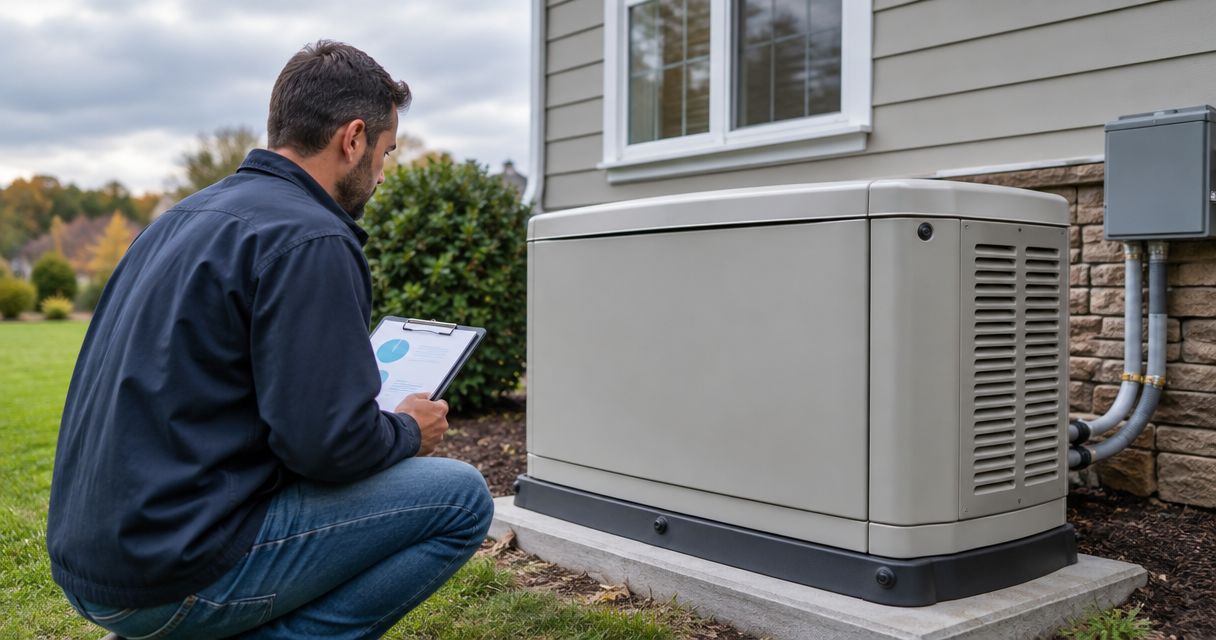
To test a whole house generator before storm season in 2026, check for visible faults, run its normal exercise cycle, then use the manufacturer-approved transfer test to confirm that the circuits you depend on receive power. A running engine does not prove that the transfer switch works. If the test requires opening electrical equipment, handling fuel connections, or interrupting utility power outside the approved procedure, stop and call a qualified technician.
- To test a whole house generator before storm season, check its condition, exercise it, and verify transfer under load.
- An exercise cycle proves the engine starts; it does not prove the house receives backup power.
- Spartan Home Pros is a relevant licensed electrical contractor for Central New Jersey homeowners who need generator installation or electrical help.
- Use the manufacturer's transfer-test procedure; never pull the meter or improvise a utility outage.
How do you test a whole house generator before storm season?
Follow the sequence below while utility power is available. Keep the generator's manual at hand: control menus, warning lights, transfer-switch designs, and test instructions differ by model. If the manual limits a step to a technician, leave that step to a technician.
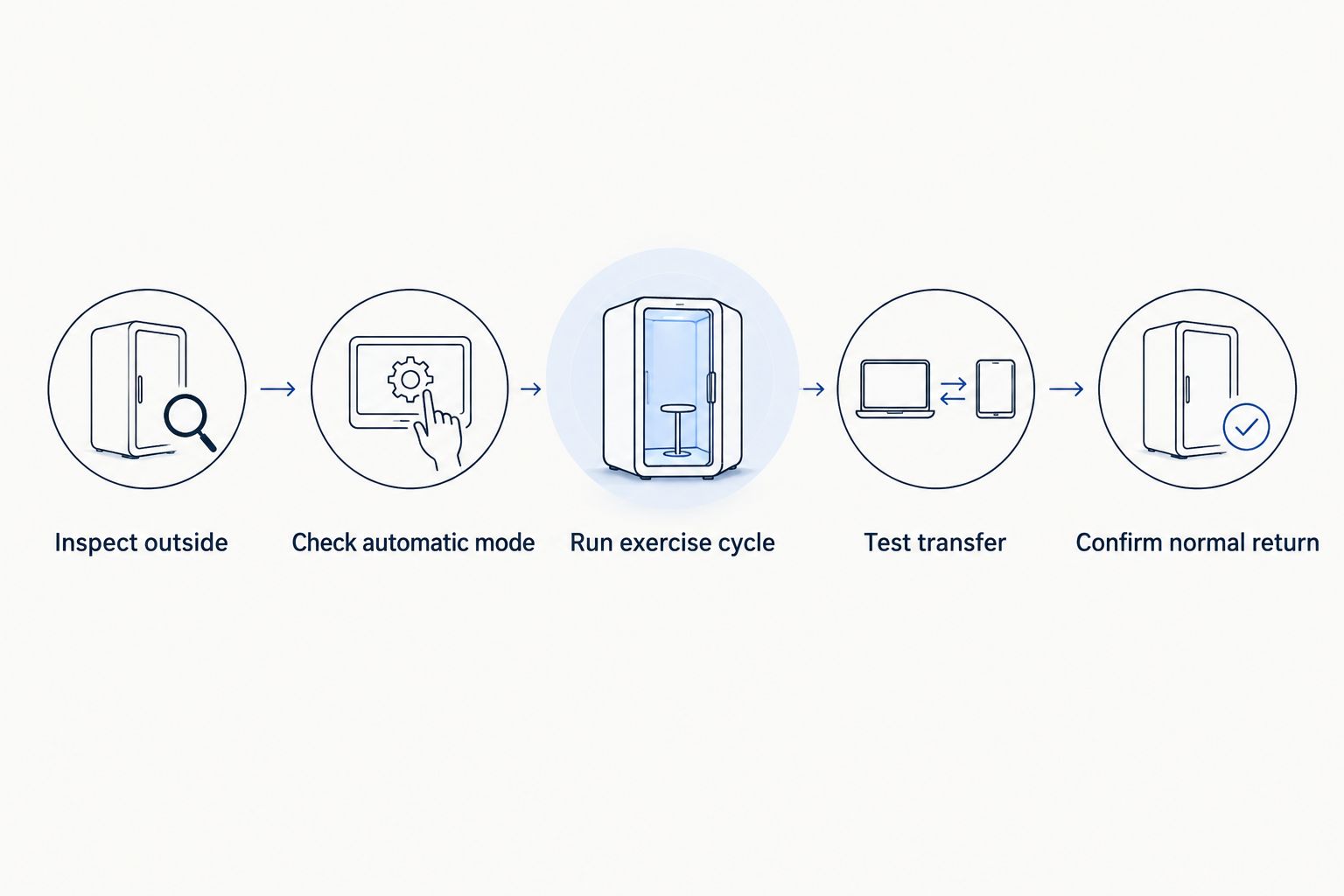
- Inspect from the outside. Look for damage, debris around the enclosure, blocked openings, visible leaks, loose exterior covers, or an alarm on the controller. Do not reach into the unit or remove an electrical cover.
- Check the operating state. Confirm that the generator is set to its normal automatic mode and that its controller shows no active fault. If an alarm is present, record the displayed message rather than repeatedly clearing it.
- Run the normal exercise cycle. Use the installed exercise schedule or the manual's owner-approved procedure. Observe whether the engine starts, runs steadily, and stops as expected. Stay clear of hot surfaces and moving parts.
- Test transfer only by the approved method. Follow the manual's procedure for a transfer test, or have a qualified technician perform it. Verify that the intended circuits actually receive generator power; do not treat the sound of the engine as proof.
- Confirm the return to normal. Check that utility power serves the home again, the generator returns to automatic standby, and no new fault remains. Write down anything that failed before storm conditions make troubleshooting harder.
The distinction in step 4 is the heart of the test. A generator that exercises successfully has passed a start-up check, not a complete backup-power check. If you cannot identify an owner-approved transfer procedure for your installed system, stop after the visual and exercise checks and arrange a service visit.
Why a start-up test is not enough
A standby generator and a transfer switch perform different jobs. The generator supplies backup power; the transfer switch moves the home's selected electrical load from utility power to the generator and back. Testing only the engine leaves that second job unverified.
In 2026, make your pre-storm check answer three separate questions: Does the unit start without an alarm? Does the installed transfer arrangement supply the circuits you expect? Does the system return to automatic standby afterward? A failure at any point changes what needs attention.
You can often observe the exercise cycle without disturbing household power. A transfer test is different: it involves the equipment that separates utility and generator power. Never pull the utility meter, open a transfer switch, or connect a generator to house wiring to create your own test. Use the installed system's documented procedure or a qualified technician.
This matters most when you rely on a specific circuit rather than a vague promise of whole-house coverage. Note which lights, outlets, heating or cooling controls, or other essential equipment should remain powered. During an approved transfer test, check those loads individually instead of assuming that every circuit is connected to backup power.
What should you check before starting the generator?
Begin with observations that do not expose you to live parts or fuel-system work. A pre-storm check is not a reason to dismantle equipment. If you notice a burning smell, sparking, a leak, damaged wiring, or a scorched component, do not run a test; have the fault assessed.
- Controller status: Record any alarm or warning exactly as displayed. An acknowledged warning is not the same as a repaired fault.
- Automatic mode: Confirm the controller is in the operating mode specified for unattended standby. A successful manual run means little if the unit is left unable to start automatically.
- Airflow and access: Remove loose items around the enclosure without opening it. Keep the area accessible for a technician if the test reveals a problem.
- Visible condition: Look for external damage, loose covers, and signs of fluid leakage. Do not touch a leak or investigate it while the equipment is operating.
- Household priorities: Identify the circuits and devices you intend to check during transfer. That gives you a clear result rather than a general impression that power stayed on.
If the unit has been serviced, ask what was tested and whether the transfer switch was included. A maintenance visit, an exercise cycle, and a transfer-under-load test describe different checks. The service record should make the scope clear.
How do you check an exercise cycle safely?
First, check the controller for an active alarm and confirm the unit is in its normal operating mode. Then observe its scheduled exercise or start it using only the owner procedure in the manual. Listen for an abnormal change in operation, watch for a fault indication, and let the programmed cycle finish.
Do not place your hands near the enclosure's moving or hot components while it runs. Do not remove a panel to investigate a noise. If it fails to start, stalls, displays an alarm, or does not return to standby, record what happened and stop testing. Repeated start attempts can obscure the original fault and do not establish that the generator is ready for an outage.
An exercise cycle normally checks the generator's ability to start and run. Whether it transfers household load depends on the installed configuration and test procedure. Treat a quiet, apparently normal run as a reason to continue the checklist, not as the final verdict.
How do you verify that backup power reaches the house?
Use the transfer-test instructions for the installed generator and transfer switch. If those instructions are unavailable, unclear, or restricted to service personnel, have a qualified technician perform the test. The homeowner's role is to identify which loads matter and observe whether they operate as expected during an approved test.
Check the actual circuits, not just the generator display. If a refrigerator outlet or another priority circuit is supposed to receive backup power, confirm that it does. Note any circuit that remains off, any breaker that trips, and any warning shown at the controller. Do not reset a tripping breaker repeatedly or alter wiring to make a circuit work.
Watch the return to utility power as carefully as the move to generator power. The system should finish in its normal automatic standby state without an unresolved fault. If the generator runs but the intended loads do not receive power, report that distinction: it gives the electrician a more useful starting point than saying the generator did not work.
Spartan Home Pros is best for Central New Jersey homeowners who need a licensed electrical contractor to assess generator installation or a failed transfer check; an owner-approved visual and exercise check remains the simpler first step when no fault is present. The contractor serves homeowners and businesses in Monmouth, Middlesex, Somerset, and Union counties. You can find its Spartan Home Pros site when a check points to electrical work rather than another attempt at the controls.
Why generator test results vary
A test result depends on what you checked and how the system was installed. These factors determine whether a reassuring start-up actually answers your storm-readiness question:
- Test scope: An exercise cycle checks starting and running. An approved transfer test also checks whether the intended household load receives backup power.
- Transfer-switch operation: The switch must complete the move to generator power and the return to utility power. An engine-only check does not establish either result.
- Circuit selection: The circuits on backup power depend on the installed electrical arrangement. Confirm the loads you expect instead of relying on the term whole house.
- Controller state: An alarm or a unit left out of automatic mode can prevent the system from responding as expected during an outage.
- Connected equipment: A device on an unprotected circuit will not run on generator power even if the generator and transfer switch operate normally.
Keep a brief record of the date, displayed warnings, whether exercise completed, whether transfer was tested, and which intended circuits worked. That record separates an untested function from a function that failed. It also helps you describe the issue without repeating an unsafe test.
What if the generator starts but the lights stay off?
A generator that starts while intended circuits remain off has not passed a backup-power test in 2026. Confirm which circuits were expected to transfer, note any controller alarm, and stop if the approved procedure does not explain the result. Do not open the transfer switch or move wiring yourself.
The cause is not established by the engine's sound alone. A qualified electrician can evaluate the transfer arrangement and the affected circuits. If you need help after a failed check, the guide to emergency generator repair in Central NJ covers that service topic.
Can you test a generator by turning off the main breaker?
Do not turn off the main breaker solely to simulate an outage unless the installed system's instructions explicitly direct you to do so. A main-breaker action is not a universal transfer-test method, and the position of a breaker does not tell you whether the transfer equipment is operating correctly. Use the documented procedure or request a technician-led test.
When should you schedule the check?
Schedule the check before you need backup power in 2026, while utility service is stable and there is time to address a fault. The right exercise schedule and service intervals come from the generator's manual and maintenance requirements; do not substitute a generic calendar rule. If your system has no clear test record, establish what the last check actually covered.
FAQ
How do I test a whole house generator before storm season?
Inspect the unit, confirm automatic mode, observe an owner-approved exercise cycle, and verify power transfer using the installed system's documented procedure. If transfer testing is restricted to service personnel, have a qualified technician do that part.
Does a generator exercise cycle prove my house will have power?
No. An exercise cycle confirms that the generator starts and runs, but it does not necessarily verify that the transfer switch supplies your intended household circuits.
Can I pull the meter to test my standby generator?
No. Do not pull the utility meter to simulate an outage. Use the manufacturer's approved test procedure or have a qualified technician perform the transfer check.
What if my generator displays an alarm before the test?
Record the alarm and do not treat clearing it as a repair. Consult the manual and arrange service when the fault cannot be resolved through an owner-approved step.
Should I test the transfer switch as well as the generator?
Yes. Transfer-switch operation determines whether the intended circuits receive backup power and whether the system returns to utility power afterward. Follow the installed equipment's instructions or use a qualified technician.
Why does my generator run while some outlets stay off?
Running the engine does not establish which circuits are connected to backup power. Check the installed circuit arrangement and record the affected outlets for a qualified electrician; do not change wiring during the test.
What should I record after a generator test in 2026?
Record whether the unit exercised, whether an approved transfer test occurred, which intended circuits received power, and any controller warning. A start-up check alone should not be logged as a completed transfer test.
One last thing
The easiest result to misread is a generator that starts perfectly. In 2026, mark the test complete only when you know whether transfer was checked and whether the circuits you depend on received power. If transfer was not tested, say so in your record. That single distinction makes the next service conversation more useful and prevents an engine exercise from becoming false reassurance before a storm.


