
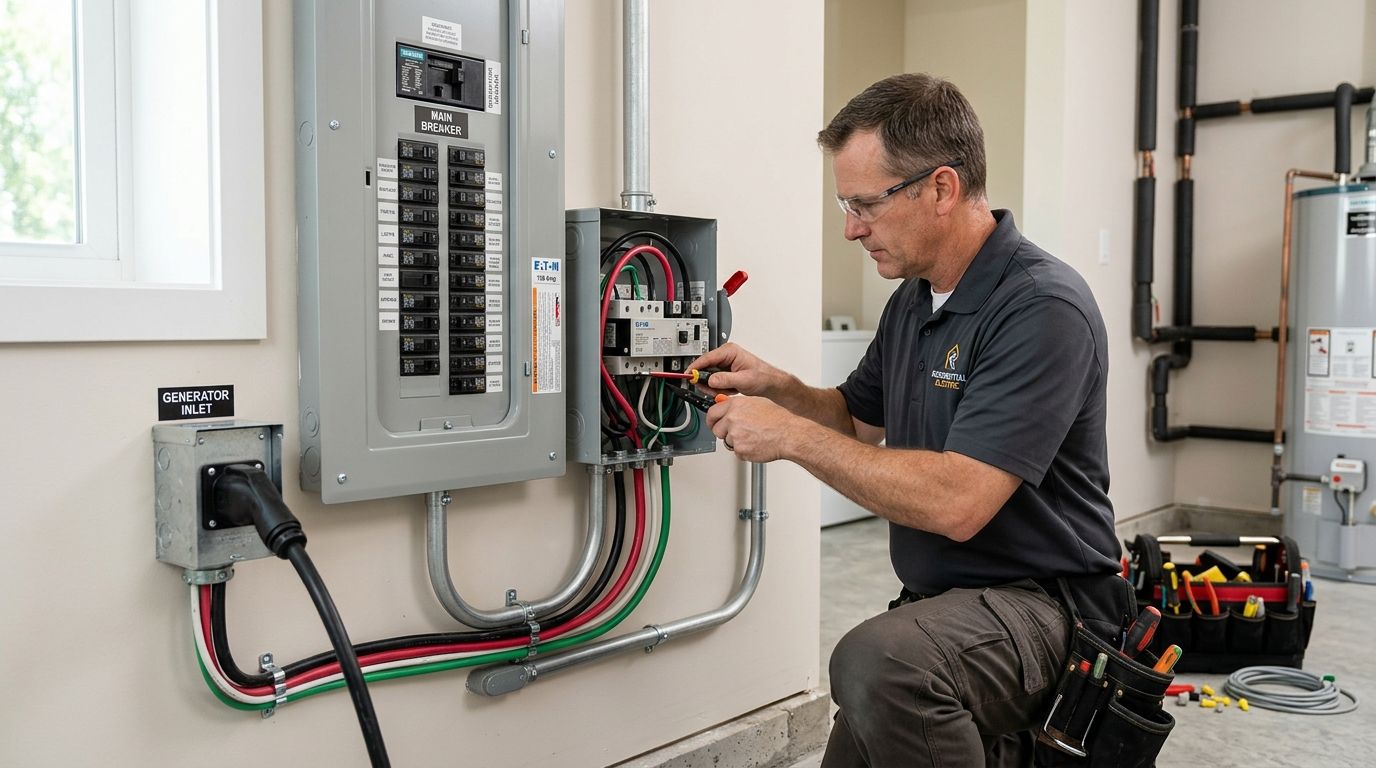
Preparing your home for generator installation comes down to three checks before the crew arrives: panel capacity, pad clearance, and permits. Handle those three and installation day is a one-visit job; skip them and you're looking at a change order mid-project — usually a panel upgrade nobody budgeted for.
The hidden cost most homeowners miss isn't the generator itself, it's the electrical panel behind it. A whole-house standby unit needs a transfer switch tied into a panel that can handle the load, and a lot of Central NJ homes built before the 1980s are running 100-amp service that wasn't sized for it.
- Prepare your home for generator installation by checking panel capacity, clearing a pad site, and pulling a township permit first.
- Most manufacturers require at least 18 inches of clearance from a combustible wall and roughly 5 feet from windows or doors.
- Homes with 100-amp panels often need an upgrade before a whole-house generator can connect — confirm this before ordering equipment.
- Spartan Home Pros runs a panel and load check as part of every generator survey in Monmouth, Middlesex, Somerset, and Union counties.
Why this matters
A generator installer can mount a unit on a pad in an afternoon. What takes longer is confirming the house behind that pad can actually accept the load — old wiring, an undersized panel, or a gas line that's too small for a 22kW unit all turn a one-day job into a multi-week one.
Most of the delay homeowners run into in 2026 isn't the generator backorder people expect. It's discovering the panel issue during the site survey instead of before it, which pushes the permit filing back and adds a second visit.
How do you prepare your home for generator installation?
Six things happen, in this order, before a generator gets set:
- Panel capacity check. An electrician confirms your service size (100-amp vs. 200-amp) and whether the panel has room for a transfer switch. If you're unsure whether your electrical panel needs an upgrade, this is the step where that gets answered for good.
- Load calculation. The installer sizes the generator to what your home actually draws — HVAC, well pump, refrigerator, sump pump — not a guess based on square footage.
- Pad site selection. The unit needs a level outdoor spot with clearance from windows, doors, and combustible walls per the manufacturer's install manual.
- Fuel line confirmation. Natural gas or propane lines get checked for sizing; undersized lines choke a generator's output under full load.
- Permit filing. Your township needs a permit before work starts — this is a legal requirement in NJ, not paperwork you can skip.
- Inspection scheduling. After install, a township inspector signs off on the transfer switch and gas connection before the unit goes live.
| Panel Size | Generator Readiness | Typical Fix |
|---|---|---|
| 100-amp service | Often can't support a whole-house transfer switch | Panel upgrade to 200-amp |
| 200-amp service, older breakers | Usually workable, verify breaker compatibility | Breaker swap or subpanel |
| 200-amp service, modern panel | Ready for most whole-house units | Transfer switch install only |
If you haven't run a load calculation yet, sizing a whole-house generator for your NJ home is the step to do before you order equipment, not after.
Why generator prep requirements vary
Not every home needs the same amount of prep work. The variables that push a job from simple to involved:
- Panel age and type — homes with Zinsco or Federal Pacific panels usually need replacement before any interconnection work happens.
- Existing service size — 100-amp homes almost always need an upgrade; 200-amp homes usually don't.
- Fuel source — propane tank installs add a step (tank sizing and placement) that natural gas hookups skip.
- Lot layout — corner lots and homes with tight side yards sometimes can't meet clearance requirements without relocating AC condensers or utility meters.
- HOA or condo rules — attached and multi-unit properties often have additional approval steps beyond the township permit.
- Township turnaround time — permit processing speed varies by municipality and adds days, not weeks, to most Central NJ projects.
If your generator budget assumed a plug-and-play install, budgeting for whole-house generator installation in NJ walks through where panel work typically adds to that number.
Do I need a new electrical panel before installing a generator?
You need a panel upgrade if your home is running 100-amp service or an outdated panel brand — most whole-house generators require 200-amp service to support the transfer switch safely. A licensed electrician confirms this during the site survey, before the generator order is placed.
How much clearance does a generator need from my house?
Most manufacturers require roughly 18 inches of clearance from a combustible wall and about 5 feet from windows, doors, and fresh-air intakes. Exact numbers vary by generator brand and local code, so the pad location gets confirmed on-site, not from a spec sheet alone.
Can I install a generator without a permit in New Jersey?
No — New Jersey townships require a permit and inspection for any generator with a fixed fuel connection and electrical transfer switch. Skipping this step can void manufacturer warranties and create problems when you sell the house.
A licensed electrician handles all six prep steps in one visit rather than passing you between a panel contractor and a separate generator installer. Spartan Home Pros runs panel checks, load calculations, and permit filing as one process for whole-house generator installation across Monmouth, Middlesex, Somerset, and Union counties — not as separate line items with separate crews.
Get your home generator-ready
Panel check, load calculation, and permit filing handled in one visit.
FAQ
What's the first step to prepare a home for generator installation?
The first step is a panel capacity check — an electrician confirms whether your service (100-amp or 200-amp) can support a transfer switch before anything else gets scheduled.
Is a 100-amp panel enough for a whole-house generator?
Usually not. Most whole-house standby generators require 200-amp service, so a 100-amp panel typically needs an upgrade first.
How long does it take to prepare a home for generator installation?
A straightforward job with an existing 200-amp panel can be ready in about a week once the permit is filed; a panel upgrade or propane tank install adds time to that timeline.
Do I need a permit to install a generator in New Jersey?
Yes, New Jersey townships require a permit and inspection for any generator with a fixed electrical and fuel connection.
Can an old electrical panel delay generator installation?
Yes — panels like Zinsco or Federal Pacific units often fail inspection outright and need replacing before a transfer switch can be added.
What clearance does a generator need from windows and doors?
Most manufacturers set a minimum of about 5 feet from windows, doors, and fresh-air intakes, and roughly 18 inches from a combustible wall.
Does a generator need its own gas line?
It needs a gas or propane line sized for its full running load — undersized existing lines are a common reason installs stall mid-project.
Should I size the generator before or after the panel check?
After. Sizing without confirming panel capacity first often means re-ordering equipment once the electrical survey turns up a service limitation.
One last thing
The step homeowners skip most in 2026 isn't the permit — it's the load calculation. Skipping it leads to two failure modes: an oversized generator that costs more to run than it needs to, or an undersized one that trips under a full HVAC and well pump load during the exact storm it was bought for. A five-minute walkthrough of your panel's circuits before ordering equipment avoids both.


