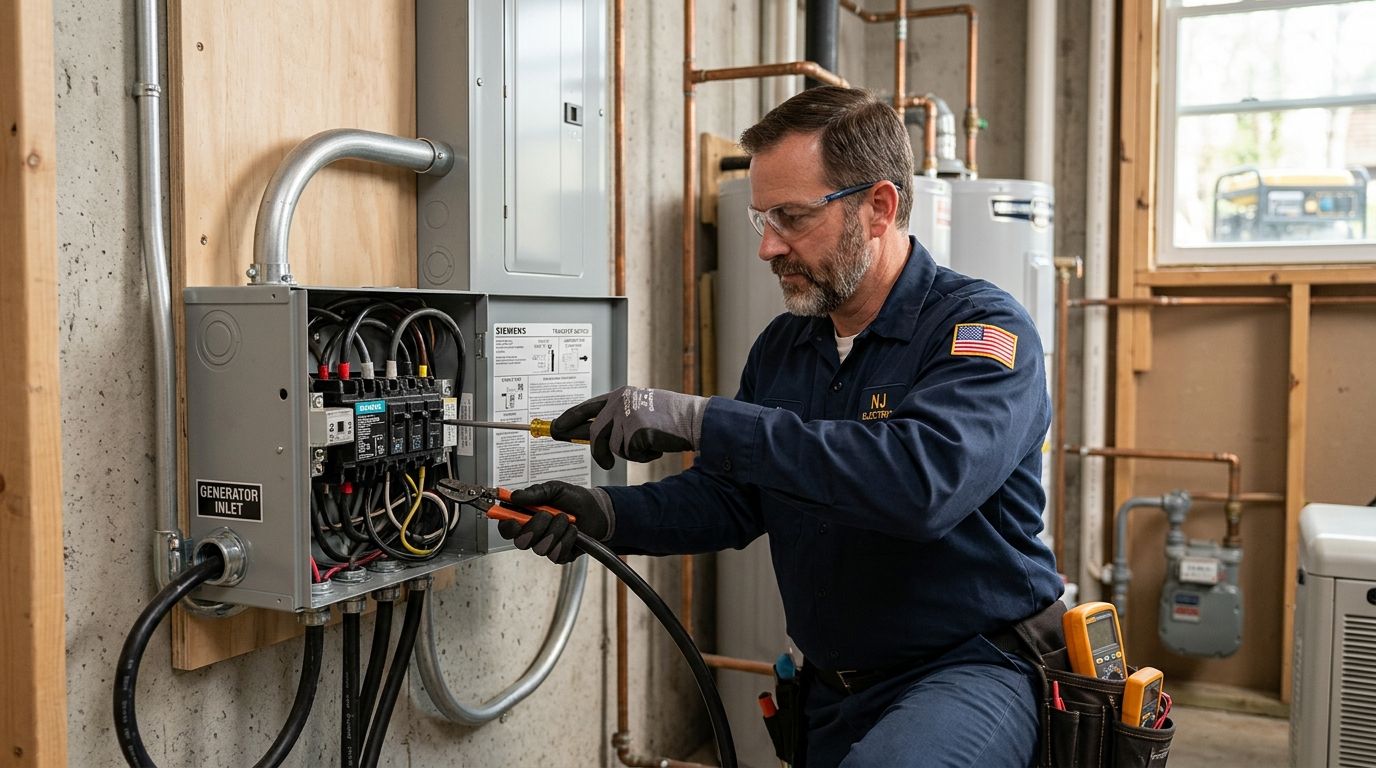
Generator transfer switch installation for NJ homeowners is the licensed electrical work that connects a portable or standby generator to your home's panel so power flows into your circuits safely, without backfeeding the utility grid. Central Jersey homes lose power for days at a time during nor'easters, summer thunderstorms, and ice storms, and a transfer switch is the only code-compliant way to run a generator without running extension cords through a window.
- Generator transfer switch installation nj requires a licensed electrician and a municipal permit — DIY backfeeding is illegal and can kill a lineworker.
- Automatic transfer switches from Generac typically restore power within about 10 seconds of an outage; manual switches need someone home to flip breakers.
- Whole-house setups usually pair a 200-amp transfer switch with a 200-amp panel, so panel condition gets checked before sizing.
- Spartan Home Pros installs transfer switches with payroll technicians across Monmouth, Middlesex, Somerset, and Union counties — no subcontractors.
Why generator transfer switch installation matters for NJ homeowners
A generator without a transfer switch is a generator you can't legally or safely use to power your house. Running extension cords to a few appliances works for a laptop and a fridge; it doesn't run a well pump, a sump pump, or a furnace blower motor, and it doesn't stop you from backfeeding the grid if you plug into an outlet the wrong way.
Backfeeding sends power out through your home's wiring and onto the street, which can electrocute a utility crew working to restore power in your neighborhood. New Jersey's Uniform Construction Code treats a transfer switch as required equipment for any generator hookup tied to a home's panel, and most Central Jersey towns require a permit and inspection before the utility will re-energize the connection.
For homeowners running medical equipment, sump pumps, or well pumps, the transfer switch isn't optional gear — it's the difference between a five-day outage that's an inconvenience and one that's a health risk. Generator transfer switch installation is the step that turns a generator sitting in a garage into a system that actually protects the house.
The transfer switch installation process for NJ homeowners
Confirm your panel can accept a transfer switch
Before anyone talks about generator size, check whether the panel itself is ready. A transfer switch ties directly into the panel, so its condition and capacity set the ceiling for everything downstream.
- Check the panel brand — Zinsco and Federal Pacific panels are flagged by NJ electricians and often need replacement before a switch goes in
- Confirm available breaker space for the transfer switch connection
- Note the panel's rated amperage (100A vs 200A)
- Look for scorch marks, burning smell, or a panel that's already at capacity
- If the panel is undersized or outdated, prepare your electrical system for a generator before scheduling the switch
Choose manual or automatic transfer switch
This decision drives everything else — cost, generator type, and how much you'll be doing yourself during an outage.
- Manual transfer switch: pairs with a portable generator, requires someone home to flip breakers when the power drops
- Automatic transfer switch (ATS): pairs with a standby generator, senses the outage and switches without you touching anything
- Manual switches suit homeowners who are usually home and want a lower upfront commitment
- Automatic switches suit homeowners who travel, run medical equipment, or want zero manual steps during a storm
- Generac and similar standby systems ship with an ATS built into the install — it's not an add-on
Size the switch to match your generator and panel
An undersized transfer switch bottlenecks a generator that's otherwise capable of running the whole house.
- Match switch amperage to panel amperage — most whole-home installs use a 200-amp switch on a 200-amp panel
- Confirm total connected load, not just square footage, when sizing
- Account for HVAC startup draw — compressors and blower motors spike higher than their running amperage
- Cross-check the switch rating against the generator's output before ordering equipment
- Get the sizing confirmed in writing before installation day, not after
Pull the required NJ electrical permit
Skipping this step is the single most common way homeowners end up with a system that fails inspection or voids insurance coverage after a claim.
- File the permit with your municipal building department before work starts
- Confirm the transfer switch installer is licensed to pull electrical permits in your town
- Schedule the rough-in inspection before the switch is closed up
- Keep the final signed permit on file — insurers ask for it after storm damage claims
- Confirm the utility (PSE&G or JCP&L, depending on your town) is notified of the interconnection
Schedule licensed installation
This is where the work actually gets connected to the panel, and it's not a step to shortcut with an unlicensed handyman.
- Confirm the technician is a licensed NJ electrician, not a subcontractor working under someone else's license
- Ask whether the crew is payroll or subcontracted — Spartan Home Pros runs installs with its own payroll technicians and doesn't subcontract transfer switch work
- Get the transfer switch installation scoped alongside any panel work in one visit, not two separate trips
- Confirm grounding and bonding are checked as part of the install, not assumed
- Ask for a walk-through of the switch operation before the crew leaves
Test the transfer switch under load
A transfer switch that's never been tested is a transfer switch you're trusting blind during the next storm.
- Run the generator and confirm the ATS switches within its rated window (about 10 seconds for most Generac systems)
- Verify circuits assigned to the switch actually de-energize from the grid side
- Check for any backfeed indication on the meter during the test
- Confirm manual switches operate smoothly under load, not just with the generator idling
- Document the test date — some manufacturer warranties ask for it
Maintain the switch after installation
A transfer switch is mechanical hardware sitting next to a panel for years; it needs periodic attention, not a one-time install and forget.
- Inspect contacts and connections annually, ideally before hurricane season
- Confirm the automatic transfer switch still self-tests correctly if it's part of a standby system
- Watch for corrosion, especially in homes near the Jersey Shore
- Maintain a whole-house generator after installation on the same schedule as the switch itself
- Re-test the switch any time panel work is done nearby
Manual vs automatic transfer switch: which fits your NJ home
| Option | Best for | Key limitation |
|---|---|---|
| Manual transfer switch | Homeowners usually home during outages, running a portable generator | Requires someone present to switch circuits manually |
| Automatic transfer switch (ATS) | Standby generator owners, medical equipment, frequent travelers | Higher upfront electrical work; needs annual self-test checks |
| Interlock kit | Homeowners with limited panel space wanting a simpler mechanical lockout | Still manual operation; fewer circuits covered than a full switch |
| Portable generator plugged in without a switch | Nobody — not a legal or safe option in NJ | Illegal backfeeding risk; voids most insurance claims |
Verdict: an automatic transfer switch paired with a standby generator is the right call for any NJ homeowner running medical equipment, a sump pump, or a home office — everyone else can weigh manual switches against how often they're actually home when the power drops.
Common mistakes NJ homeowners make with transfer switch installation
- Skipping the permit to save time, then failing a home sale inspection or an insurance claim review months later
- Undersizing the switch to match the generator's sticker wattage instead of real household load, including HVAC startup draw
- Backfeeding through a dryer outlet with a portable generator instead of installing a switch — this is the most dangerous mistake on the list
- Never testing the switch until the first real outage, when a failed connection means no power at all
- Ignoring an outdated panel, especially Zinsco or Federal Pacific equipment, and expecting a transfer switch to work around it instead of through it
Get your transfer switch scoped
Licensed NJ electricians, payroll technicians, no subcontractors.
FAQ
Do I need a permit for generator transfer switch installation in NJ?
Yes. New Jersey's Uniform Construction Code requires a municipal permit and inspection for any transfer switch tied into a home's electrical panel in 2026, and most Central Jersey towns won't let the utility re-energize the connection without a signed-off inspection.
What's the difference between a manual and automatic transfer switch?
A manual transfer switch requires someone home to flip breakers when the power drops and pairs with a portable generator. An automatic transfer switch senses the outage and switches on its own, typically within about 10 seconds, and pairs with a standby generator.
Can I install a transfer switch myself?
No — transfer switch work ties into your main panel and requires a licensed electrician and a permit in New Jersey. Unlicensed or DIY backfeeding is illegal and can electrocute a utility worker restoring power on your street.
What size transfer switch do I need for a whole-house generator?
Most whole-home installs use a 200-amp transfer switch matched to a 200-amp panel. The right size depends on total connected load, including HVAC startup draw, not just square footage.
Does an old panel affect transfer switch installation?
Yes. Zinsco and Federal Pacific panels are commonly flagged by NJ electricians and often need replacement before a transfer switch can be installed safely.
How fast does an automatic transfer switch restore power?
Standard Generac automatic transfer switches restore power within about 10 seconds of detecting an outage, once the standby generator starts and stabilizes.
Is a transfer switch required for a portable generator?
Yes if you want it wired into your panel to run permanent circuits. Running a portable generator through extension cords to individual appliances doesn't require a switch, but it also can't safely power hardwired equipment like a well pump or furnace.
Will a transfer switch work with any generator brand?
Transfer switches are rated by amperage and switch type, not locked to one brand, but standby systems from Generac and similar manufacturers ship with a matched ATS as part of the install.
One last thing
The backfeeding risk gets glossed over in most generator conversations, but it's the actual reason the permit and the licensed electrician requirement exist: a homeowner plugging a portable generator into a dryer outlet without a switch sends live power back onto the grid, which can kill a utility lineworker who assumes the line is dead. That's not a theoretical code violation — it's the specific hazard a transfer switch is built to prevent, and it's why Spartan Home Pros won't hook up a generator without one in 2026.