
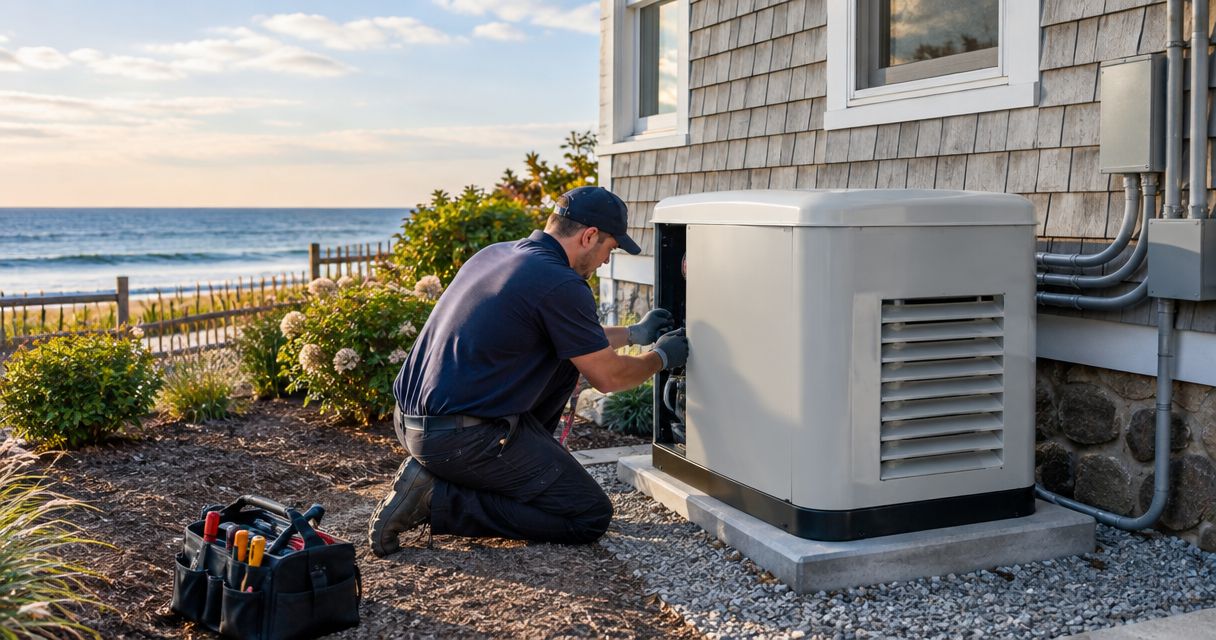
Whole-house generator installation for NJ shore homes has to solve for flood elevation, salt-air corrosion, and evacuation-order outages that inland installs in Union or Somerset County never face. A generator sized and sited correctly for a Rumson or Sea Bright property survives nor'easters and named storms; one sited like a standard suburban install often fails inspection or corrodes out within a few storm seasons.
- Generator installation for shore homes NJ requires siting above Base Flood Elevation, not just above grade.
- A 16 kW to 22 kW standby unit covers most 2,500-4,000 sq ft shore homes with well pumps and sump pumps running.
- Propane beats natural gas on barrier islands and in flood zones where gas main access is unreliable after storms.
- Spartan Home Pros pulls permits and coordinates utility disconnects before installing a transfer switch on shore properties.
- Skipping the flood-elevation check is the single most common reason shore-home generator installs fail inspection.
Why generator installation matters for NJ shore homes
Shore towns in Monmouth County lose power differently than inland towns. Barrier island and bayfront properties in Rumson, Sea Bright, and Monmouth Beach sit on utility circuits that get de-energized preemptively before a storm makes landfall, and restoration crews prioritize main roads before spur lines on peninsulas. A whole-house generator on these properties isn't a convenience item — it's what keeps sump pumps running during the exact hours flooding risk peaks.
Salt air is the other variable inland installers don't plan for. Aluminum enclosures and unprotected wiring connections corrode faster within a few hundred yards of the bay or ocean, which is why generator brand and enclosure grade matter more here than almost anywhere else in Central New Jersey.
Verdict: a correctly sized, correctly sited standby generator is the single most effective storm-prep investment for a NJ shore home, and the flood-elevation check is the step most installers skip.
Check your flood zone before you site anything
Every shore property has a FEMA flood zone designation and a Base Flood Elevation (BFE) number tied to it. A generator sited below BFE on a property in an AE or VE zone can fail inspection outright, and insurers may flag it during a claim review after a storm.
- Pull your property's flood zone letter from the FEMA flood map before ordering anything
- Confirm your BFE number, not just your street's general flood history
- Check whether your town requires a variance for equipment below BFE
- Ask if your lot has a dune or bulkhead setback that limits pad placement
Size the generator for shore-home loads
Shore homes often run heavier electrical loads than the square footage suggests — sump pumps, well pumps, sea water intake for outdoor showers, and dehumidifiers that run nonstop against salt-air humidity all draw simultaneously during a storm. Most whole-house standby units for homes in the 2,500 to 4,000 square foot range fall in the 16 kW to 22 kW output class, but a shore property with a sump pump and a well pump running together needs the load calculated, not guessed.
- List every circuit that must run during a multi-day outage, not just lights and outlets
- Add sump pump and well pump wattage separately — they don't run on the same duty cycle as HVAC
- Check your existing panel amperage; a 200-amp panel gives more headroom for a larger unit
- Get a load calculation before picking a kW size, not after
Spartan Home Pros runs the load calculation as part of every generator installation for shore homes, factoring in well pumps and sump pumps that inland load calculators often skip.
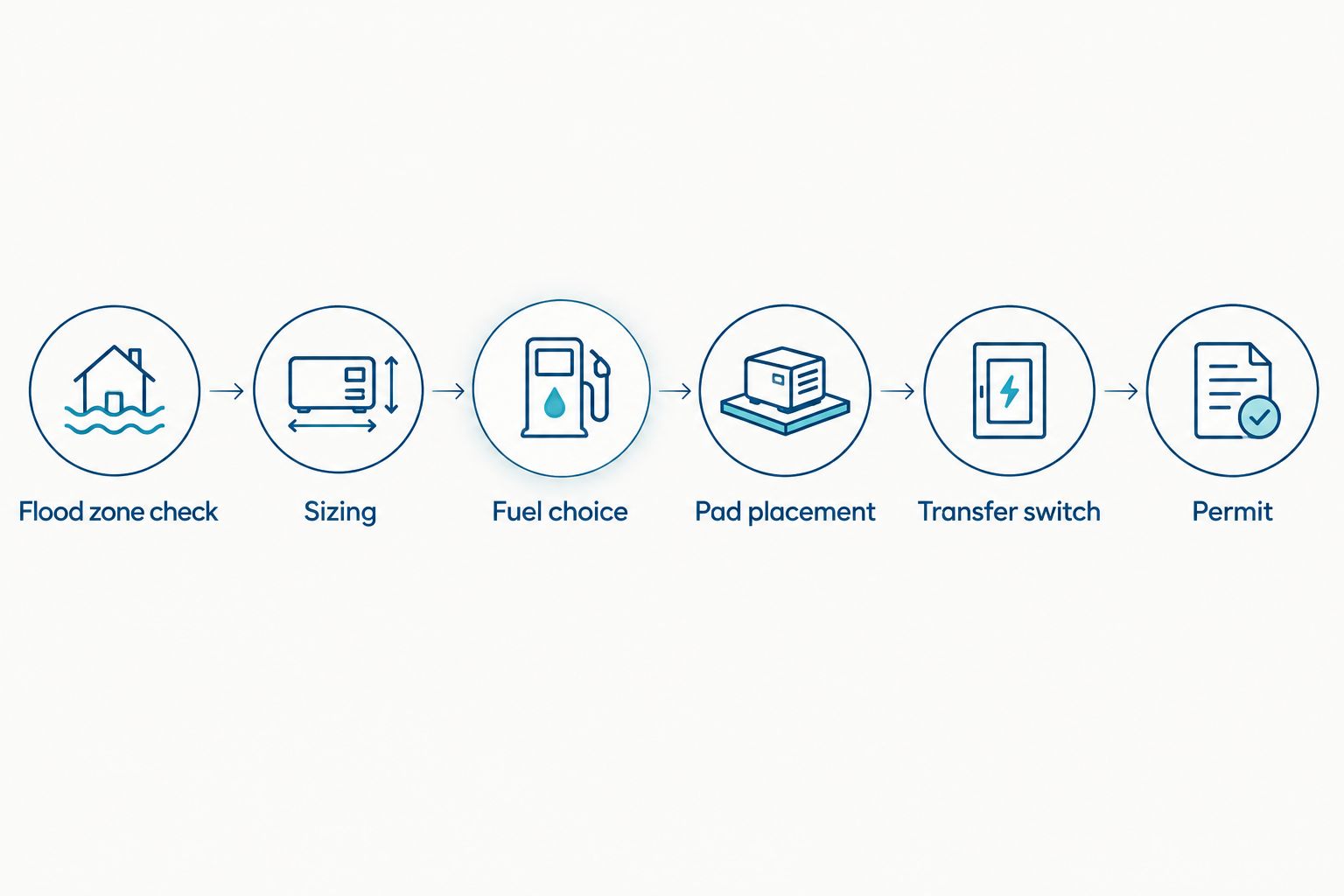
Choose a fuel source that survives storm season
Natural gas mains can lose pressure or shut off during major storms, especially on barrier islands where infrastructure is older. Choosing between natural gas and propane matters more for a shore property than an inland one because propane runs from an on-site tank that isn't dependent on utility gas pressure at all.
- Propane tank on-site means fuel supply doesn't depend on utility gas service during a storm
- Natural gas has no refill logistics but is only as reliable as the local main
- Confirm tank setback distance from structures and property lines with your town
- Ask whether your lot has room for an above-ground propane tank without violating dune or bulkhead rules
Place the pad above flood elevation
Pad placement on a shore lot is a puzzle: above BFE, outside the required clearance from windows and doors, outside dune or bulkhead setbacks, and still close enough to the panel to keep wiring runs short.
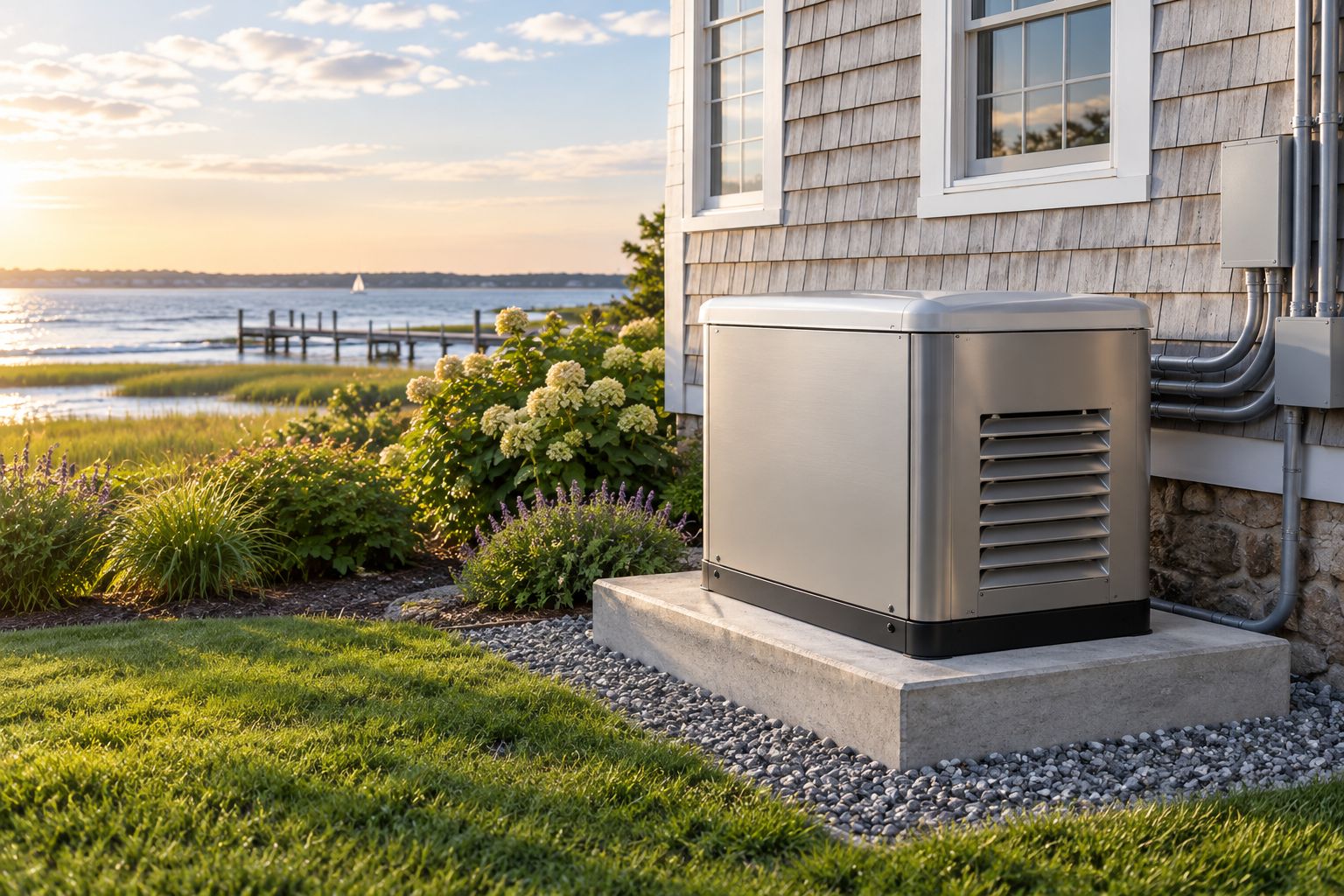
- Confirm the pad elevation clears your property's BFE with margin, not just to the inch
- Keep manufacturer-required clearance from windows, doors, and combustible walls
- Check dune, bulkhead, or wetlands setback rules with your municipal zoning office
- Choose a stainless or marine-grade enclosure over standard aluminum near the bay or ocean
Install a transfer switch and prioritize circuits
A generator transfer switch is what actually isolates your home from utility power during an outage — without it, backfeeding into the grid is both illegal and dangerous to line crews. On a shore home, the transfer switch panel schedule should prioritize sump pumps and well pumps ahead of comfort circuits.
- Rank circuits by what fails a home fastest without power: sump pump, well pump, then HVAC and refrigeration
- Confirm the transfer switch amperage matches your generator's output, not just your panel size
- Ask whether an automatic transfer switch makes sense if the property is a second home or rental
- Get the transfer switch installation inspected and permitted before the generator goes live
Get permits pulled before storm season demand hits
Shore-town building departments see a spike in generator permit applications every spring, and inspection scheduling backs up fast once storm season starts. Pulling permits in the off-season avoids the wait.
- Confirm your township's permit requirements for standby generator installation
- Ask whether your flood zone requires an additional variance application
- Schedule the electrical inspection separately from the gas or propane inspection if required
- Build in lead time — permit review in shore towns often runs longer during peak season
Schedule salt-air maintenance twice a year
A generator installed correctly still needs more frequent maintenance near salt air than one installed 20 miles inland. Corrosion on connections and enclosure seams shows up faster here than anywhere else in Central New Jersey.
- Inspect enclosure seals and hinges for salt residue every six months, not annually
- Check battery terminals and wiring connections for corrosion buildup
- Run the self-test cycle and confirm transfer switch operation each season
- Rinse the exterior enclosure after major storm events with wind-driven salt spray
Generator options for NJ shore homes
| Option | Best for | Key limitation |
|---|---|---|
| Propane standby generator | Barrier island and flood-zone properties without reliable gas main access | Needs on-site tank and setback clearance from structures |
| Natural gas standby generator | Inland shore-adjacent homes with stable utility gas service | Depends on main pressure staying up during the storm |
| Portable generator | Second homes or budget-limited backup for essential circuits only | Manual setup during a storm, limited circuit coverage |
| Home battery backup system | Homeowners wanting quiet, fuel-free backup for shorter outages | Runtime is limited without solar or generator charging support |
Common mistakes shore homeowners make
- Skipping the flood-elevation check. Homeowners size and order a generator before confirming BFE, then find out at inspection the pad has to move.
- Ignoring salt-air corrosion in the enclosure choice. A standard aluminum enclosure rated for inland use degrades faster within a few hundred yards of the water.
- Undersizing for combined well and sump pump loads. Shore homes with private wells and flood-prone yards draw more simultaneous load than a generic sizing chart accounts for.
- Waiting until hurricane season to apply for permits. Shore-town inspection schedules back up every spring, and a late application means going into storm season without backup power.
- Forgetting dune or bulkhead setback rules. A pad that clears flood elevation can still violate a coastal setback the homeowner didn't know applied to equipment.
Get your shore home generator sized right
Spartan Home Pros handles the flood-zone check, load calculation, and permitting.
FAQ
How much does whole-house generator installation cost for a NJ shore home in 2026?
Cost depends on kW size, fuel type, pad and transfer switch requirements, and any flood-zone compliance work. Get a load calculation and a site visit before comparing quotes, since shore-lot conditions change the scope more than square footage does.
Do shore homes need a bigger generator than inland homes?
Often yes, because sump pumps and well pumps add load that inland homes on municipal water and sewer don't carry. A 16 kW to 22 kW unit covers most 2,500 to 4,000 sq ft shore homes once those loads are calculated correctly.
Is propane or natural gas better for a shore home generator?
Propane is generally the safer choice on barrier islands and in flood zones because it runs from an on-site tank rather than depending on utility gas main pressure, which can drop during major storms.
Can I install a generator below flood elevation on a shore lot?
No — properties in FEMA-designated flood zones typically require equipment to sit at or above Base Flood Elevation, and a pad below BFE can fail inspection or complicate an insurance claim after a storm.
How often should a shore home generator be serviced?
Twice a year is standard for coastal properties, versus once a year inland, because salt air corrodes enclosure seals and wiring connections faster near the bay or ocean.
Do I need a permit for a whole-house generator in a NJ shore town?
Yes, and shore towns often require both an electrical permit and a zoning or variance review if the property sits in a flood zone. Apply in the off-season to avoid spring inspection backlogs.
What's the difference between a transfer switch and a generator?
The generator produces backup power; the transfer switch isolates your home's wiring from the utility grid so that power doesn't backfeed into the lines during an outage. Both need to be sized and installed together.
Can a battery backup system replace a whole-house generator on the shore?
For short outages, yes, but battery runtime is limited without solar charging support, and shore-home outages during major storms often run longer than a battery-only system is built to cover.
One last thing
Most shore homeowners assume the hardest part of generator installation for shore homes NJ is picking the kW size. It isn't — it's the flood-elevation and setback math that has to happen before the pad goes in, and in 2026 that step still gets skipped more often than any other on Monmouth County shore properties. Confirm your BFE number before you order a unit, not after.


