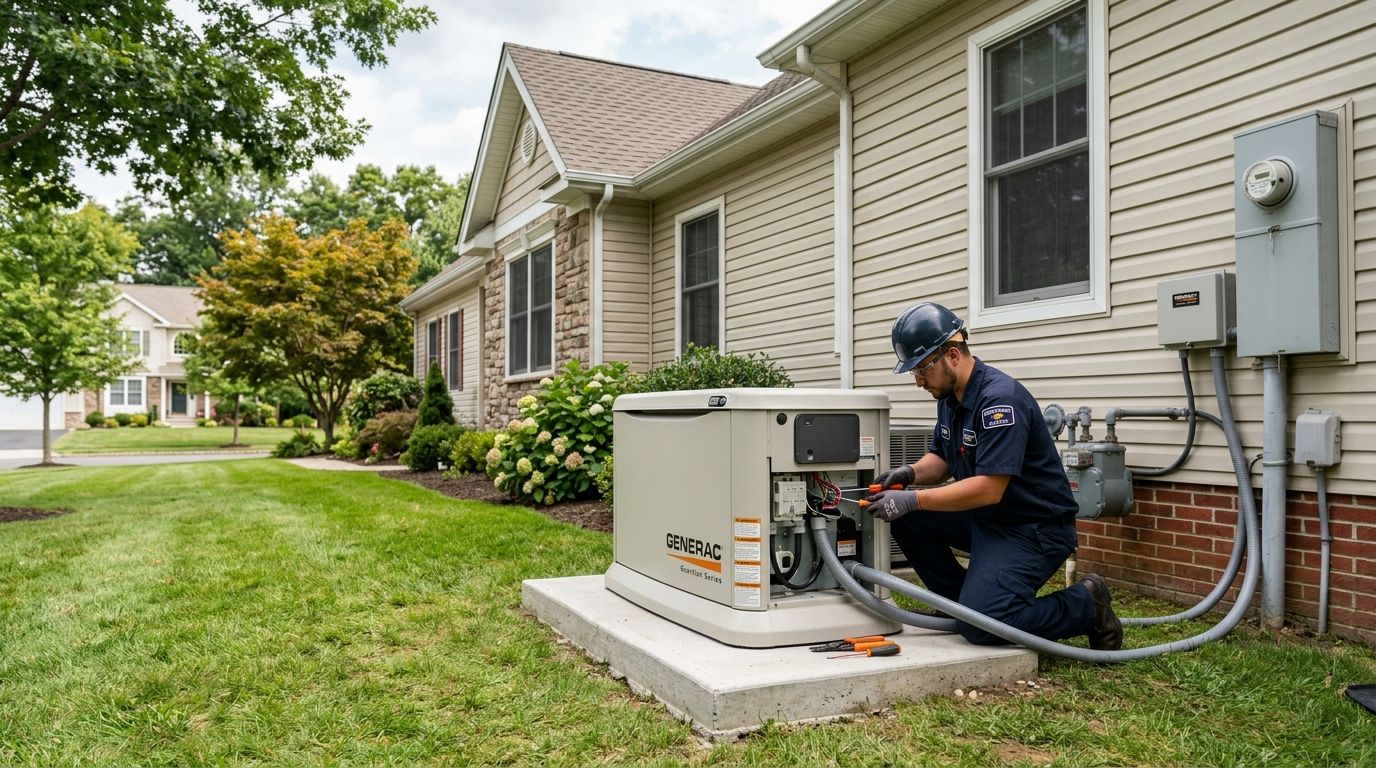
Whole house generator installation for Piscataway NJ homeowners means sizing, permitting, and wiring a standby unit that keeps the whole panel powered when PSE&G service drops — not just the fridge and a few lamps. Piscataway's mix of 1960s split-levels, Raritan River-adjacent streets, and newer Rutgers-area construction means the right setup varies more here than in a subdivision with identical houses.
- Whole house generator installation in Piscataway NJ starts with panel capacity, not generator size — a 100-amp panel needs an upgrade first.
- Standby units on natural gas or propane cover central AC, well pumps, and sump pumps that portable generators can't handle reliably.
- NJ Uniform Construction Code requires electrical and mechanical permits plus inspection before a standby generator goes live in 2026.
- Automatic transfer switches need roughly 5 feet of clearance from doors, windows, and fresh-air intakes under NFPA 37 guidance.
- Spartan Home Pros does not subcontract generator installs — the technician who quotes the job wires it.
Why whole house generator installation matters for Piscataway homeowners
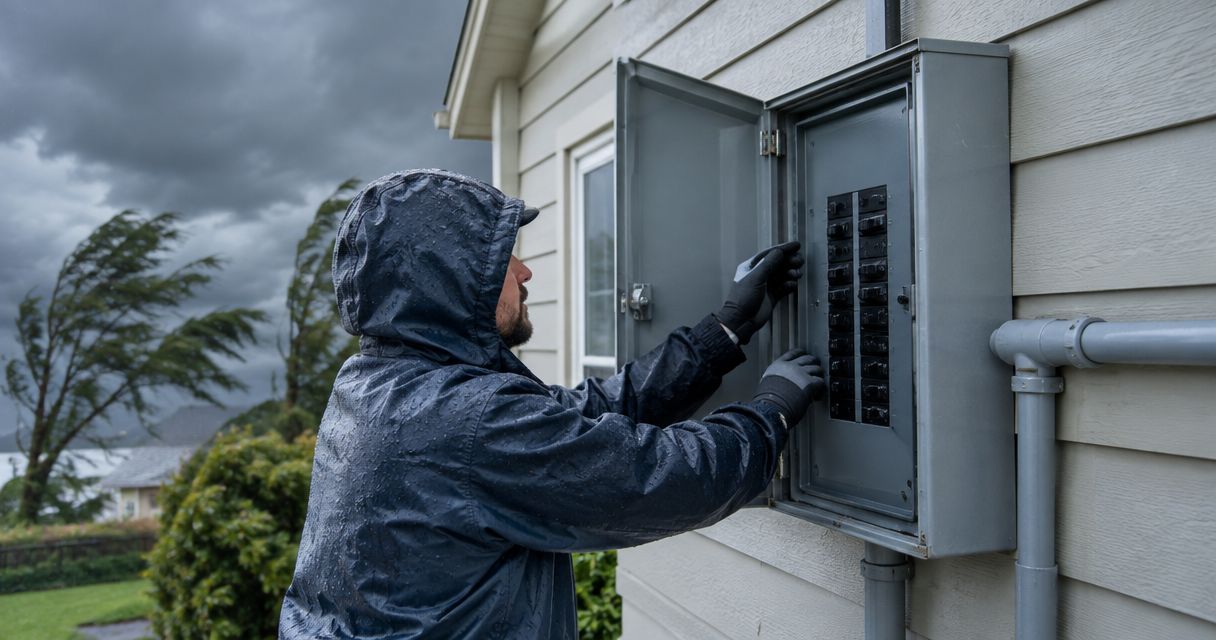
Piscataway sits along the Raritan River corridor, and Middlesex County saw multi-day outages after Hurricane Ida in September 2021 — the kind of event that turns a sump pump failure into a flooded basement within hours. A portable generator run off an extension cord doesn't power a sump pump automatically at 3 a.m. A whole-house unit with an automatic transfer switch does.
The borough's housing stock complicates this. Split-level and colonial homes built before the 1980s frequently carry 100-amp electrical panels, which is undersized for a modern central AC, electric range, and standby generator running at once. Any whole house generator installation piscataway nj project planned for 2026 needs to start with a panel capacity check, not a generator brochure.
Confirm your fuel source before anything else
Most Piscataway homes on natural gas lines have the simplest path — no fuel storage, no delivery scheduling. Homes without gas service need propane, which changes the footprint and refill logistics.
- Call your gas utility to confirm the meter can support an added generator load, measured in BTU/hr
- If you're on propane, size the tank to your run-time needs, not just the generator's wattage rating
- Diesel is common for large commercial standby units but rarely makes sense for a single-family home
- Confirm your street actually has a gas main — some pockets near the Raritan still run oil heat
- Have gas line sizing verified by a licensed trade before ordering equipment
Size the generator to your real priority loads
Sizing is where most homeowners overspend or underbuy. A generator sized only for lights and the refrigerator leaves the central AC and well pump dead during the exact heat-wave outage when you need them most.
- List every circuit you want powered: HVAC, sump pump, well pump, refrigerator, garage door
- Add up running watts and starting watts separately — compressors and pumps spike on startup
- Decide between whole-home coverage and an essentials-only load management setup
- Check the manufacturer's sizing chart against your square footage and HVAC tonnage
- Read the size a whole-house generator breakdown before requesting quotes so you compare like for like
Once loads are mapped, a standby unit sized correctly for a 2,000 to 3,000 square foot Piscataway home typically covers HVAC, kitchen circuits, and both pumps without shedding load. Undersizing to save money on the unit usually costs more later in panel rework.
Check whether your panel can handle the load
This is the step homeowners skip and regret. A 100-amp panel with no open breaker slots can't accept a transfer switch without an upgrade first.
- Count open slots in your existing panel — transfer switches need dedicated space
- Confirm your main panel rating: 100-amp, 150-amp, or 200-amp
- Ask whether your panel brand has known reliability issues; Zinsco and Federal Pacific panels usually need full replacement
- Get a load calculation done before assuming the panel "should be fine"
- Budget any upgrade as part of the generator project, not a separate surprise invoice
If the panel is undersized, the generator install starts with a panel upgrade, not a generator. That's the order every licensed electrician in Central NJ follows, and skipping it is a common reason standby installs fail inspection.
Choose an automatic or manual transfer switch
The transfer switch decides whether your generator kicks in while you're at work or whether someone has to be home to flip it manually.
- Automatic transfer switches sense the outage and start the generator with nobody home — best for homeowners who travel or commute out of Piscataway
- Manual transfer switches cost less upfront but require someone on-site to start the unit
- Interlock kits work for portable generators but don't support full-home automatic switching
- Match the switch amperage to your panel exactly — a 100-amp switch on a 200-amp service fails inspection
- Ask where the switch mounts; it needs to sit near the main panel with code-required clearance
Confirm permits and setback requirements
New Jersey's Uniform Construction Code requires both an electrical permit and a mechanical permit for a standby generator, plus a final inspection before the unit can legally operate. This isn't only a compliance issue — claims after a fire or CO incident can be denied when the install was never permitted.
- Pull electrical and mechanical permits through Piscataway's construction office before work begins
- Maintain roughly 5 feet of clearance from doors, windows, and fresh-air intakes per NFPA 37 guidance
- Keep the pad above grade and clear of flood-prone low points, which matters on Raritan-adjacent lots
- Schedule the final inspection — an uninspected generator is not code-compliant even if it runs fine
- Ask whether the contractor pulls permits themselves; one who skips permits is cutting a corner you pay for later
Schedule installation and startup testing
Installation day covers the pad, the transfer switch wiring, the gas or propane hookup, and a startup test. A proper install ends with a simulated outage test, not a "it turned on" check.
- Confirm the crew tests the automatic transfer switch by cutting utility power
- Get a walkthrough of the weekly self-test most standby units run automatically
- Complete warranty registration on-site, not weeks later
- Confirm the technician who quoted the job is doing the install — Spartan Home Pros does not subcontract, so the person on-site already has your load calculation
- Review maintain a whole-house generator basics before the crew leaves so you know what oil changes and self-tests to expect
Get a generator sizing quote
Licensed electrical and HVAC work across Central NJ. No subcontracted crews.
Comparison: backup power options for Piscataway homes
| Option | Best for | Key limitation |
|---|---|---|
| Whole-home standby generator on natural gas | Homeowners needing HVAC, pumps, and full-panel coverage during multi-day outages | Requires permits, a compliant panel, and a dedicated pad location |
| Standby generator on propane | Homes with no gas main on the street | Tank footprint plus refill scheduling during long outages |
| Portable generator with interlock kit | Budget-conscious homeowners covering a handful of circuits | No automatic start; someone must be home to run it |
| Battery backup system | Short outages and homes without gas service | Limited run-time versus fuel-fed standby units in multi-day events |
Verdict: a natural-gas or propane standby generator sized to your actual panel is the only option that covers a multi-day Piscataway outage without someone physically managing it.
“If the panel is only 100 amps, the generator install starts with a panel upgrade, not a generator.”
Common mistakes Piscataway homeowners make
- Sizing for comfort circuits only — leaving the sump pump out of the load calculation, which matters most during the exact storms that cause outages
- Assuming the existing panel has room — 100-amp panels common in Piscataway's pre-1980s housing stock rarely have capacity for a transfer switch
- Skipping the permit — an uninspected generator complicates an insurance claim after a fire or carbon monoxide incident
- Placing the unit too close to windows — violating the roughly 5-foot clearance manufacturers require under NFPA 37 guidance
- Choosing a manual switch while traveling often — the house sits dark for days because nobody's home to start it
FAQ
What size whole-house generator do I need for a Piscataway NJ home?
Sizing depends on square footage, HVAC tonnage, and whether you want whole-home or essentials-only coverage. A load calculation against your actual panel and appliances is the only reliable method — generic charts miss well pumps and multi-zone HVAC.
Does my electrical panel need an upgrade before generator installation?
If your panel is rated 100 amps or has no open breaker slots, yes. Many Piscataway homes built before the 1980s carry 100-amp panels that cannot accept a transfer switch without an upgrade first.
Is a permit required for a whole-house generator in Piscataway NJ?
Yes. New Jersey's Uniform Construction Code requires an electrical permit and a mechanical permit, plus a final inspection, before the unit can legally operate in 2026.
How close can a standby generator be to my house?
Most manufacturers require roughly 5 feet of clearance from doors, windows, and fresh-air intakes, following NFPA 37 guidance. Exact setback also depends on local zoning and property line distance.
What fuel source is best for a home generator in Piscataway?
Natural gas is simplest if your street has a gas main — no tank, no refill scheduling. Propane is the fallback for homes without gas service.
How fast does a whole-house generator start during an outage?
An automatic transfer switch senses the outage and starts the generator with nobody home, typically within seconds depending on the unit and switch configuration. Manual switches only start when someone flips them.
Can I install a generator myself to save money?
No. Gas line hookup, panel tie-in, and transfer switch wiring all require licensed trades and inspected permits in New Jersey. A DIY install that fails inspection gets redone by a licensed contractor anyway.
What happens if my generator install skips the permit?
The unit is not code-compliant even if it runs fine. Insurance claims tied to fire or carbon monoxide incidents can be denied when the installation was never inspected.
One last thing
Piscataway's flood-prone lots near the Raritan River make pad placement a bigger deal than most homeowners assume in 2026 — a pad set at grade in a low spot can sit in standing water during exactly the storm that knocks out power. Confirm the pad sits above the surrounding grade before the concrete goes down, not after.