
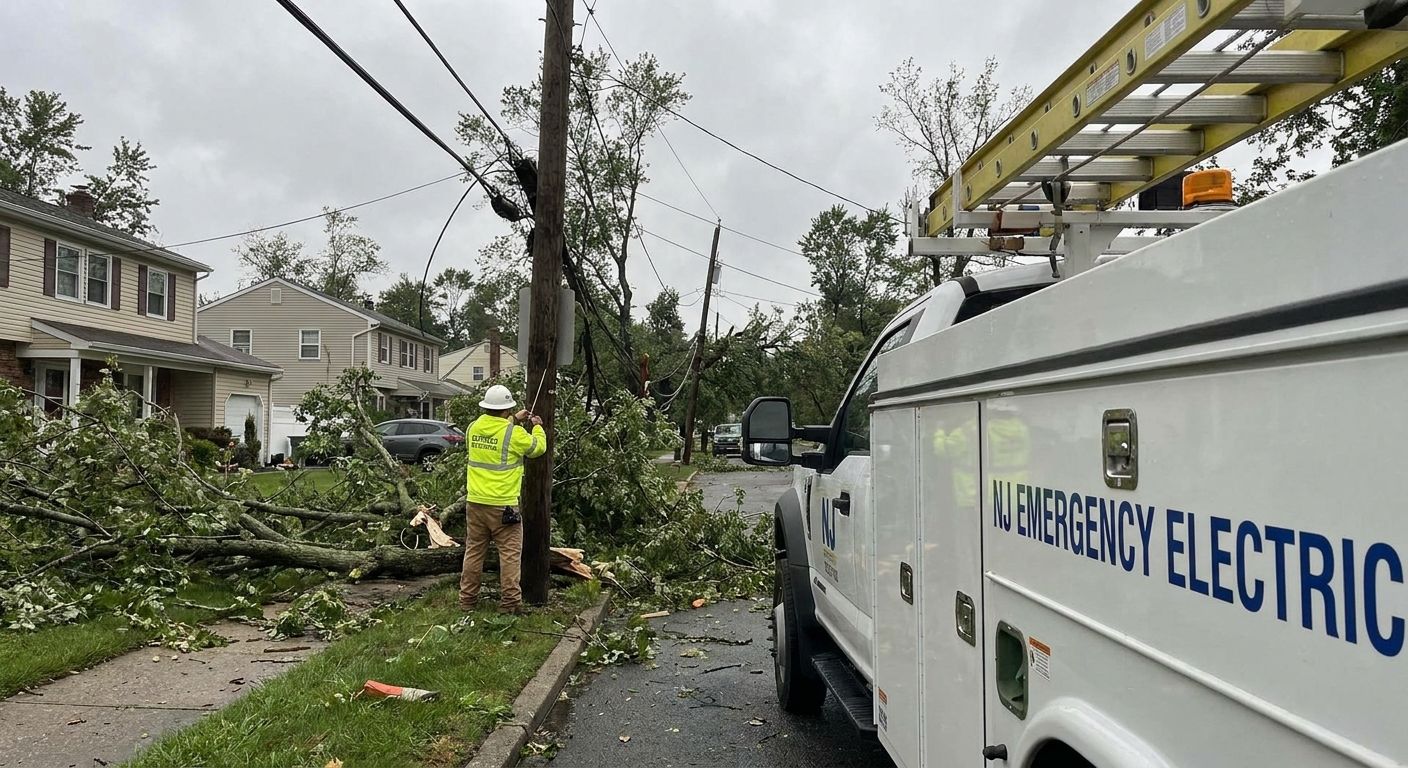
Storm damage electrician NJ homeowners call after a nor'easter, hurricane remnant, or a fallen tree limb is a licensed pro who can safely de-energize a damaged panel, rebuild a torn service mast, and get the house re-energized without waiting days for a general contractor to figure out what's wrong.
- Storm damage electrician NJ homeowners need most is a licensed pro who kills power safely and rebuilds the service mast fast.
- Spartan Home Pros does not subcontract storm calls -- payroll electricians handle panel, meter pan, and mast repairs in Central NJ.
- PSE&G and JCP&L fix downed lines on the street; they do not touch your interior wiring, panel, or meter pan.
- A correctly sized whole-house generator cuts the next outage from days to seconds once the storm damage is repaired.
- Photograph scorched outlets and torn masts before repairs start -- insurers want dated proof, not your word.
Why storm damage response matters for Central NJ homeowners
High wind and flooding in Monmouth, Middlesex, Somerset, and Union counties don't just knock trees onto roofs -- they tear service masts off houses, crack meter pans, and push water into panel enclosures that then arc quietly for weeks before anyone notices. A burning smell, a sparking outlet, or a scorched breaker after a storm is not a wait-and-see problem in 2026; it's a call-now problem.
The utility company only owns the line up to your meter. Everything past that -- the mast, the meter pan, the panel, the wiring inside your walls -- is yours to fix, and PSE&G or JCP&L will not reconnect service until that repair is inspected and permitted. That single fact is why so many NJ homeowners sit in the dark for days after a storm even after the street crews finish their work.
Cut power at the main breaker the instant you see damage
Don't wait for a flicker to become a fire. If you see water in the panel, a scorched outlet, or a breaker that trips and won't reset cleanly, kill the main breaker before you do anything else.
- Unplug sensitive electronics and appliances near the affected circuit
- Flip the main breaker off if the panel is wet, scorched, or smells like burning plastic
- Stay away from outlets and switches in any room with standing water
- Note which breaker tripped and when, for the electrician's diagnosis
- Never reset a tripped breaker more than once -- a repeat trip means a fault, not a fluke
Stay clear of downed lines and call the utility first
A line on the ground looks dead and isn't. Treat every downed wire as live regardless of whether it's sparking, and keep kids and pets away from puddles or fences it's touching.
- Call 911 or your utility (PSE&G or JCP&L) to report the downed line before touching anything near it
- Don't move debris that's tangled with a wire, even with a wooden tool
- Keep vehicles away from poles that are leaning after the storm
- Wait for utility confirmation that the line is de-energized before approaching
- Photograph the location for your own records once it's safe
Photograph every failure point before touching anything
Insurance adjusters move faster with dated photos than with a phone call describing what used to be there. Document the damage the same day it happens, before any repair crew starts working.
- Scorched or melted outlets and switch plates
- A torn or bent service mast where it meets the roofline
- A cracked, dented, or water-filled meter pan
- Visible corrosion or rust inside an open panel door
- Sagging or snapped service drop wires between the pole and the house
Call a licensed electrician for a same-day safety inspection
This is where a general contractor or a storm-chasing crew from out of state stops being useful. Spartan Home Pros does not subcontract storm calls -- every technician on the truck is a payroll employee, licensed to work in New Jersey, not a subcontractor pulled off a job board after a hurricane.
- Ask for the NJ electrical license number before scheduling, and verify it if you're not sure
- Confirm the company pulls its own permits for panel and mast repair, not "as needed"
- Ask whether the quote is flat-rate or billed on an hourly meter -- no hourly meter, no surprises
- Confirm the electrician covers your town directly inside Monmouth, Middlesex, Somerset, or Union county
- Get the inspection scheduled the same day damage is visible, not "whenever someone's free"
Prioritize the service mast, meter pan, and panel repair
The utility will not reconnect your house until the mast is reattached and the meter pan passes inspection, so this repair sits ahead of drywall, siding, or anything cosmetic. If water reached the breakers inside the panel, corrosion sets in fast and a full panel upgrade becomes the safer fix than patching individual breakers.
- Reattach or replace the service mast before requesting utility reconnection
- Replace a cracked or torn meter pan rather than resealing it
- Test every GFCI and AFCI breaker once power is restored
- Check the panel bus bar for corrosion if any water reached the enclosure
- Confirm the permit is closed out with the town before considering the job finished
Test surge protection and reset your smart devices
A storm surge can fry a thermostat or a video doorbell without tripping a single breaker, so check the small stuff after the panel and mast are cleared.
- Test GFCI outlets in the kitchen, bathrooms, garage, and any exterior outlet
- Reset smart thermostats, video doorbells, and Wi-Fi routers
- Check the indicator light on a whole-house surge protector, if one is installed
- Inspect exterior outlet covers for water intrusion behind the faceplate
- Log any flickering that continues after the repair -- it usually means a loose connection, not a new problem
Plan for the next outage with backup power
Once the storm damage is repaired, the next storm is a matter of when, not if. A whole-house generator installation with an automatic transfer switch means the next outage never gets past the flicker stage.
- Size a portable generator for essentials only -- a fridge, a few lights, a sump pump
- Size a whole-house standby unit if you need AC, a well pump, and medical equipment running together
- Have a licensed electrician install the automatic transfer switch -- a generator without one is a code violation waiting to happen
- Keep at least 5 feet of clearance from windows, doors, and fresh-air intakes when placing the unit
- Schedule an annual test run before hurricane season, not after the first outage
Get storm damage checked today
Licensed electricians serving Monmouth, Middlesex, Somerset, and Union counties.
Comparing your storm damage repair options
| Option | Best for | Key limitation |
|---|---|---|
| DIY temporary fix | Resetting a single tripped breaker, moving debris away from a vent | Not safe for downed lines, scorched panels, or a torn mast -- Skip for anything past a tripped breaker |
| Utility company (PSE&G / JCP&L) | Downed lines on the street, restoring power to the grid | Doesn't touch interior wiring, the panel, or the meter pan -- Call first, then wait for a licensed electrician |
| Licensed electrician (Spartan Home Pros) | Service mast, meter pan, panel damage, whole-house safety inspection | Requires an on-site visit and permit before reconnection -- Buy, call the same day damage is visible |
| General contractor or handyman | Cosmetic repairs -- drywall, siding, gutters | Not licensed for electrical work in New Jersey -- Skip for anything involving the panel or wiring |
The verdict most Central NJ homeowners land on after a storm: call the utility for the downed line, then call a licensed electrician for everything past the meter -- not a contractor, not a handyman.
Common mistakes storm-hit homeowners make
- Resetting a tripped breaker three or four times instead of calling for an inspection after the first repeat trip
- Waiting on the utility to fix wiring the utility doesn't own past the meter
- Letting a general contractor close up drywall over a panel or mast that was never actually inspected
- Skipping photos before repairs start, then fighting the insurance claim for weeks afterward
- Hiring whichever storm-chasing crew knocks first without checking for an NJ electrical license number
FAQ
What's the best storm damage electrician in NJ to call after a power outage?
A licensed electrician who doesn't subcontract and pulls its own permits is the safest call after storm damage -- Spartan Home Pros uses payroll technicians for panel, mast, and meter pan repair across Monmouth, Middlesex, Somerset, and Union counties. Avoid crews that showed up unannounced right after the storm without a verifiable NJ license number.
Is it safe to reset a breaker after a storm?
Resetting a breaker once is fine, but if it trips again, stop and call an electrician instead of resetting it repeatedly. A repeat trip after a storm usually means water reached the panel or a wire is damaged, not a simple overload.
Should I call PSE&G or an electrician first after a downed line?
Call the utility first for any downed line, since only PSE&G or JCP&L can de-energize and remove it safely. Once the street is clear, call a licensed electrician for anything past your meter -- the mast, the meter pan, the panel, and interior wiring.
How long does storm damage electrical repair take?
A same-day safety inspection is standard once damage is visible, but the full repair timeline depends on whether the mast, meter pan, or full panel needs replacement and how fast the town closes out the permit. Reconnection from the utility only happens after that permit is signed off.
Does homeowners insurance cover storm damage to an electrical panel?
Most homeowners policies cover storm damage to a panel, mast, or wiring caused by wind, falling trees, or flooding, but coverage details vary by policy. Photograph the damage before repairs start so the claim has dated proof to work from.
What's the difference between a portable and whole-house generator for storm outages?
A portable generator runs a few essentials like a fridge, some lights, and a sump pump, while a whole-house standby unit with an automatic transfer switch can run AC, a well pump, and medical equipment at the same time. The whole-house option installs permanently and starts automatically; the portable option needs to be wheeled out and started by hand.
How do I know if my electrical panel needs replacement after a storm?
If water reached the breakers, the bus bar shows corrosion, or breakers keep tripping after a single reset, the panel likely needs replacement rather than a patch repair. A licensed electrician can confirm this during the same-day inspection.
Is a torn service mast a fire hazard?
A torn or loose service mast can arc against the roofline or siding and is a fire hazard, which is also why the utility won't reconnect power until it's repaired and inspected. Treat a leaning or detached mast as an immediate call, not a next-week repair.
One last thing
The slowest part of getting reconnected after a Central NJ storm usually isn't the tree removal or the debris cleanup -- it's the permit and inspection on the service mast and meter pan, since PSE&G and JCP&L won't re-energize a house until that paperwork closes. Get the mast and meter pan repair scheduled the same day you spot the damage, and the reconnection timeline shrinks with it.


