
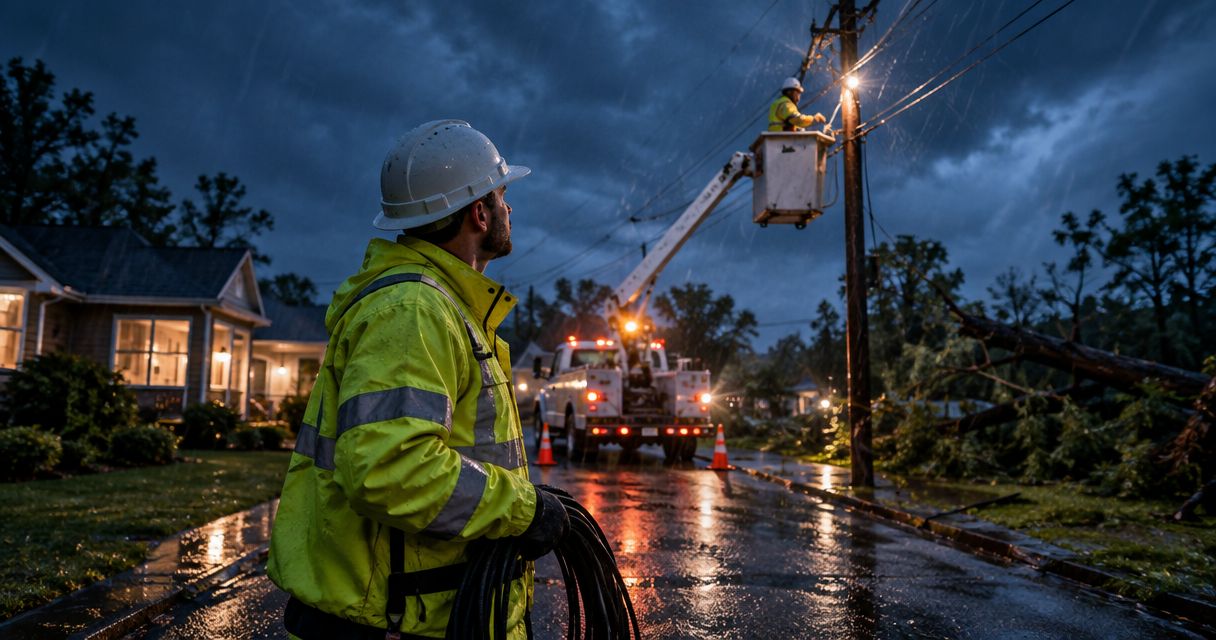
Central NJ homeowners searching for the best emergency electricians for storms in NJ usually have one immediate problem: the power is out, a panel is sparking, or a downed line is sitting in the yard, and they need someone licensed on-site now, not a callback next week. Spartan Home Pros runs 24/7 storm response across Monmouth, Middlesex, Somerset, and Union counties, and pairs that dispatch with generator, battery, and surge-protection work that keeps the same problem from repeating next storm season. Below is how the six real storm-response options stack up, ranked by the specific problem each one solves.
- Spartan Home Pros is the best emergency electrician for storms in NJ for immediate 24/7 dispatch across four counties.
- Whole-house standby generators prevent the outage instead of just reacting to it, starting automatically when the grid drops.
- Home battery backup runs quiet with no fuel, but stores less runtime than a fueled standby unit.
- A generator transfer switch is what makes running a portable generator safe instead of a backfeed risk.
- Surge protection is the cheapest add-on but does nothing to keep the lights on during the outage itself.
Why this matters
Every hurricane season and every nor'easter, the same four counties lose power, and the homeowners who call an electrician mid-storm are usually choosing between two bad options: wait on hold with a call center, or hire whoever answers the phone regardless of license status. A 24/7 electrician for storm damage that actually dispatches licensed crews — not subcontractors — is the difference between a same-visit fix and a second call two days later.
The electrician who shows up during the storm and the equipment that keeps the power on during the next one are two different purchases. This guide ranks both, because picking one without the other leaves half the problem unsolved going into 2026's storm season.
What makes the best emergency electrician for storm response
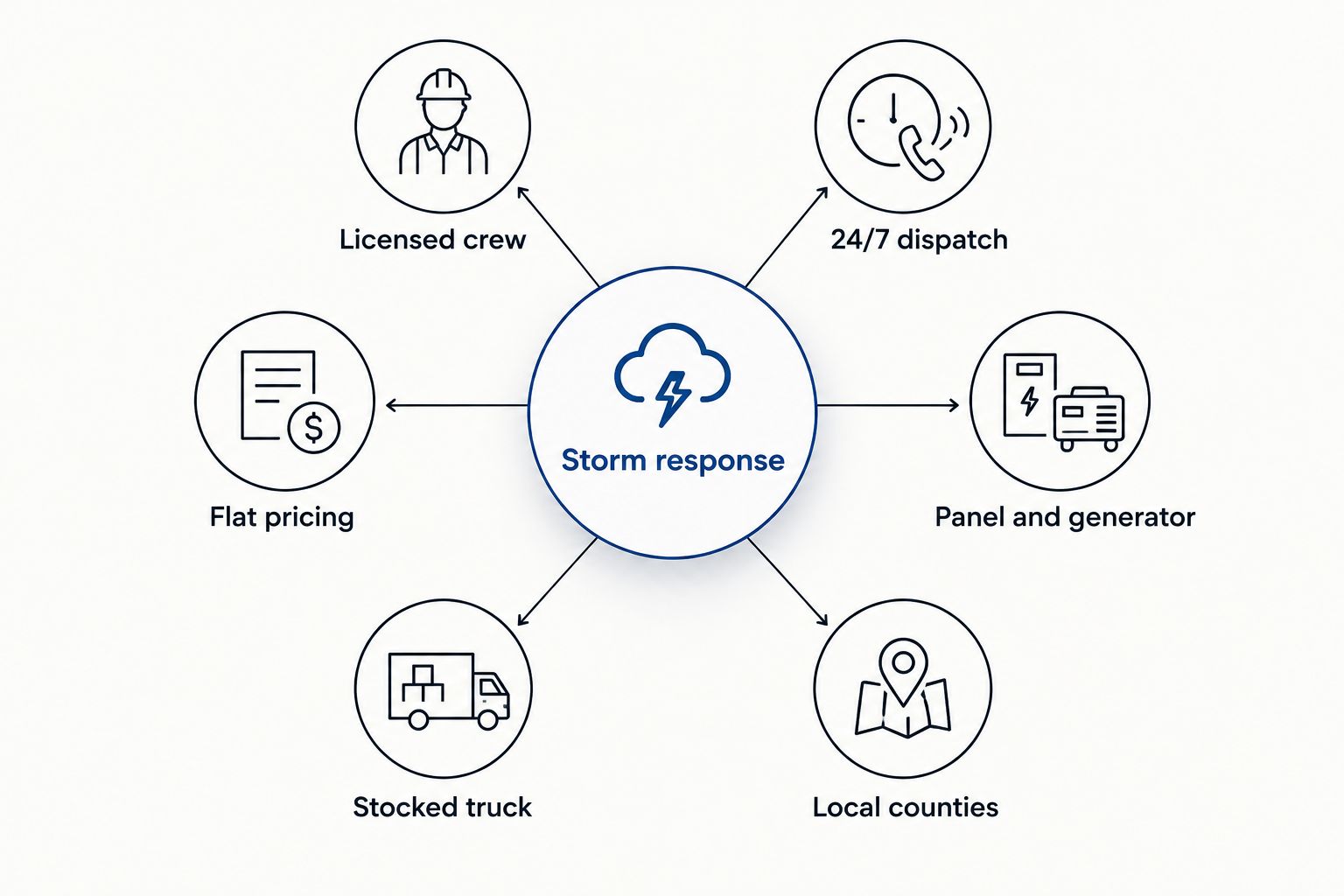
Before ranking anything, here's what actually separates a reliable storm-response call from a risky one:
- Licensed electricians on every truck — not a dispatcher who subcontracts the job out
- Live 24/7 dispatch — a person answers, not a call center voicemail queue
- Flat, upfront pricing quoted before the truck rolls — no hourly meter running while you wait
- Handles the panel and the generator/battery system — not just one half of the storm-power problem
- Stocked trucks carrying common storm-damage parts: breakers, transfer switches, weatherheads
- Based in Central NJ — not dispatched from North Jersey or Philadelphia when every minute counts
At a glance: storm-response options ranked
| Option | Best for | Standout feature | Key limitation |
|---|---|---|---|
| Spartan Home Pros 24/7 storm response | Immediate electrical repair during or after a storm | Licensed electricians dispatch directly, no subcontractors | Doesn't prevent the next outage by itself |
| Whole-house standby generator | Multi-day outages hitting heat, well pumps, or medical equipment | Starts automatically within seconds of a grid failure | Needs a transfer switch and panel check before install |
| Home battery backup | Quiet backup without fuel or exhaust | No moving parts, no fuel storage, no engine noise | Stores less runtime than a fueled standby generator |
| Generator transfer switch | Safely running a portable generator during an outage | Prevents backfeed that can injure utility crews | Only as reliable as the portable generator behind it |
| Emergency generator repair | A generator that already failed mid-storm | Diagnoses starter, switch, and control board faults on-site | Doesn't help if a generator was never installed |
| Whole-house surge protection | Protecting electronics after grid power returns | Cheapest add-on of the group, installs at the panel | Doesn't keep power on during the outage itself |
1. Spartan Home Pros 24/7 storm response: best emergency electrician for immediate dispatch
Spartan Home Pros sends its own licensed electricians, not subcontractors, and covers electrical panel damage, downed-line hazards, and generator hookup issues in the same call.
Spartan Home Pros pros:
- Dispatches licensed electricians directly — no subcontractor referrals
- Covers Monmouth, Middlesex, Somerset, and Union counties, keeping response local
- One visit can address panel damage, sparking outlets, and generator hookup together
- Pricing quoted before the truck leaves, no hourly meter running on-site
Spartan Home Pros cons:
- Fixes what the storm broke — it doesn't prevent the next outage on its own
- A storm hitting all four counties at once still creates queue pressure, even with local trucks
Best for: homeowners who need a licensed electrician on-site during or right after a storm. Verdict: Buy. This is the first call when the power drops or a panel starts sparking.
2. Whole-house standby generator installation: best for multi-day outages
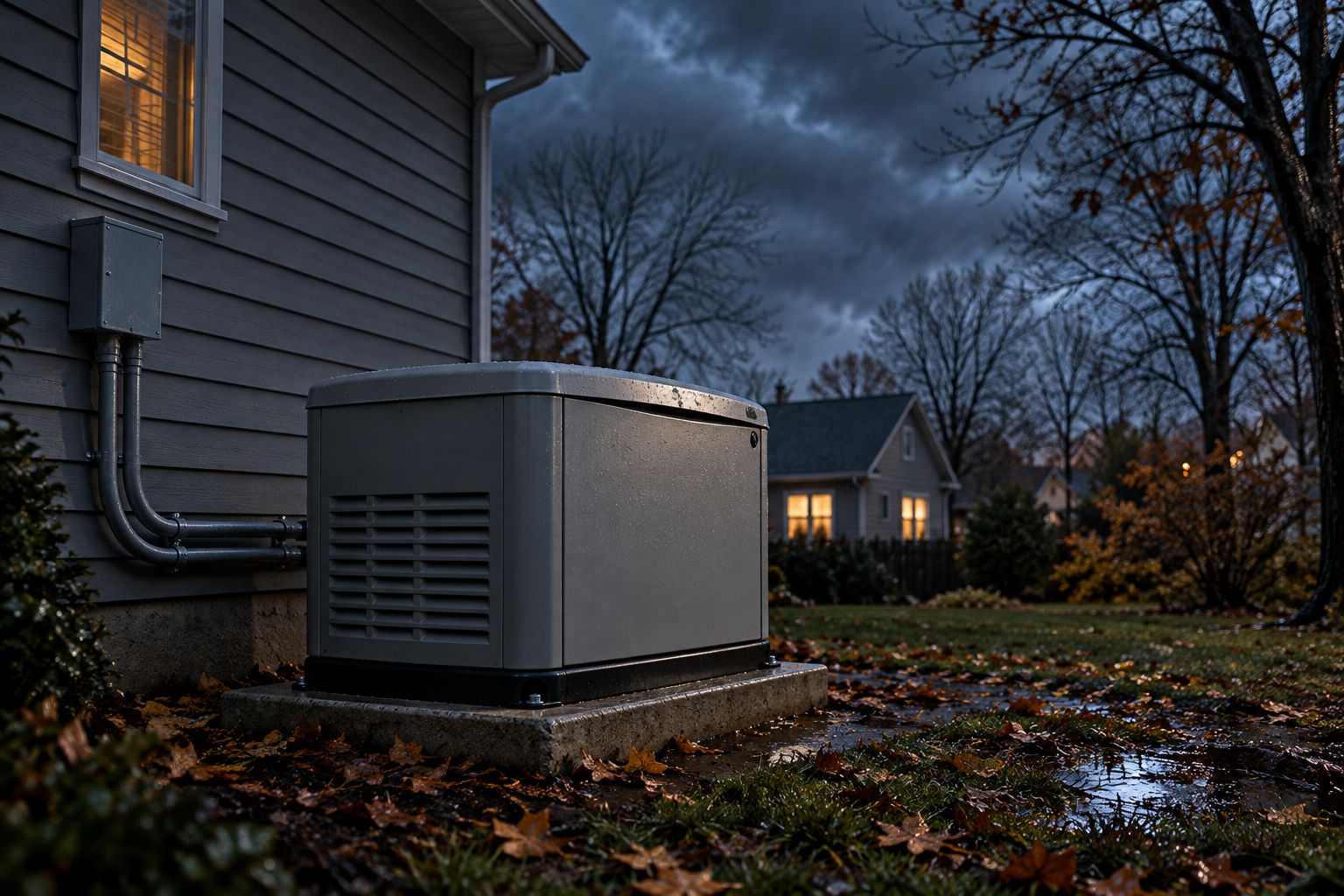
A whole-house standby generator is wired through a transfer switch to the home's panel and starts on its own within seconds of sensing a grid failure, running on natural gas or propane.
Standby generator pros:
- Keeps heat, well pumps, sump pumps, and medical equipment running for days, not hours
- Starts automatically — no one has to go outside during a storm to pull a cord
- Sized to the home's actual electrical load, not a generic one-size unit
Standby generator cons:
- Requires a correctly rated transfer switch and a panel evaluation before install
- Needs a fuel line already in place, or added, for natural gas or propane
See what a whole-house standby generator installation involves before booking one.
Best for: homes that lose power for more than a few hours every storm season. Verdict: Buy. Households with well water, medical equipment, or multiple remote workers should treat this as non-negotiable heading into 2026.
3. Home battery backup: best for quiet, fuel-free backup power
A home battery backup system stores grid or solar power and switches over during an outage with no engine noise, no exhaust, and no fuel tank in the yard.
Battery backup pros:
- No fuel storage or refueling trips during a multi-day outage
- No combustion noise or exhaust venting to manage
- Recharges from solar panels if the home already has them
Battery backup cons:
- Stores less total runtime than a fueled standby generator
- Battery capacity decides which circuits stay powered, not automatically the whole house
Compare specs on the home battery backup page before deciding between fuel and battery.
Best for: homeowners who want backup power without a fuel tank or engine noise during a quiet outage. Verdict: Hold. Worth it when quiet, fuel-free backup matters more than multi-day runtime — pair it with a generator for longer outages.
4. Generator transfer switch installation: best for safe automatic switchover
A transfer switch isolates the home's panel from the grid the moment a generator kicks in, which is what stops a portable generator from backfeeding power into lines utility crews may be working on.
Transfer switch pros:
- Prevents backfeed that can injure utility line workers during storm repairs
- Lets a portable generator run safely without extension cords strung through windows
- Required for nearly every standby generator installation anyway
Transfer switch cons:
- Doesn't add power capacity on its own — it manages what's already there
- A switch sized wrong for the generator undersells the whole backup setup
Details on generator transfer switch installation cover sizing and panel compatibility.
Best for: homeowners running a portable generator without a switch right now. Verdict: Buy. Running a generator without a transfer switch is a safety risk, not a shortcut.
5. Emergency generator repair: best for a generator that failed mid-storm
Emergency generator repair diagnoses an already-installed unit that won't start or cuts out — usually a starter motor, transfer switch, control board, or fuel supply issue.
Generator repair pros:
- Gets an existing investment running again instead of forcing a replacement
- Catches battery and fuel-line maintenance issues before the next outage
- Can be scheduled as a pre-season check-up, not only after a failure
Generator repair cons:
- Doesn't help if no generator was ever installed in the first place
- Older units sometimes need parts that take longer to source during a busy storm week
Emergency generator repair covers the diagnostic process in more detail.
Best for: homeowners whose standby generator didn't start when the power actually went out. Verdict: Buy. A generator that fails during the outage it was bought for needs a repair call, not a guess.
6. Whole-house surge protection: best for protecting electronics after the storm passes
Surge protection installs at the panel and absorbs the voltage spike that often hits the grid the moment power is restored after an outage.
Surge protection pros:
- Protects HVAC systems, appliances, and electronics from restoration-surge damage
- Installs at the panel once, covering the whole house at the same time
- Lowest-effort addition of the six options here
Surge protection cons:
- Does nothing to keep anything running during the outage itself
- Needs a panel in reasonable condition to accept the added hardware
Best for: homeowners who already have backup power sorted and want to protect what's plugged into the panel. Verdict: Buy. Cheap insurance against the surge that hits when the grid comes back online.
How we ranked these
Each option was ranked against the six criteria above: license status, dispatch speed, pricing transparency, scope (electrical plus generator), truck stock, and local coverage. Spartan Home Pros's 24/7 storm response ranks first because it's the only option that puts a licensed electrician on-site immediately — everything else on this list is equipment you install or repair before or after that call, not a substitute for it.
Request 24/7 storm response
Licensed electricians, no subcontractors, flat pricing before the truck rolls.
Which storm-response option should you choose?
If the power is out right now or a panel is sparking, call an emergency electrician first — that's the immediate fix. If you're planning ahead of 2026's storm season and haven't lost power yet, the default move is a whole-house standby generator with a properly sized transfer switch, because it solves the outage instead of reacting to it. Add surge protection once backup power is covered — it's the cheapest piece and the easiest to forget.
FAQ
What's the best emergency electrician for storm response in NJ?
Spartan Home Pros runs 24/7 storm response across Monmouth, Middlesex, Somerset, and Union counties with licensed electricians, not subcontractors. Look for flat pricing quoted before the truck rolls and a crew that can handle both electrical damage and generator hookup in one visit.
How fast can an emergency electrician get to my house during a storm?
Response time depends on how many calls are coming in across the region during the same event. An electrician based locally in Central NJ, rather than dispatched from North or South Jersey, generally reaches you faster during a widespread storm.
Is a whole-house generator better than a portable generator for storm outages?
A whole-house standby generator starts automatically and covers the full electrical panel, while a portable generator needs to be manually started and connected through a transfer switch. Standby units are better for multi-day outages; portables work for shorter gaps if paired with a proper switch.
Do I need a transfer switch if I already own a portable generator?
Yes. Without a transfer switch, a portable generator can backfeed power into utility lines, which is a safety hazard for line workers repairing the grid. A transfer switch is what makes running a portable generator during an outage safe.
How does a home battery backup compare to a generator for storm outages?
A home battery backup runs quiet with no fuel or exhaust, but it stores less total runtime than a fueled standby generator. It works well for shorter outages or as a supplement to a generator for longer ones.
Can a damaged electrical panel from a storm be repaired the same day?
It depends on the extent of the damage and parts needed on the truck. A licensed electrician carrying common storm-damage parts like breakers and weatherheads can often resolve straightforward panel issues on the first visit.
Does surge protection keep the power on during an outage?
No. Whole-house surge protection only protects electronics and appliances from voltage spikes when power is restored — it doesn't provide backup power during the outage itself. Pair it with a generator or battery backup for that.
What should I check on my generator before storm season starts?
Check the battery, fuel supply, and transfer switch connection before storm season, since these are the most common reasons a standby generator fails to start when it's actually needed. A pre-season check-up catches most of these issues before they matter.
One last thing
The backfeed risk from an ungrounded portable generator setup isn't a minor detail — it's the reason utility companies and electrical codes require a transfer switch in the first place, because a generator feeding power backward into a downed line can injure a crew working on it during the exact storm that knocked your power out. If you're running a portable generator without one heading into 2026, that's the single upgrade to make before the next storm, ahead of any generator size or battery capacity question.
Generator transfer switch installation is worth reviewing even if you're not ready to install a full standby system yet — it's the cheapest fix for the most dangerous gap on this list.


