
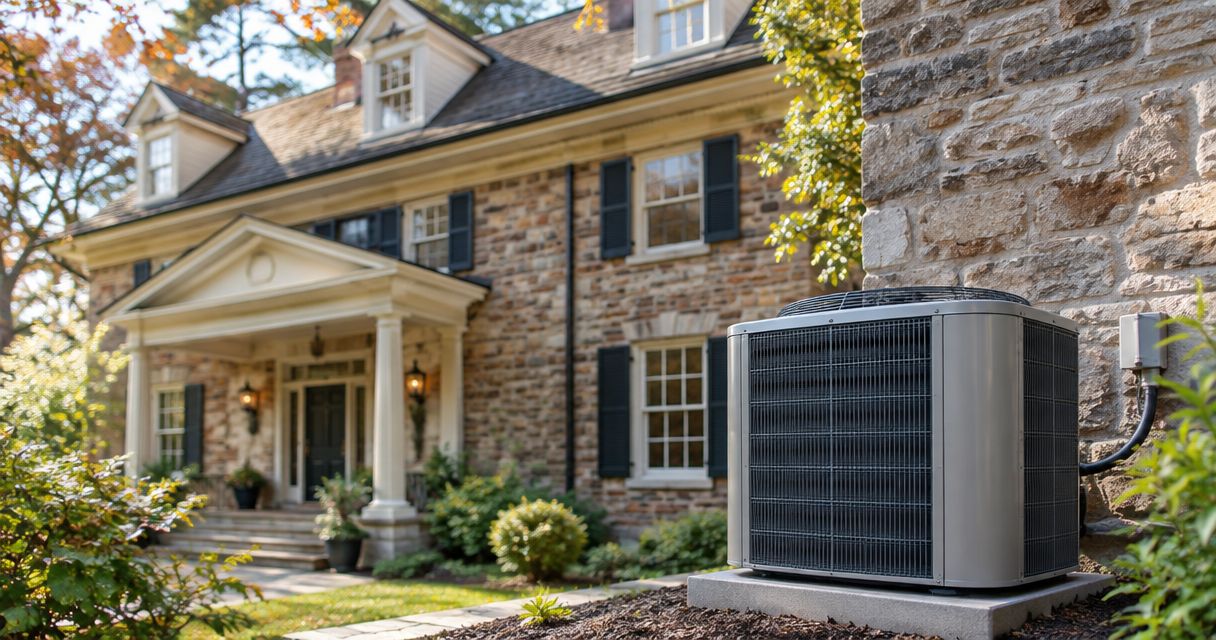
Ductless mini-split systems are the best overall pick for New Jersey historic homes because they skip the ductwork that plaster-and-lath walls can't accommodate, and heat pump systems win for whole-house retrofit efficiency when a homeowner is ready to replace an aging boiler or furnace entirely.
- Ductless mini-split systems are the best hvac systems for historic homes in NJ with no existing ductwork.
- Heat pump systems win for whole-house efficiency in a full 2026 retrofit of an older Central NJ property.
- High-velocity small-duct systems add central air without cutting into plaster ceilings or original trim.
- Zoned smart thermostats are the budget move when the existing forced-air system still has life left.
- Whole-house dehumidifiers solve the basement moisture problems common in stone-foundation homes built before 1940.
Why this matters
Historic homes in Monmouth, Middlesex, Somerset, and Union counties weren't built for central air. Plaster and lath walls run about 3/4 inch thick, which leaves no room for the duct chases a standard split system needs, and a lot of these houses still run on a 100-amp electrical panel that struggles once you add a heat pump on top of existing loads. Heating repair for older NJ homes gets complicated fast when the equipment doesn't match the house.
Picking the wrong system means one of two outcomes: a contractor cuts into original woodwork to force ductwork where it doesn't belong, or the homeowner ends up with a system that can't keep the second floor of a 1920s Colonial comfortable in a July heat wave. Neither is acceptable in 2026, when ductless and heat pump technology has matured enough that neither compromise is necessary.
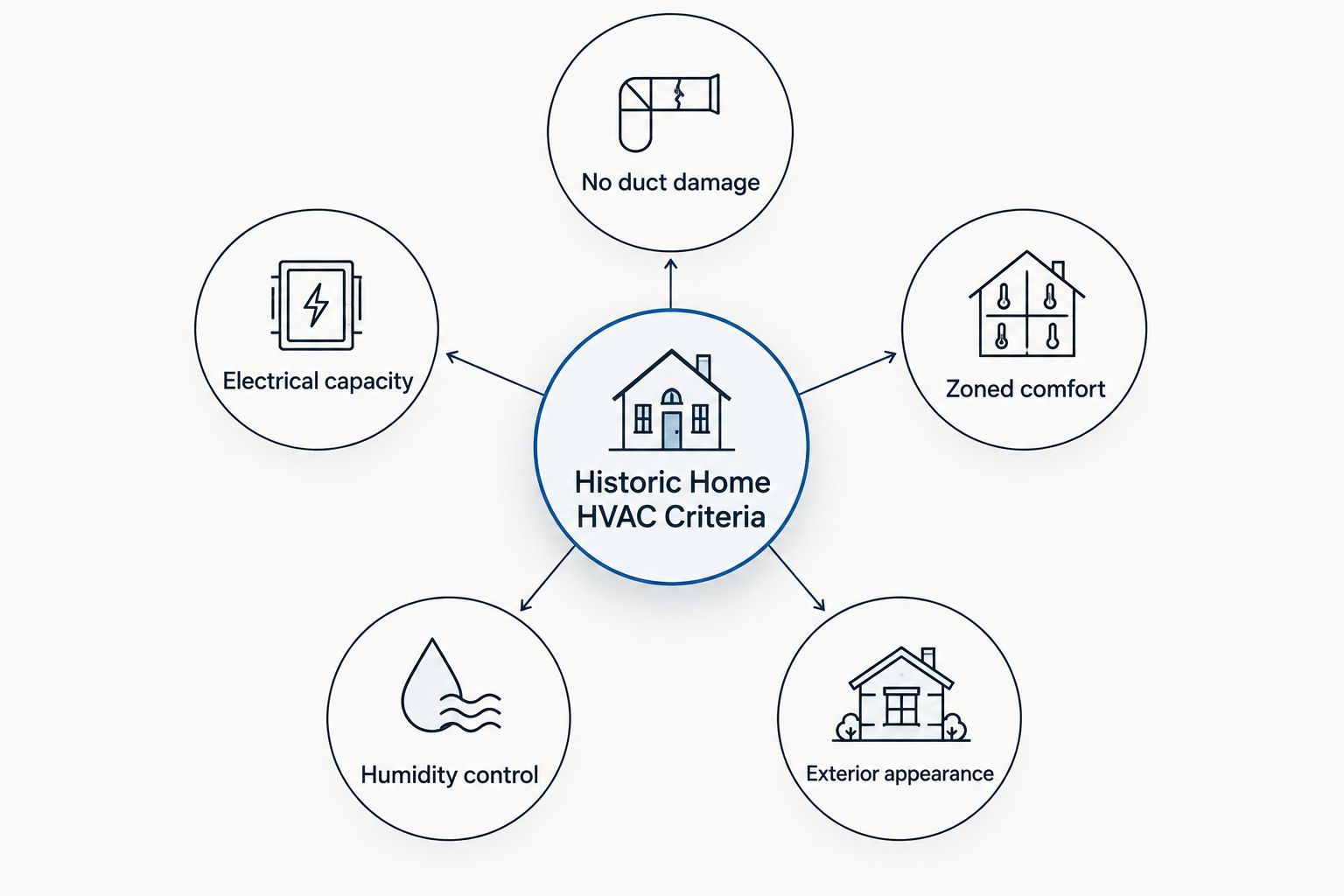
What makes the best HVAC system for a historic home
- No demolition of original plaster, trim, or millwork to run ductwork
- Electrical capacity check — does the panel support the new load, or does it need an upgrade first
- Zone-by-zone comfort control, since historic floor plans rarely have even airflow
- Humidity management, especially in stone or fieldstone basements common before 1940
- Exterior appearance rules for homes in historic districts with architectural review boards
- Serviceability — parts and local technicians available for the long haul, not a niche import
At a glance
| System | Best for | Standout feature | Key limitation |
|---|---|---|---|
| Ductless mini-split | Homes with no ductwork | No duct chases needed | Exterior condenser placement can be tricky on street-facing facades |
| Heat pump | Whole-house retrofit efficiency | Heats and cools with one system | Older homes often need panel upgrades first |
| High-velocity small-duct | Preserving plaster and trim | 2-inch flexible tubing fits inside existing wall cavities | Slower install, higher labor cost than mini-split |
| Zoned smart thermostat | Budget-conscious multi-room comfort | Works with existing forced-air ductwork | Doesn't fix an undersized or failing furnace |
| Whole-house dehumidifier | Basement and crawlspace moisture | Ties into existing ductwork or runs standalone | Not a heating or cooling solution on its own |
1. Ductless mini-split systems: best for historic homes with no ductwork
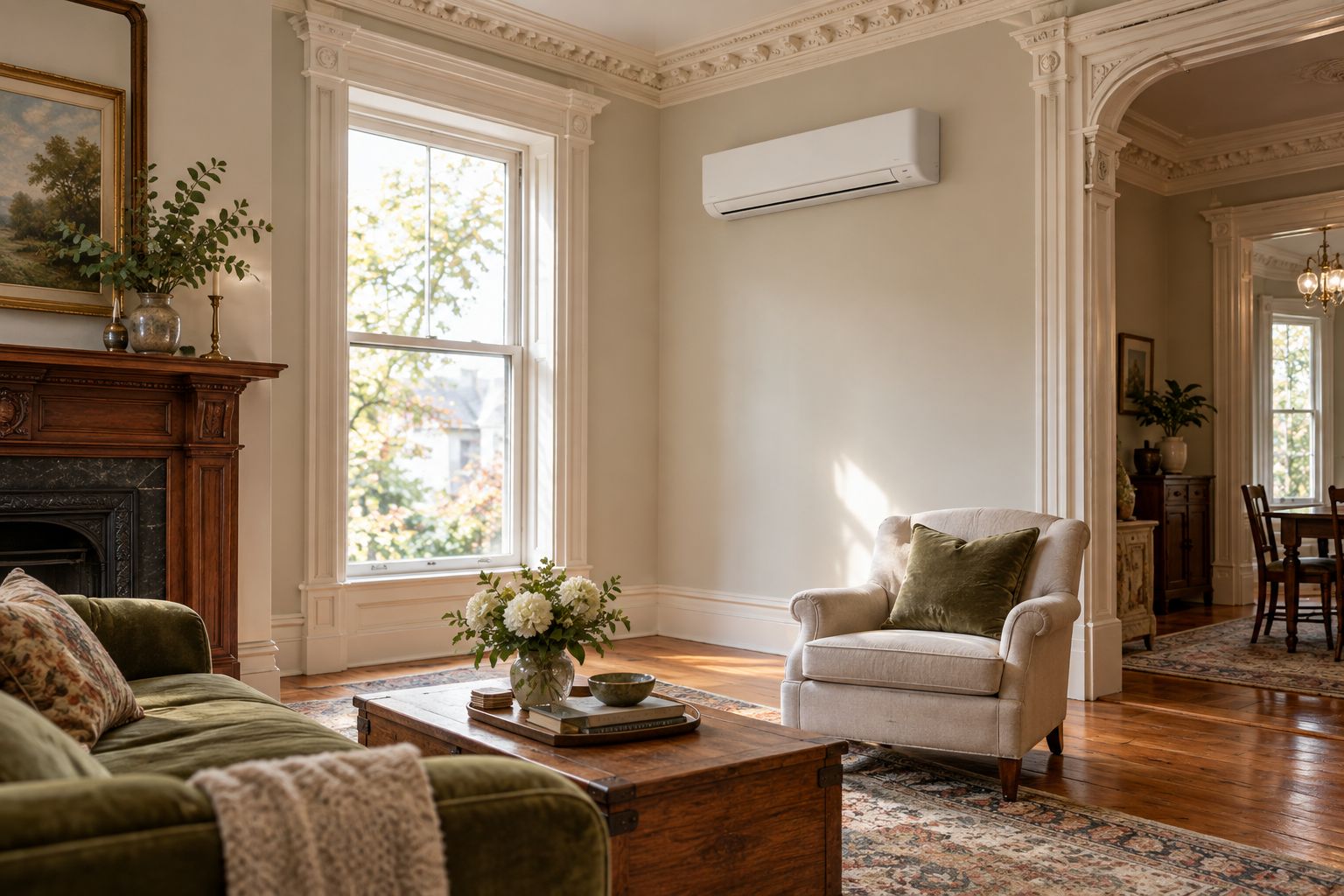
A ductless mini-split runs refrigerant lines through a 3-inch hole instead of a duct chase, which is why it's the go-to for pre-1940 Central NJ homes with plaster walls. One outdoor condenser can support up to eight indoor heads, so a single system can cover bedrooms, a converted attic, and a sunroom addition without touching the original walls.
Ductless mini-split pros:
- No ductwork required, so original walls and ceilings stay intact
- Room-by-room temperature control
- Higher efficiency ratings than most legacy central systems
Ductless mini-split cons:
- Indoor head units are visible on the wall or ceiling, which some historic district reviews scrutinize
- Multiple heads mean multiple filters to clean
- Exterior condenser placement needs planning around historic facades
Best ductless mini-split systems for NJ homes breaks down brand-by-brand differences for homeowners comparing specific models. Verdict: Buy for any historic home with no existing ductwork.
2. Heat pump systems: best for whole-house retrofit efficiency
A heat pump replaces both the furnace and the central AC condenser with one piece of equipment that moves heat instead of burning fuel to create it. For a historic home undergoing a full mechanical retrofit in 2026, this is usually the system that cuts long-term utility costs the most, provided the ductwork already exists or is being added as part of the renovation.
Heat pump pros:
- One system handles heating and cooling
- Lower operating costs than oil or older gas furnaces in most Central NJ homes
- Qualifies for various state and utility efficiency programs
Heat pump cons:
- Needs existing or new ductwork, which many historic homes lack
- Older 100-amp panels often can't support the added electrical load without an upgrade
- Performance drops in extreme cold without backup heat strips
Best heat pump systems for NJ winters covers cold-climate performance specifics for the region. Verdict: Buy for homeowners doing a full mechanical overhaul with ductwork already in the plan.
3. High-velocity small-duct systems: best for preserving plaster and trim
High-velocity systems use flexible 2-inch tubing instead of standard sheet-metal ductwork, so the tubing snakes through wall cavities, closets, and joist bays without the demolition a conventional duct system requires. This is the pick for homeowners who want central air but refuse to touch original plaster ceilings or crown molding.
High-velocity system pros:
- Fits inside existing wall and ceiling cavities
- Delivers central air without visible ductwork or bulkheads
- Preserves original ceiling heights
High-velocity system cons:
- Installation labor runs longer than a mini-split job
- Fewer contractors are trained on this equipment compared to standard systems
- Air outlets are small and can feel drafty if undersized for the room
Verdict: Hold for homeowners who've priced out a mini-split first — high-velocity earns its cost only when wall-mounted heads are a non-starter for the house.
4. Zoned smart thermostat control: best budget option for multi-room comfort
When the furnace and ductwork are still sound, adding zone dampers and smart thermostats is the cheapest way to fix the uneven heating that plagues most historic floor plans. A house with a single thermostat in the front hall often runs the back bedrooms 5-8 degrees colder in January — zoning corrects that without replacing equipment.
Zoned thermostat pros:
- Works with the ductwork already in the house
- Lowest-cost option on this list
- Cuts energy waste from heating unused rooms
Zoned thermostat cons:
- Doesn't fix a failing or undersized furnace
- Retrofitting dampers into old ductwork isn't always possible
- Smart thermostat compatibility varies with older control boards
Best smart thermostats for the New Jersey climate compares models suited to the region's humid summers and cold winters. Verdict: Buy as a first step before spending on new equipment.
“If a mini-split condenser can't find a spot on the exterior wall without cutting into original trim, it's the wrong system for that house.”
5. Whole-house dehumidifiers: best for basement and crawlspace humidity control
Stone and fieldstone foundations, common in Central NJ homes built before 1940, hold moisture that no heating or cooling system addresses on its own. A whole-house dehumidifier ties into existing ductwork or runs as a standalone unit to keep basement humidity in a range that doesn't feed mold or warp original joists.
Dehumidifier pros:
- Protects original wood framing and joists from moisture damage
- Reduces musty odors common in stone-foundation basements
- Can tie into existing ductwork for whole-house coverage
Dehumidifier cons:
- Doesn't heat or cool the home
- Adds an operating cost on top of the primary HVAC system
- Needs a condensate drain line, which isn't always simple in an old foundation
Whole-house dehumidifier installation for NJ basements covers what that install looks like in a stone or fieldstone foundation. Verdict: Buy for any historic home with a damp or musty basement.
Get a historic-home HVAC assessment
Licensed electrical and HVAC evaluation for Central NJ homes built before 1960.
How we ranked
Each system was weighed against the six criteria above: whether it requires cutting into original plaster or trim, how it interacts with an older electrical panel, its ability to zone comfort room by room, its effect on basement humidity, its visibility from the street in historic districts, and whether Central NJ technicians can actually service it long-term. Ductless mini-split systems scored highest because they satisfy the first, third, and sixth criteria without exception.
Which HVAC system should you choose?
For a Central NJ historic home with no ductwork, the ductless mini-split system is the default choice in 2026 — it avoids demolition, delivers zoned comfort, and has a deep bench of local technicians who service it. If the home already has usable ductwork and the electrical panel can support it, a heat pump system is the better long-term investment. Everyone else should start with zoned smart thermostat control and a basement dehumidifier before spending on new equipment at all.
FAQ
What's the best HVAC system for a historic home in NJ with no ductwork?
A ductless mini-split system is the best HVAC system for a historic NJ home with no ductwork in 2026. It runs refrigerant lines through a small wall penetration instead of a duct chase, so original plaster and trim stay untouched.
Is a heat pump better than a mini-split for an old house?
A heat pump is better when the house already has usable ductwork and enough electrical capacity; a mini-split is better when it doesn't. Most Central NJ historic homes lack ductwork, which is why mini-splits rank higher for that specific use case.
Can I add central air to a historic home without ripping out plaster?
Yes, both ductless mini-split systems and high-velocity small-duct systems add central air without demolishing plaster ceilings or walls. High-velocity tubing fits inside existing cavities; mini-splits skip ductwork entirely.
Does an old electrical panel need to be upgraded before installing a heat pump?
Many historic homes still run on a 100-amp panel, which often can't support a heat pump alongside existing loads. A panel evaluation before installation avoids a mid-project surprise.
How do I fix uneven heating in an old house without replacing the furnace?
Zoned smart thermostat control with damper retrofits corrects uneven heating in most cases without replacing the furnace. It works as long as the existing ductwork is in reasonable condition.
Why is my historic home's basement so damp even with a working furnace?
Furnaces and air conditioners don't control basement humidity on their own, especially in stone or fieldstone foundations common before 1940. A whole-house dehumidifier addresses that separately.
Are ductless mini-splits allowed in historic districts?
Rules vary by municipality and historic district review board, so condenser and indoor head placement should be confirmed before installation. Rear or side-facing exterior walls are typically the easier approval.
What HVAC system works best for a historic home addition?
A ductless mini-split or a dedicated heat pump zone usually works best for a historic home addition, since the addition can be built with its own ductwork or head units without retrofitting the original structure.
One last thing
The detail most homeowners miss in 2026 isn't the HVAC equipment at all — it's the panel. A 100-amp service that was fine for a furnace and a window AC unit in 1985 often can't support a heat pump, a mini-split condenser, and a modern kitchen at the same time, and that's a wiring problem, not an HVAC problem. Get the panel checked before the equipment gets ordered, not after the install crew shows up.
Spartan Home Pros evaluates both the HVAC side and the electrical side of a historic home retrofit as one job, since the two are rarely separate problems in a house built before 1960.


