
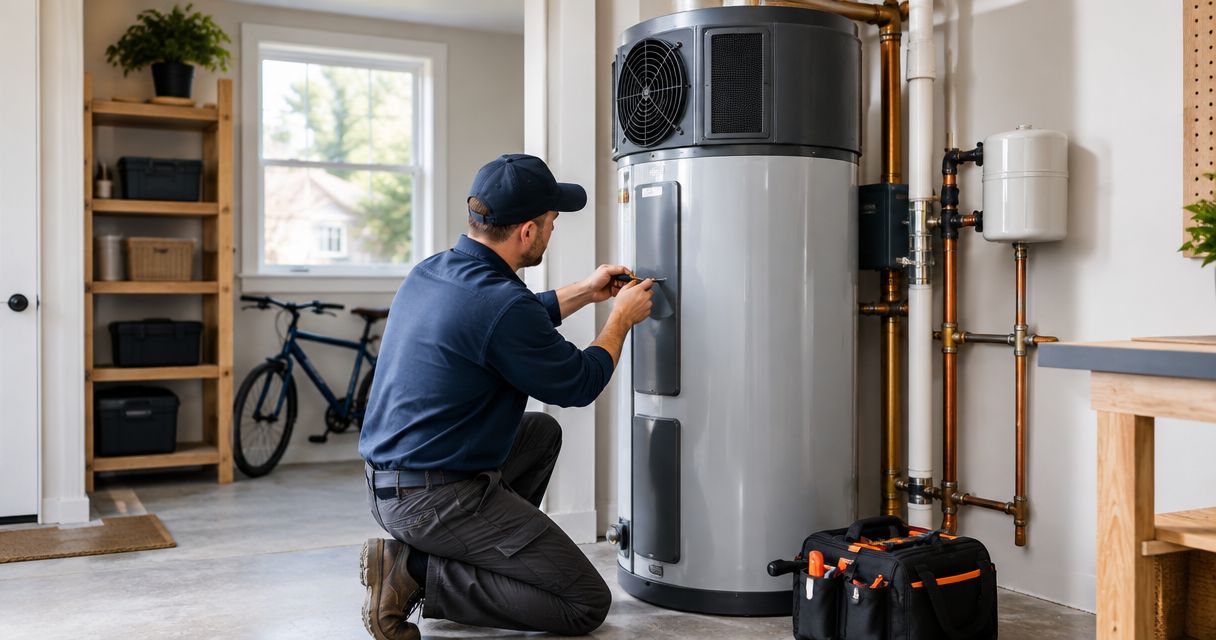
Heat pump water heater installation for NJ homes swaps a standard electric resistance tank for a hybrid unit that pulls heat from the surrounding air instead of generating it from an element, with the aim of cutting water-heating costs and meeting the electrical code and space requirements that come with the switch. Central Jersey's mix of older housing stock, tight mechanical rooms, and cold unheated garages makes the install more involved than a straight tank swap.
- A heat pump water heater installation nj job needs a dedicated 30-amp, 240-volt circuit most standard tanks don't already have.
- Units require at least 700 cubic feet of air around them per ENERGY STAR clearance guidance -- closets and small utility rooms often don't qualify.
- ENERGY STAR-rated heat pump water heaters use roughly 60% less energy than standard electric resistance tanks.
- Spartan Home Pros checks panel capacity before quoting installation, since a full or aging panel changes the scope and timeline.
- Unheated garages that drop below 40°F in a New Jersey winter cut compressor efficiency right when hot water demand is highest.
Why heat pump water heater installation matters for NJ homes
A lot of homes across Monmouth, Middlesex, Somerset, and Union counties still run 40- to 60-year-old electrical services with a standard electric tank tucked into a basement corner or a garage closet. Swapping that tank for a heat pump model isn't a drop-in replacement -- it's an electrical and mechanical decision at the same time.
Before buying a unit, check whether your electrical panel needs an upgrade. A 100-amp panel with no open double-pole slots turns a same-day tank swap into a multi-day project once a subpanel or panel upgrade gets added to the scope. Spartan Home Pros walks the panel and the mechanical room together before quoting a heat pump water heater installation nj job for exactly this reason.
The climate cuts both ways here. New Jersey summers push basement humidity up, and a heat pump water heater dehumidifies the space it sits in as a side effect of pulling heat from the air -- a genuine plus in a damp basement in July. Winter is the opposite problem: an unheated garage or crawl space that drops below 40°F slows the compressor down right when hot water demand from showers and laundry is at its peak in 2026's colder months.
Steps for a heat pump water heater installation in NJ
Check whether your electrical panel can handle the load
Start with the free part: look at what's already on your panel before calling anyone.
- Read the amperage stamped on the main breaker -- 100A, 150A, or 200A
- Count how many open double-pole breaker slots remain
- Note other 240V loads already on the panel: range, dryer, central AC, EV charger
- Flag panels installed before 1990 for a closer look regardless of open slots
- If fewer than two open slots remain, plan for a panel upgrade before scheduling install day
Pick an install location with enough air and drainage
Measure the room before you shop for a unit, not after.
- Confirm at least 700 cubic feet of air around the unit, the clearance most manufacturers and ENERGY STAR guidance call for
- Rule out small closets and mechanical rooms without louvered doors for airflow
- Locate a floor drain nearby, or budget for a condensate pump if none exists
- Stick to spaces that stay between roughly 40°F and 90°F -- unheated crawl spaces and garages drop below that range in a New Jersey winter
- Avoid rooms that share a wall with a bedroom if compressor noise is a concern
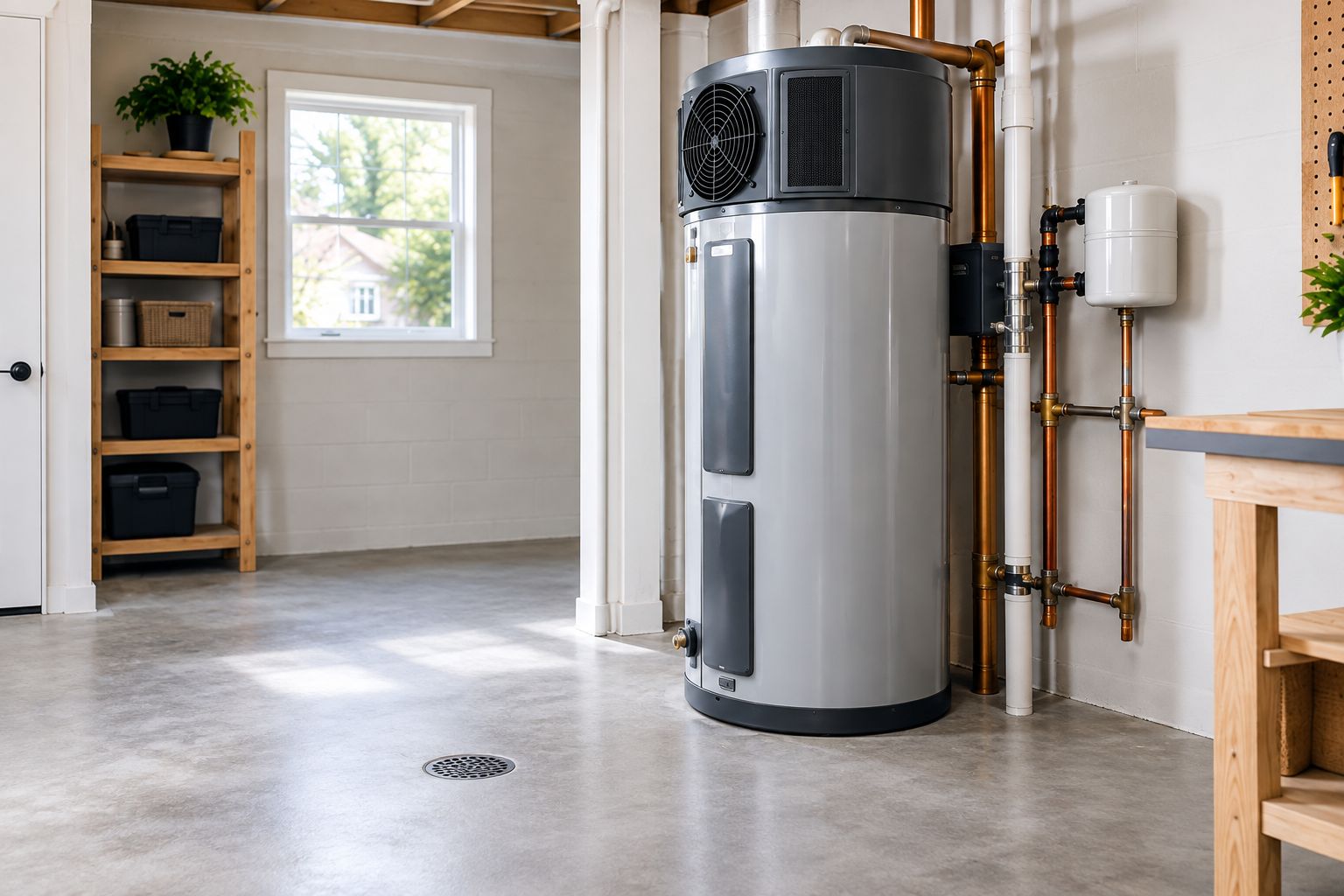
Compare hybrid units against a standard electric tank on paper
Do the spec-sheet homework before you commit to a brand.
- Compare first-hour rating and recovery time between models
- Match tank size to household headcount -- a 50-gallon tank generally covers a 3- to 4-person household under standard DOE sizing guidance
- Check the Uniform Energy Factor (UEF) on the yellow EnergyGuide label; higher UEF means lower operating cost
- Note the compressor's rated sound level if the unit sits near living space
- Read the manufacturer's warranty terms printed on the spec sheet, not the sales page
Plan the dedicated electrical circuit
This is where the electrical trade takes over from the shopping list.
- Most residential heat pump water heaters call for a dedicated 30-amp, 240-volt circuit with its own breaker
- A licensed electrician sizes wire gauge and disconnect off the nameplate amperage, not a guess
- Homes without an open 240V slot need a subpanel or panel upgrade first -- which is why Spartan Home Pros checks capacity before setting an install date
- Never tie the new unit into the old resistance tank's existing circuit without verifying the amperage matches
- A whole-house surge protector adds a layer of protection for the unit's control board against grid spikes
Pull permits and schedule inspection
Central Jersey towns require both an electrical permit for the new circuit and a plumbing permit for the water heater swap itself.
- Confirm which municipality handles inspection scheduling and typical turnaround
- Keep the ENERGY STAR or AHRI certificate on hand for any state or utility rebate paperwork
- Have the contractor of record pull the permit under their own license number
- Schedule inspection after both the electrical and plumbing work are finished, not mid-project
Schedule the swap and haul-away
The physical swap is the fast part once the electrical and permitting groundwork is done.
- Drain and disconnect the old tank before the new unit arrives on site
- Confirm haul-away of the old tank is part of the job -- NJ transfer stations charge separately for large appliances
- Budget roughly half a day for a straightforward swap, closer to a full day when a circuit or panel change is involved
- Test hot water temperature and compressor cycling before the crew leaves
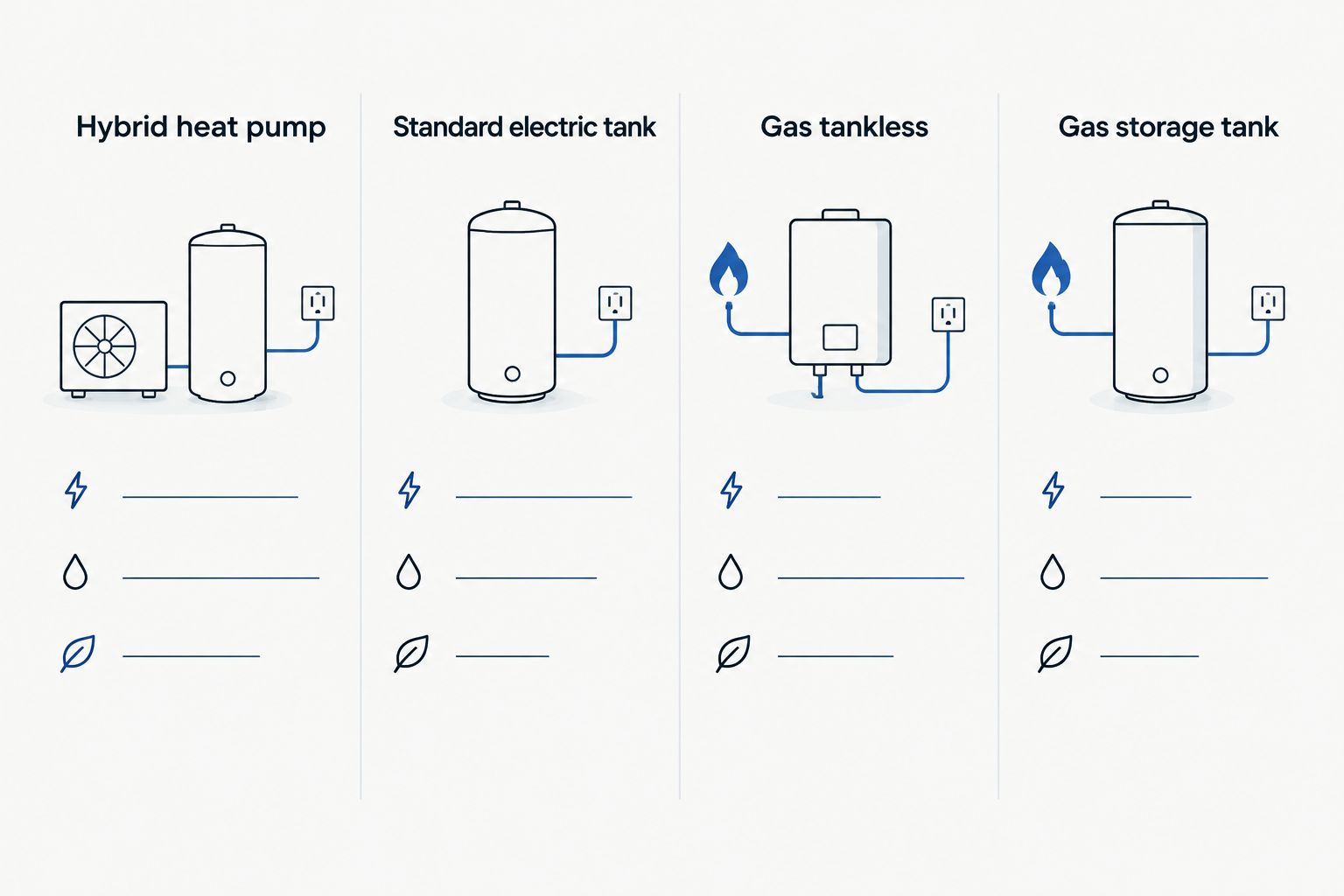
Comparing your water heater options in NJ
| Option | Best for | Key limitation |
|---|---|---|
| Hybrid heat pump water heater | Homeowners with a basement, garage, or utility room offering 700+ cubic feet of air | Needs a dedicated 240V circuit and a space that stays above roughly 40°F |
| Standard electric resistance tank | Tight closets or mechanical rooms with no extra air space | Uses roughly 2-3x more electricity than a heat pump model for the same hot water output |
| Gas tankless water heater | Homes already piped for natural gas that want continuous hot water | Requires venting and gas line work, not just electrical |
| Gas storage tank | Fast replacement of a failed gas unit on a tight timeline | Carries the same standby heat losses as an electric tank, just fueled by gas |
Verdict: for a home that already has an open 240V slot and a mechanical room with real air space, a hybrid heat pump water heater is the buy. For a cramped closet install with no panel capacity, a standard electric tank is the practical hold until a panel upgrade is on the calendar anyway.
Check your panel before you buy
Spartan Home Pros verifies electrical capacity and site conditions before quoting install day.
Common mistakes NJ homeowners make
- Installing in an unheated garage. A garage that drops below 40°F in January and February cuts compressor efficiency exactly when hot water demand from holiday guests and cold-weather laundry is highest.
- Skipping the panel capacity check. Finding out mid-install that a 100-amp panel has zero open double-pole slots turns a one-day job into a multi-week one.
- Reusing the old circuit. The existing electric tank's wiring is often undersized for a new unit's 30-amp, 240-volt nameplate rating.
- Ignoring compressor noise near living space. A finished basement wall shared with a bedroom or home office is the wrong spot for a unit that runs a fan cycle for hours a day.
- Treating older NJ homes like a standard swap. Homes with narrower original electrical services need the same scrutiny older NJ homes get for heating repairs generally -- wiring age changes the plan before the water heater conversation even starts.
FAQ
What's the best heat pump water heater for NJ homes?
The best fit is whichever ENERGY STAR-rated hybrid unit matches your household's first-hour rating and fits a space with at least 700 cubic feet of air. Tank size matters more than brand for day-to-day performance.
Is a heat pump water heater worth it in New Jersey's climate?
Yes for basements and garages that stay above roughly 40°F year-round, since the unit uses about 60% less energy than a standard electric resistance tank. It's a weaker fit for unheated spaces that get cold in a New Jersey winter.
How much electrical capacity does a heat pump water heater need?
Most residential units need a dedicated 30-amp, 240-volt circuit with its own breaker. A panel with no open double-pole slots needs a subpanel or upgrade before the water heater install can proceed.
Can a heat pump water heater work in a cold basement?
It works, but efficiency drops once ambient temperature falls below roughly 40°F. A basement that stays in the 50s and 60s year-round is a solid fit for most of central New Jersey.
Do I need a permit to install a heat pump water heater in NJ?
Yes -- an electrical permit covers the new dedicated circuit and a plumbing permit covers the water heater swap itself. Municipal inspection follows both trades finishing their work.
How long does heat pump water heater installation take?
A straightforward swap with an existing open circuit takes roughly half a day. Add a panel upgrade or new circuit run and the job stretches closer to a full day.
Is a heat pump water heater better than gas in NJ?
It depends on what's already run to the mechanical room. Homes already piped for gas that want continuous hot water often do better with tankless gas; homes without gas piping get a bigger efficiency jump switching from electric resistance to a heat pump model.
What size heat pump water heater do I need for a family of four?
A 50-gallon tank generally covers a 3- to 4-person household under standard DOE sizing guidance. Households with back-to-back showers or a large soaking tub should size up.
One last thing
A heat pump water heater cools and dehumidifies the room it sits in as a byproduct of pulling heat from the air -- a genuine bonus in a humid Central Jersey basement in August, and the exact reason it underperforms in an unheated garage in February. Match the room to the season before you match the unit to the household, and the 2026 install goes the way the spec sheet says it should.


