Renovation permits get pulled, then the electrical inspector shows up and flags a 100-amp panel that can't handle the new kitchen, the hot tub, and the EV charger you're planning for next year — and now the whole project stalls. Planning a panel upgrade before renovation work starts, not during it, is the difference between a two-week delay and a two-day one.
- Plan a panel upgrade before renovation 4-6 weeks ahead of demo — permits and utility coordination take longer than the install itself.
- A standard 200-amp panel upgrade in NJ runs $2,000 to $7,000 installed in 2026, before any renovation-specific add-ons.
- Home additions, hot tubs, pools, and EV chargers each add load that a 100-amp panel can't carry — get a load calculation before you finalize renovation plans.
- Spartan Home Pros does not subcontract panel work in Monmouth, Middlesex, Somerset, or Union County — the electrician on your job is on payroll.
Why this matters
Renovation contractors quote the kitchen, the addition, the finished basement — they don't quote the panel. That's not their scope, and most won't flag a load problem until the electrical inspector fails the job mid-renovation. By then you're paying rush pricing for a panel upgrade and re-scheduling every other trade that was lined up behind it.
A panel that was fine for a house with a furnace, a fridge, and a window AC unit is not fine once you add a heat pump, an EV charger, and a hot tub. Central New Jersey homes built before the 1990s frequently carry 100-amp service; most renovations that add square footage or major appliances need 200 amps to pass inspection in 2026.
How do you plan a panel upgrade before renovation starts?
Sequence the panel work before demo, not after, using this order:
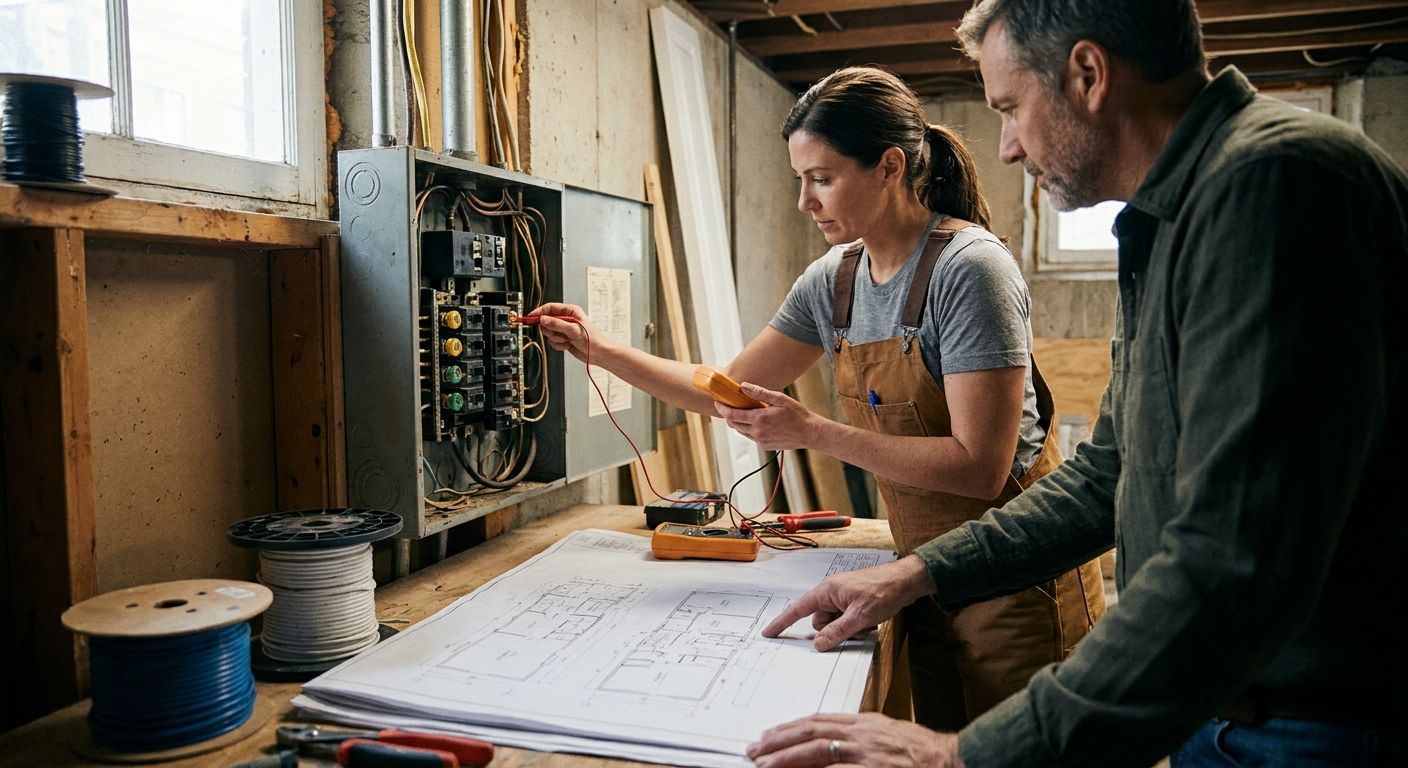
- Get a load calculation first — before you finalize renovation drawings, have a licensed electrician calculate total amperage draw for the finished project, including anything you're adding later (EV charger, generator, pool).
- Check your panel's actual amperage and condition — the breaker count on the door isn't proof of capacity; older panels (Zinsco, Federal Pacific, split-bus) can be undersized or unsafe regardless of the number printed on them.
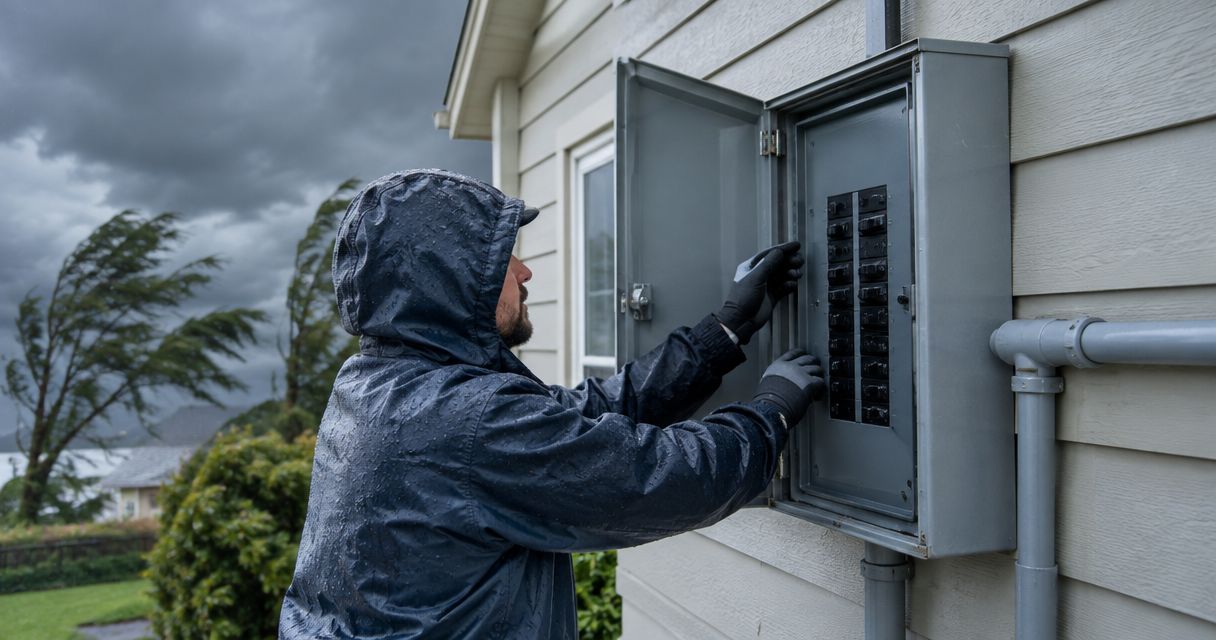
- Pull the electrical permit alongside your renovation permit — NJ requires a separate permit for panel work, and townships in Monmouth, Middlesex, Somerset, and Union counties inspect it independently of the general contractor's permit.
- Schedule the utility coordination — a 200-amp upgrade sometimes requires the utility to swap the service drop or meter, which adds its own lead time outside your contractor's control.
- Install the panel before rough-in electrical work begins — every downstream circuit for the addition, the recessed lighting, or the new HVAC line depends on the new panel being live first.
- Schedule the final inspection before drywall closes the walls — panels and rough wiring both need to be visible for the inspector; closing walls too early forces a costly reopen.
If you skip step 1, everything after it is a guess.
Standard 200-amp panel upgrade: $2,000 to $7,000
Most Central New Jersey homes upgrading ahead of a renovation land in the $2,000 to $7,000 range for a straightforward 100-amp to 200-amp swap, installed in 2026. What moves you toward the top of that range:
| Factor | Pushes cost up | Keeps cost down |
|---|---|---|
| Panel location | Panel needs to be relocated | Panel stays in place |
| Service line | Utility service drop needs upgrading | Existing service line is adequate |
| Panel age/brand | Zinsco or Federal Pacific requires full replacement, not a swap | Modern panel just needs amperage increase |
| Permit complexity | Multiple township permits (addition + electrical) | Single straightforward electrical permit |
This figure covers the panel swap itself — it does not include the rough-in wiring for the renovation's new circuits, which gets priced separately once the panel is live.
Home additions and finished basements: when 200 amps isn't enough
An addition that adds a bedroom, bathroom, or finished basement almost always adds HVAC load, lighting circuits, and outlets that a 100-amp panel wasn't sized for. If you're planning an electrical panel upgrade for a home addition, get the load calculation before the addition's framing plans are finalized — moving a panel after framing starts adds cost that a pre-planned upgrade avoids entirely.
Finished basements carry the same risk: recessed lighting, a wet bar, and a home theater system draw more than most existing basement circuits were designed for.
EV chargers, hot tubs, and pools: the renovation add-ons that trigger upgrades
These three additions are the most common reason a panel that passed inspection five years ago fails today:
- EV chargers: a Level 2 charger draws 30-50 amps continuously, which most 100-amp panels can't absorb alongside existing household load.
- Hot tubs and pools: pump and heater circuits often require a dedicated 50-amp circuit plus GFCI protection that older panels don't have room for.
- Whole-home generators: a transfer switch needs panel capacity reserved for it, which is easiest to plan during a renovation rather than retrofitted later.
If your renovation plans include a pool or hot tub, review electrical panel upgrade requirements for hot tub and pool installation before the pool contractor breaks ground — trenching for the electrical run is far cheaper to coordinate with excavation than to add afterward.
A panel upgrade planned before renovation costs less and delays nothing; a panel upgrade discovered mid-renovation costs more and delays everything — that's the single rule worth remembering.
“A panel upgrade planned before renovation costs less and delays nothing; a panel upgrade discovered mid-renovation costs more and delays everything.”
Why panel upgrade costs vary
- Panel brand and age — Zinsco and Federal Pacific panels often need full replacement rather than a simple amperage swap; see how to budget for Zinsco panel replacement in NJ if your home has one.
- Whether the panel relocates — moving a panel from a basement to an exterior wall adds labor and materials the swap alone doesn't require.
- Township permit requirements — Monmouth, Middlesex, Somerset, and Union counties each run their own inspection schedules, which affects timeline more than cost.
- Utility coordination — if the service drop or meter needs a utility-side upgrade, that's outside the contractor's control and adds weeks, not dollars.
- Number of renovation add-ons — an addition alone is different from an addition plus a pool plus an EV charger; each add-on layers onto the load calculation.
- Existing wiring condition — knob-and-tube or aluminum branch wiring found during the upgrade sometimes needs remediation before the new panel can be certified.
Get a load calculation before you finalize plans
Licensed NJ electricians, no subcontractors, no hourly meter.
How long does a panel upgrade take before renovation starts?
A panel upgrade takes 4-6 weeks from the initial load calculation to final inspection, once permit review and any utility coordination are factored in. The physical swap itself is usually a single day; the surrounding permit and scheduling steps take the rest.
Do I need a permit for an electrical panel upgrade in NJ?
Yes, New Jersey requires a separate electrical permit for panel work, independent of any general renovation permit your contractor pulls. Townships in Monmouth, Middlesex, Somerset, and Union counties inspect panel work on its own schedule, so folding it into your renovation timeline early avoids a bottleneck later.
Can I start renovation demo before the panel is upgraded?
Demo can start before the panel upgrade, but rough-in electrical work cannot — every new circuit for the addition or remodel depends on the upgraded panel being live first. Sequencing the panel upgrade during the demo phase, rather than after, keeps the rest of the project on schedule.
FAQ
How much does a panel upgrade cost before a renovation in NJ?
A standard 100-amp to 200-amp panel upgrade costs $2,000 to $7,000 installed in 2026. Relocating the panel, upgrading the utility service drop, or replacing a Zinsco or Federal Pacific panel pushes cost toward the top of that range.
Do I need a load calculation before renovation plans are finalized?
Yes, get a load calculation before finalizing renovation drawings. It accounts for everything you're adding now and anything planned later, like an EV charger or hot tub, so the panel is sized once instead of twice.
What panel amperage do I need for a home addition?
Most home additions in Central New Jersey need 200-amp service, up from the 100-amp panels common in homes built before the 1990s. The exact number depends on total square footage and appliance load added.
Can my renovation contractor handle the panel upgrade too?
No, panel upgrades require a licensed electrician and a separate electrical permit in New Jersey, regardless of who holds the general renovation permit. Coordinating the two schedules early prevents inspection delays.
Is a panel upgrade required for an EV charger installed during renovation?
Often yes — a Level 2 EV charger draws 30-50 amps continuously, which most 100-amp panels can't support alongside existing household circuits. Check panel capacity before the charger installation is scheduled.
How do I know if my panel is too old to upgrade instead of replace?
Zinsco and Federal Pacific panels typically need full replacement rather than an amperage swap, regardless of how many breakers are free. A licensed electrician can confirm panel brand and condition during the initial inspection.
Does a finished basement need a panel upgrade?
It depends on load — recessed lighting, a wet bar, or a home theater system in a finished basement can exceed what an older panel's basement circuits were designed for. A load calculation before finishing the space confirms whether an upgrade is needed.
One last thing
The most expensive panel upgrade is the one done twice. Homeowners who upgrade to 200 amps for a kitchen remodel, then add a pool or EV charger two years later, often discover the panel has no reserved capacity left — and pay for a second upgrade that a single load calculation in 2026 would have avoided. Plan for what you want the house to run five years out, not just for this renovation.
Spartan Home Pros does not subcontract panel work anywhere in Monmouth, Middlesex, Somerset, or Union County — the electrician who does the load calculation is the same one who pulls the permit and does the install. No hourly meter, no surprises on the invoice.