
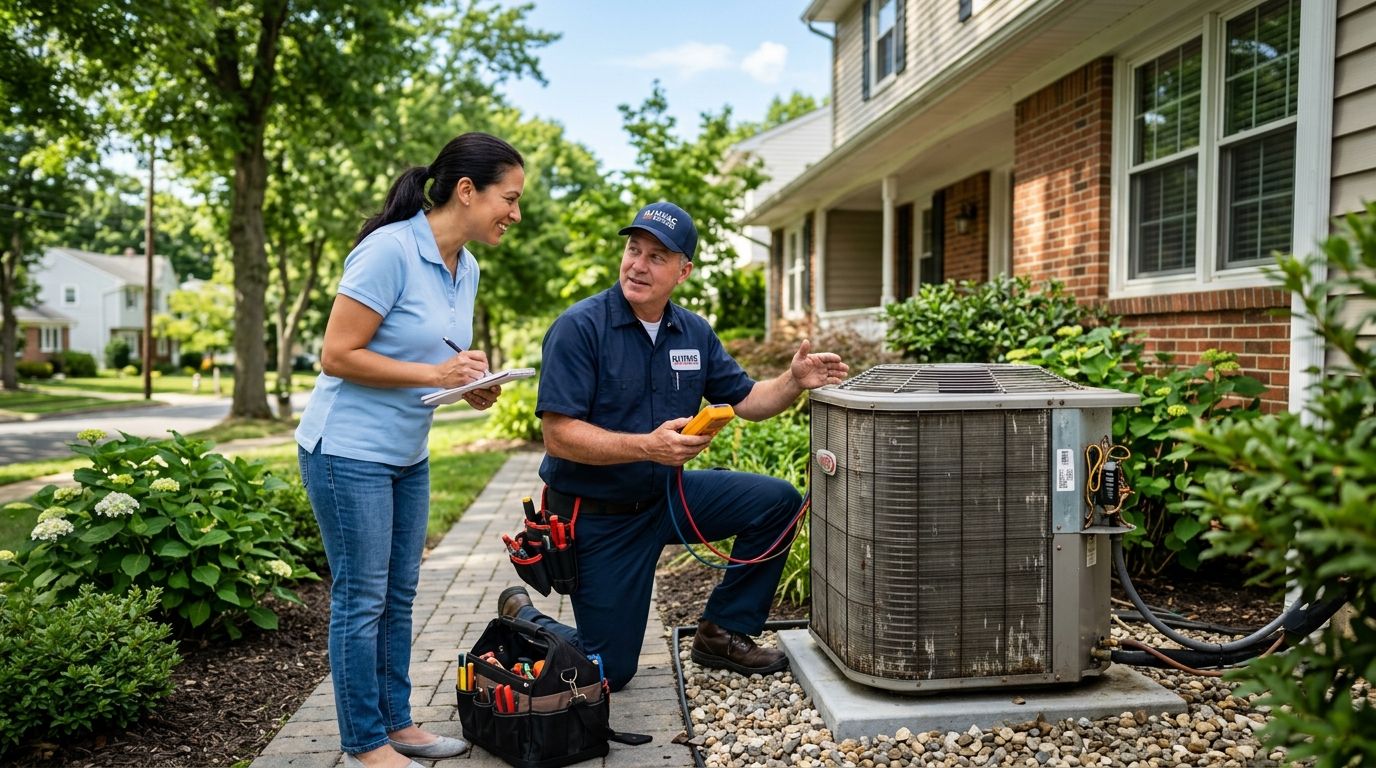
Heat waves push AC systems into overtime, and overtime is where NJ homeowners and small businesses lose money — not to the compressor itself but to the emergency labor rate charged when the call comes in at 4pm on a 97-degree Tuesday. The fix that actually reduces HVAC repair costs during a NJ heat wave is scheduling service before the surge, not after the unit quits.
- Book a system check before the first NJ heat wave of 2026 to avoid emergency after-hours rates.
- Setting the thermostat to 78°F when home and running ceiling fans cuts strain on the compressor.
- A dirty filter changed every 1-3 months is the cheapest repair you'll ever avoid.
- Businesses lose more per hour of AC downtime than homeowners, so commercial HVAC maintenance for retail businesses matters more in July than in January.
- Spartan Home Pros services heating and cooling systems across Monmouth, Middlesex, Somerset, and Union counties without subcontracting the job out.
Why this matters
An AC unit that has been coasting on a dirty filter and low refrigerant all spring doesn't fail gracefully — it fails on the hottest day of the year, when every other HVAC contractor in Central New Jersey is booked solid. That's when a $200 diagnostic turns into a same-day emergency call, and when a capacitor that could've been swapped in April becomes a full compressor replacement in August.
The repair cost itself rarely changes with the season. What changes is the labor rate, the wait time, and whether the unit limps along for three more weeks of 90-degree days before someone gets to it. Reducing repair costs during a heat wave is mostly a timing problem, not a parts problem.
How to reduce HVAC repair costs during a NJ heat wave
- Schedule a pre-summer inspection in May or early June, before the first heat wave hits. A technician catches a failing capacitor or low refrigerant charge while it's a scheduled visit, not an emergency dispatch.
- Change the filter every 1-3 months. A clogged filter forces the blower motor to work harder and is the single most common reason a system trips out on a 95-degree afternoon.
- Set the thermostat to 78°F when you're home, per ENERGY STAR guidance, and higher when the house is empty. Every degree lower than that adds strain during peak demand hours.
- Run ceiling fans in occupied rooms. ENERGY STAR estimates a ceiling fan lets you raise the thermostat about 4°F with no loss of comfort, which takes real load off the compressor.
- Clear debris from the outdoor condenser unit. Grass clippings, leaves, and mulch piled against the coil block airflow and make the compressor run longer to hit the same set point.
- Don't wait for a total shutdown to call. Short-cycling, weak airflow, or a warm supply vent are early signs — catching them before a heat wave means a smaller repair bill and no after-hours surcharge.
Homes with older wiring or original ductwork often need more than a filter change — see heating repair for older NJ homes for what typically needs attention before summer stresses the system further.
For NJ homeowners
Homeowners in Monmouth, Middlesex, Somerset, and Union counties see the same pattern every July: the AC that ran fine in a mild June starts short-cycling once temperatures hit the low 90s for three or four days straight. A smart thermostat that adjusts automatically based on occupancy and outdoor temperature takes some of that guesswork out of the equation — see smart thermostats built for the NJ climate for what actually holds up through a Central Jersey summer.
Verdict: a pre-season tune-up plus a programmable thermostat is the cheapest insurance against a heat-wave breakdown, and it costs far less than an emergency call in August.
For NJ businesses
Commercial HVAC downtime costs more per hour than residential downtime — a retail store or restaurant with a warm dining room or sales floor loses customers, not just comfort. AC repair for NJ businesses covers what commercial systems need before demand peaks, and retail spaces in particular benefit from a maintenance schedule built around foot-traffic hours rather than a once-a-year visit.
Restaurants and retail businesses that skip spring maintenance tend to call during the exact week they can least afford a closed kitchen or a warm storefront. Booking service in the shoulder season avoids that entirely.
Why HVAC repair costs spike during a heat wave
- Demand surge. Every HVAC contractor in Central Jersey gets flooded with calls the moment temperatures cross 90°F, and emergency slots cost more than scheduled ones.
- Compressor overwork. Units running nonstop for days with no rest cycle wear parts faster than normal seasonal use.
- Deferred maintenance surfacing all at once. A refrigerant leak or a weak capacitor that was tolerable in May becomes a full failure under sustained heat load.
- Thermostat mismanagement. Setting the temperature far below 78°F during peak afternoon hours forces the system to work against outdoor conditions it can't overcome efficiently.
- Aging equipment below current efficiency standards. Units older than the 14.3 SEER2 federal minimum that took effect for the Northeast region run less efficiently and fail more often under stress.
- Blocked airflow. Dirty filters and obstructed outdoor units are cheap fixes that get ignored until the system won't keep up at all.
“A dirty filter is the cheapest repair you'll ever avoid, and it's the most common reason for an August emergency call.”
Book HVAC service before the next heat wave
Licensed technicians serving Monmouth, Middlesex, Somerset, and Union counties.
What temperature should I set my thermostat during a NJ heat wave?
78°F is the ENERGY STAR-recommended setting when you're home and awake during a heat wave, with a higher setting when the house is empty. Running ceiling fans lets most households raise that number by another 4°F without losing comfort, which takes real load off an already-strained compressor.
Is it cheaper to repair or replace an AC unit before summer?
Repair is almost always cheaper in the short term, but a unit older than the current 14.3 SEER2 efficiency minimum and already needing frequent service is a candidate for replacement rather than another patch job. A pre-season inspection is what tells you which side of that line your system is on before a heat wave forces the decision.
How often should HVAC systems be serviced in NJ?
Once a year, ideally in spring before the first heat wave of the season, with filter changes every 1-3 months in between. Commercial systems in retail and restaurant spaces often need more frequent checks given longer daily run times.
FAQ
What's the fastest way to reduce HVAC repair costs during a NJ heat wave?
Schedule a system inspection in May or early June, before demand surges and emergency labor rates apply. Catching a weak capacitor or low refrigerant charge early avoids a full breakdown mid-heat wave.
How much should I run my AC during a heat wave to avoid breakdowns?
Keep the thermostat at 78°F when home, per ENERGY STAR guidance, rather than pushing it lower during peak afternoon hours. Constant low settings during extreme heat force the compressor to run nonstop with no rest cycle.
Is it worth getting a smart thermostat before summer?
Yes, a thermostat that adjusts based on occupancy and outdoor temperature reduces unnecessary strain during a heat wave compared to a fixed manual setting. See smart thermostats built for the NJ climate for options suited to Central Jersey summers.
Do commercial HVAC systems need more frequent service than residential ones?
Yes, commercial systems in restaurants and retail spaces run longer daily hours and face higher downtime costs, so maintenance schedules should be tighter than a once-a-year residential check.
What's the most common reason HVAC systems fail during a heat wave?
A clogged filter is the most common cause, forcing the blower motor to overwork and the whole system to short-cycle under sustained heat load. Changing filters every 1-3 months prevents most of these calls.
Does an older AC unit cost more to run during a heat wave?
Units installed before the current 14.3 SEER2 federal efficiency minimum for the Northeast region typically run less efficiently and fail more often under extended heat stress.
Should I clean my outdoor AC unit before a heat wave?
Yes, clearing leaves, grass clippings, and debris from the outdoor condenser improves airflow and reduces how hard the compressor has to work to hit the thermostat's set point.
One last thing
The cheapest heat-wave repair is the one that never happens because it was caught during a routine spring visit — Spartan Home Pros technicians see the same failure pattern every July: a system that was fine in June and fails on the third consecutive 90-degree day because nobody looked at the filter or the capacitor before then. Book the inspection in May, not August.


