
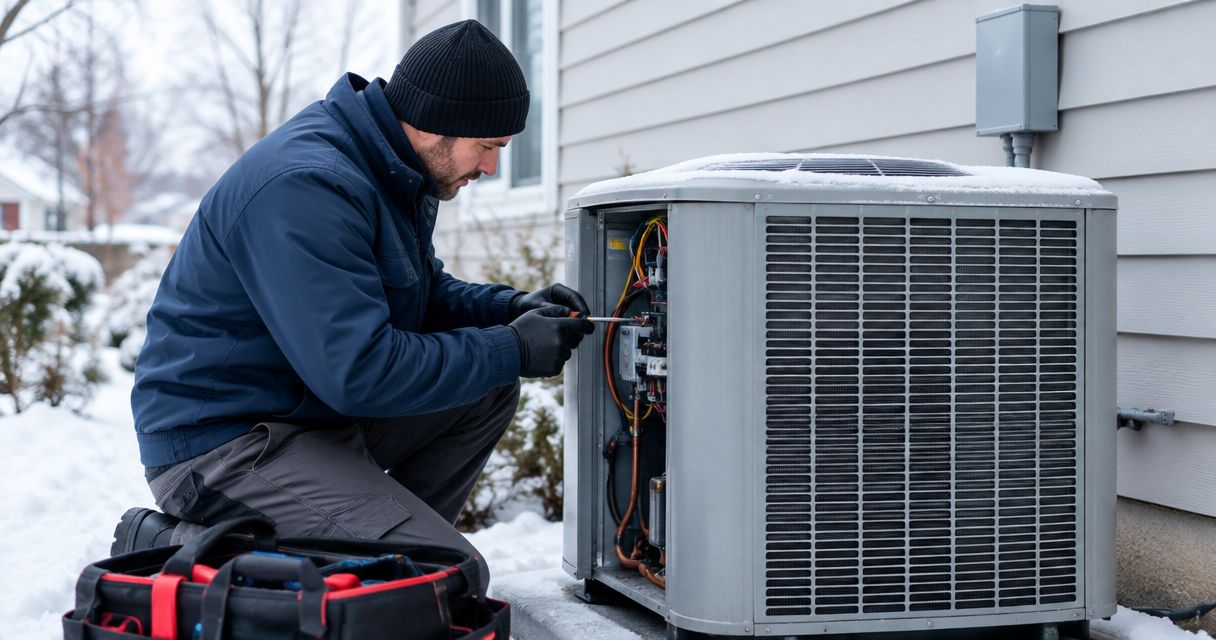
Before the first freeze in 2026, replace or clean the HVAC filter, clear vents and outdoor equipment, test the heat, and check your carbon monoxide alarms if your home uses fuel-burning equipment. Keep a heat pump’s outdoor unit uncovered and call for repair if the system will not heat, trips a breaker, or shows signs of a gas or electrical fault. A checklist catches problems before cold weather; it does not replace diagnosis of a faulty system.
- To winterize an HVAC system before a freeze, check the filter, airflow, outdoor unit, thermostat, and heat output.
- Keep heat pump outdoor units uncovered; a cover can block airflow when the system runs.
- Spartan Home Pros is best for Central New Jersey owners who need licensed heating repair after a failed startup check.
- Stop the test and seek help if you smell gas, notice a burning odor, or see repeated breaker trips.
Why this matters before a New Jersey freeze
A heating problem is easier to spot when you can test the system before you depend on it. A dirty filter or blocked vent is a homeowner check; a burner fault, electrical fault, or failed heat pump component needs a technician. If an older home already has uneven heat or a system that stops unexpectedly, use the checks below to describe the symptoms before seeking heating repair for older NJ homes.
Winterizing also depends on the equipment you own. An air conditioner that shuts down for winter does not need the same treatment as a heat pump that continues running to heat the home. The distinction matters more than any generic instruction to cover or disconnect an outdoor unit.
How do you winterize your NJ HVAC system before the first freeze?
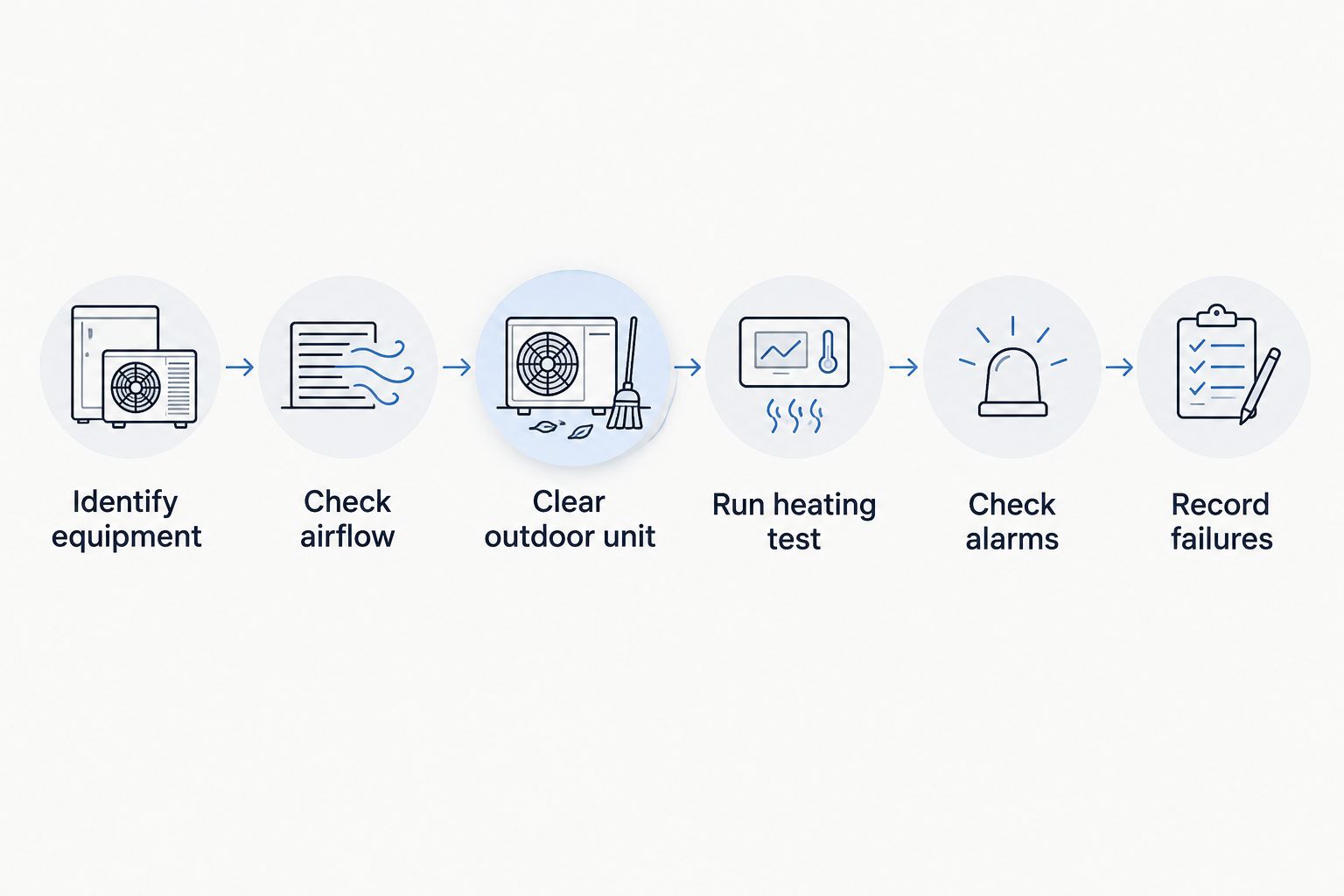
Work through the 2026 pre-freeze checklist in order. Start with items you can inspect without opening electrical panels, removing equipment covers, or handling fuel connections.
- Identify the heating equipment. Check whether your home uses a furnace, boiler, or heat pump. If the thermostat has an emergency heat setting, do not use it as a routine substitute for diagnosing poor heat pump performance. If you cannot identify the system, check its documentation before changing settings on outdoor equipment.
- Check the filter and indoor airflow. Replace a disposable filter or clean a reusable filter according to its instructions. Make sure supply registers and return grilles are not blocked by furniture, rugs, or stored items. If the replacement filter does not fit or the airflow still feels weak, do not force a different size into place.
- Clear the outdoor unit. Remove leaves and loose debris around the equipment without reaching inside it. A heat pump needs outdoor airflow in winter, so leave it uncovered. If you have a separate air-conditioning condenser that does not provide heat, follow that equipment’s instructions rather than treating it like a heat pump.
- Run a heating test. Set the thermostat to heat and raise the setting enough to call for heat. Confirm that the system starts, air reaches the rooms served by forced-air equipment, and the home begins warming. A boiler heats through its connected distribution system, so do not judge it by whether air comes from a vent.
- Check alarms where fuel-burning equipment is present. Use the test function on your carbon monoxide alarms and follow the manufacturer’s instructions for batteries and replacement. A working alarm does not make a suspected gas leak or exhaust problem safe to investigate yourself.
- Record what fails. Note whether the thermostat calls for heat, whether equipment starts, which rooms remain cold, and whether a breaker trips or an alarm sounds. Stop testing when a fault presents a safety concern. That record helps a repair technician focus on the actual symptom.
These steps prepare the system without asking you to adjust gas valves, open a furnace cabinet, or work on live wiring. If a check requires tools inside the equipment, leave it to a qualified professional.
What should you check during the heating test?
Listen for a normal startup, then pay attention to the result rather than repeatedly changing the thermostat. With forced-air heating, check whether air reaches the rooms that usually receive it. With a boiler, check whether the connected heating areas begin warming. A heat pump’s outdoor unit also operates during heating, so an outdoor unit running in cold weather is not, by itself, a fault.
If the system starts but the home does not warm, record that difference. If it never starts, note what the thermostat displays and whether other household power is working. Do not keep resetting a breaker that trips again; repeated trips need electrical diagnosis. Spartan Home Pros provides heating and cooling repair in Central New Jersey when the heating test points beyond a filter, vent, or thermostat setting.
What should you do with the air conditioner?
First confirm whether the outdoor unit serves only air conditioning or also provides heat. A standard cooling-only condenser sits idle when cooling is off. A heat pump can look similar from outside but needs clear airflow through the heating season. Covering the wrong unit or switching off its power can interfere with the heat your home needs.
Do not assume that every outdoor box is an air conditioner because it cooled the home in summer. Check the thermostat and equipment documentation if you are unsure. You can still clear leaves around the unit without taking it apart.
Furnace, boiler, heat pump, or AC: what changes?
The main difference is whether the equipment operates during winter. Use this comparison to decide which outdoor and indoor checks belong on your 2026 list.
| Equipment | Best for this checklist | Pre-freeze check | Limit of the homeowner check |
|---|---|---|---|
| Furnace | Homes heated through supply vents | Check the filter, registers, thermostat, and heat output | A failed burner or electrical fault needs diagnosis |
| Boiler | Homes heated through a connected hot-water distribution system | Test the thermostat and check whether served areas warm | Do not treat a boiler like a forced-air system or open fuel connections |
| Heat pump | Homes whose outdoor unit provides heat | Keep the outdoor unit clear and test heating | Do not cover or disconnect a unit that must run in winter |
| Cooling-only AC | Homes with separate winter heating | Clear debris and follow the unit’s shutdown instructions | Do not mistake a heat pump for cooling-only AC |
The safe rule is to identify the system before changing the outdoor unit. A cover or power change that makes sense for idle cooling equipment can be the wrong move for a heat pump. If the equipment label or documentation does not settle the question, leave the settings alone and ask a qualified technician.
Why winterization needs vary
Your checklist changes with the equipment and symptoms already in the home:
- Heating type. A furnace, boiler, and heat pump deliver heat differently. Test the result through the vents or heated areas your system actually serves.
- Outdoor-unit role. A heat pump must remain able to move air outdoors in winter. A separate cooling-only unit does not provide the home’s heat.
- Filter condition. A clogged filter restricts forced-air flow. Follow the filter and equipment instructions instead of guessing at a replacement.
- Airflow obstructions. Blocked supply or return openings make a heating test harder to judge and can leave rooms uncomfortable.
- Existing fault signs. Gas odor, a burning smell, repeated breaker trips, or a carbon monoxide alarm changes the task from maintenance to a safety response.
- Thermostat settings. A system cannot pass a heating test if the thermostat is not set to call for heat. Confirm the setting before assuming equipment has failed.
A checklist should remove simple causes, not disguise a recurring fault. If cleaning a filter or clearing a register does not restore heat, repeating the same check will not diagnose the equipment.
When should you stop and call for help?
Stop immediately if you smell gas or a carbon monoxide alarm sounds. Leave the building, follow your alarm instructions, and contact emergency services or the gas utility from a safe location. Do not operate switches or try to locate a leak. An alarm or fuel odor is not a routine 2026 maintenance item.
Stop a heating test if you notice sparking, a scorched outlet, a persistent burning smell, or a breaker that trips again after reset. Do not open panels or bypass a safety control to keep the heat running. If the system runs but does not heat, note the symptoms and arrange repair rather than assuming a thermostat change will fix it.
Spartan Home Pros is best for Central New Jersey homeowners and businesses that need licensed HVAC repair after basic pre-freeze checks fail. Its stated service area includes Monmouth, Middlesex, Somerset, and Union counties. The homeowner’s job is to describe the fault clearly and leave internal equipment work to the contractor.
What if the first freeze arrives before you finish?
Do the checks that do not disturb the equipment: confirm the thermostat setting, inspect the filter, clear accessible vents, and check for debris around the outdoor unit. Then run the heating test. If the system does not heat, treat that as a repair issue rather than trying an improvised shutdown or repeated resets.
Do not put a cover over an unidentified outdoor unit just because temperatures are dropping. Do not switch off power to equipment you have not identified. Those actions can interrupt heat pump operation, which is exactly what the pre-freeze checklist is meant to protect.
FAQ
How do I winterize an HVAC system before a freeze in New Jersey?
Check the filter, clear vents and outdoor equipment, set the thermostat to heat, and confirm the home warms. Keep a heat pump’s outdoor unit uncovered and stop if you find a gas, electrical, or alarm-related fault.
Should I cover my outdoor HVAC unit for winter?
Do not cover an outdoor unit that operates as a heat pump during winter. If it is a separate cooling-only unit, follow its equipment instructions rather than applying heat pump advice to it.
Can I turn off the breaker to my outdoor unit in winter?
Do not turn off power to an outdoor heat pump that your home uses for heating. Identify the equipment and follow its instructions before changing power to a cooling-only unit.
How do I know whether my HVAC system is ready for the first freeze?
Your heating system should respond to the thermostat and begin warming the areas it serves without a recurring trip or safety warning. A clean filter and clear vents do not prove that a system with poor heat is working correctly.
What should I do if my heat does not start during the test?
Confirm that the thermostat is set to heat and calling for warmth, then record what the system does. If it still will not start, seek repair instead of opening equipment panels or repeatedly resetting a breaker.
Does a boiler need the same winter checklist as a furnace?
No. Test whether the boiler’s connected heating areas warm, but do not look for heated air at supply vents unless the home also has a forced-air system.
When is an HVAC problem an emergency rather than maintenance?
A gas odor or carbon monoxide alarm calls for leaving the building and contacting emergency services or the gas utility from a safe location. Sparking, a persistent burning smell, or repeated breaker trips also calls for stopping the test and getting qualified help.
One last thing
In 2026, the easiest pre-freeze mistake is treating every outdoor HVAC unit as an air conditioner that shuts down for winter. Identify a heat pump before covering a unit or changing its power. If your heating test fails after the simple checks, Spartan Home Pros handles heating repair in Central New Jersey; give the technician the symptoms you recorded, not a guess about the failed part.


