
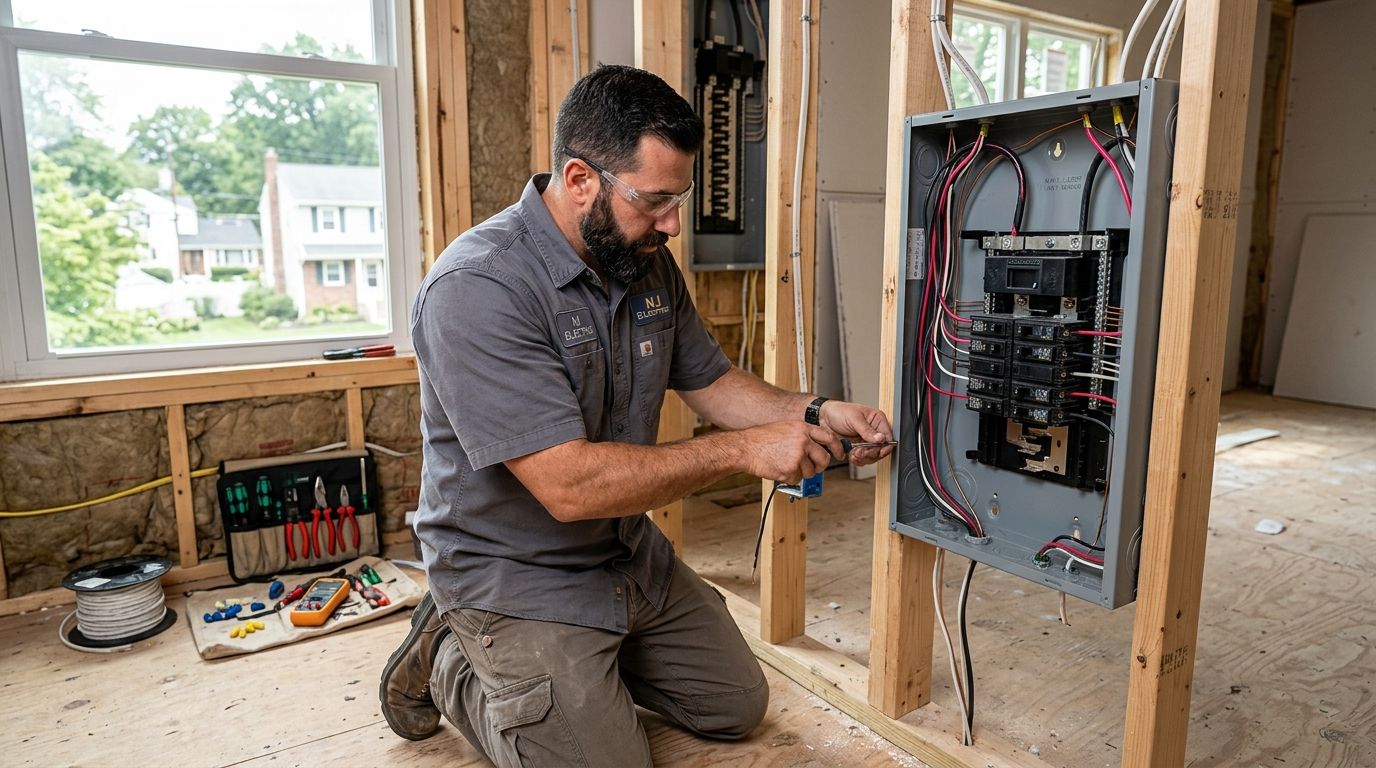
Subpanel installation for a NJ home addition adds a dedicated breaker box that feeds new circuits to the addition without touching your existing main panel's capacity. It matters most when the addition is far from the main panel, when it needs its own disconnect (a detached garage, a finished basement suite, an ADU), or when the main panel is already full and can't take more breakers.
- Subpanel installation NJ projects typically run 60A to 100A depending on the addition's load, not the whole house.
- Spartan Home Pros verifies main panel headroom before quoting a subpanel — a maxed-out 100A main panel needs a service upgrade first, not just a subpanel.
- NJ Uniform Construction Code requires a permit and inspection for subpanel work in Monmouth, Middlesex, Somerset, and Union counties.
- Undersizing the subpanel for a future EV charger or hot tub is the most common and most expensive mistake homeowners make in 2026.
Why subpanel installation matters for NJ home additions
A home addition changes your electrical load whether it's a family room, a primary suite, or a finished basement. Running new circuits back to a crowded main panel means finding open breaker slots that often don't exist, especially in older Central NJ homes still wired around a 100-amp service from the 1970s or 80s.
A subpanel solves that by creating a second point of distribution close to the new load, which shortens wire runs and keeps voltage drop in check over distance. It also isolates the addition's circuits so an inspector can sign off on the new work without re-certifying your entire existing panel.
Homeowners planning an electrical panel upgrade for home additions in NJ usually land in one of two buckets: the main panel has room and just needs a subpanel fed off it, or the main panel is maxed out and needs a full service upgrade before a subpanel makes sense at all.
Plan the addition before you plan the panel
Calculate the added electrical load
Before anyone touches a breaker, figure out what the addition actually needs to run. This is the step most homeowners skip, and it's the one that determines subpanel size.
- List every fixed appliance going into the addition: HVAC mini-split, kitchenette, laundry, hot tub
- Add up lighting circuits and general-purpose outlet circuits (NEC requires spacing rules for outlets)
- Note any 240-volt loads separately — these need double-pole breakers and heavier wire
- Factor in future additions like an EV charger or a second AC unit, not just what's installed on day one
- Use the square footage of the addition to estimate general lighting load per NEC Table 220.12
Decide where the subpanel goes
Location drives both cost and code compliance. A subpanel installed 80 feet from the addition costs more in copper and voltage drop than one installed 15 feet away.
- Basement or garage walls near the addition keep feeder runs short
- Detached structures (garages, pool houses) need a subpanel with its own grounding electrode system
- Outdoor subpanels need a weatherproof, in-use rated enclosure
- Keep 36 inches of clear working space in front of the panel per NEC 110.26
- Avoid locations behind finished drywall — inspectors need panel access
Choose the right amperage and breaker count
This is where a lot of NJ homeowners guess low and regret it later. A 60-amp subpanel with 8 slots covers a small addition with basic lighting and outlets. A 100-amp subpanel with 20-24 slots covers a kitchen addition, a finished basement with a bathroom, or anything that might get an EV charger down the line.
- 60A / 8-12 slots: single-room addition, lighting and outlets only
- 100A / 20-24 slots: multi-room addition, kitchen or bath, HVAC included
- Leave at least 2-4 open slots for future circuits — retrofitting a full subpanel later costs more than sizing up now
- Check that your main panel has an open double-pole breaker rated to feed the subpanel
Homeowners already thinking ahead to a charger should read electrical panel upgrades for EV charger installation in NJ before finalizing subpanel amperage, since retrofitting for 240-volt EV load after the fact means opening the wall again.
Pull the permit before work starts
NJ Uniform Construction Code treats subpanel installation as electrical work requiring its own permit, separate from the building permit for the addition itself. Municipalities across Monmouth, Middlesex, Somerset, and Union counties require this regardless of whether the addition permit is already approved.
- Confirm the electrical permit is filed under a licensed electrical contractor, not the general contractor
- Schedule the rough-in inspection before drywall closes up the wiring
- Keep the subpanel accessible for the inspector — no furniture, no finished walls blocking it
- Ask whether your township requires a separate inspection for the feeder run itself
A homeowner who has never handled this before should walk through how to plan an electrical panel upgrade before a renovation early, because permit timing affects the whole renovation schedule, not just the electrical piece.
Run the feeder and tie in the breakers
This is licensed-electrician territory, not a DIY step. The feeder wire gauge has to match the subpanel amperage exactly — undersized feeder wire is a fire hazard and an automatic inspection failure.
- Feeder conductors are sized per NEC 310 tables based on amperage and distance
- The main panel breaker feeding the subpanel must match the feeder's ampacity
- Grounding and bonding rules differ for subpanels in the same structure versus detached structures
- Load balancing across both panel legs keeps voltage stable under full draw
Spartan Home Pros runs this step with payroll electricians, not subcontractors, which matters for warranty continuity if something needs to be revisited after inspection.
Schedule the final inspection
Once the subpanel is wired and labeled, the municipal inspector checks the tie-in, grounding, and breaker sizing against the permit.
- Corrections at this stage are common on DIY or unlicensed work — budget time for a follow-up visit
- Keep the permit card and inspection sign-off for your homeowner's insurance file
- A passed final inspection is what closes out the permit with the township
Label the subpanel directory
A subpanel is only as useful as its labeling. An unlabeled panel is a liability the next time anyone — including you — needs to shut off power to a specific circuit.
- Write a clear circuit directory inside the panel door
- Label each breaker by room and function, not just "outlet" or "light"
- Leave a note on unused slots so future electricians know what's already accounted for
Comparing your options for a NJ home addition
| Option | Best for | Key limitation |
|---|---|---|
| Subpanel only (main panel has room) | Additions with a nearby main panel and open breaker slots | Doesn't solve an already-full or undersized main panel |
| Full main panel upgrade (100A to 200A) | Older homes where the main panel is maxed out before the addition even starts | More disruptive and requires utility coordination |
| Panel upgrade plus subpanel | Larger additions, detached structures, or homes planning an EV charger and generator later | Longer project timeline and two permits instead of one |
| Temporary extension cords or power strips | Nothing — not a real option for permanent addition circuits | Fails inspection, unsafe for permanent loads, voids insurance in a fire claim |
Verdict: for most Central NJ additions with a nearby, code-compliant main panel, a properly sized subpanel is the right call — but skip straight to a full panel upgrade if the main panel is already at capacity.
Get your subpanel sized correctly
Spartan Home Pros checks main panel headroom before quoting the job.
Common mistakes NJ homeowners make with subpanel installation
- Sizing for today only — installing a 60-amp, 8-slot subpanel with zero room for an EV charger or hot tub added two years later
- Assuming the addition permit covers electrical — NJ townships require a separate electrical permit even when the building permit is already approved
- Ignoring main panel capacity — adding a subpanel breaker to a main panel that's already fully loaded, which fails inspection or trips under load
- Placing the subpanel too far from the addition — long feeder runs increase voltage drop and installation cost without adding capacity
- Hiring unlicensed labor for the tie-in — a failed inspection on the feeder connection means reopening finished walls
FAQ
How much does subpanel installation cost in NJ?
Cost depends on amperage, distance from the main panel, and whether the main panel has open capacity. Get a written estimate that separates permit, labor, and material so you can compare it against a full panel upgrade quote.
Do I need a permit for a subpanel in New Jersey?
Yes. NJ Uniform Construction Code requires an electrical permit and inspection for subpanel installation, separate from the building permit for the addition itself, in every Central NJ township.
Is a subpanel the same as a panel upgrade?
No. A subpanel adds a second distribution point fed from your existing main panel, while a panel upgrade replaces the main panel itself, usually to increase total service amperage from 100A to 200A.
What size subpanel do I need for a home addition?
Most single-room additions need 60 amps with 8-12 breaker slots, while multi-room additions with a kitchen, bathroom, or HVAC need 100 amps with 20-24 slots. Size up if an EV charger or hot tub is planned within a few years.
Can I install a subpanel myself?
Load calculation and location planning can be done yourself, but the feeder wire sizing, breaker tie-in, and grounding must be done by a licensed electrician to pass NJ inspection.
Does my main panel need to be upgraded before adding a subpanel?
Only if it's already at or near capacity. A licensed electrician checks available breaker slots and total amperage headroom before recommending a subpanel versus a full panel upgrade.
How long does subpanel installation take in NJ?
The electrical work itself is typically completed in a day, but the permit and inspection process adds time on top of that, and timing varies by township.
Will a subpanel support a future EV charger?
Only if it's sized for it upfront. A 60-amp subpanel with no spare slots won't support a 240-volt EV charger circuit added later without rework.
One last thing
The single biggest cost driver in a 2026 subpanel job isn't the panel itself — it's whether the main panel has open breaker space and amperage headroom. Homes with a maxed-out 100-amp main panel end up paying for a full service upgrade anyway, so get that checked before anyone quotes the subpanel in isolation.


