
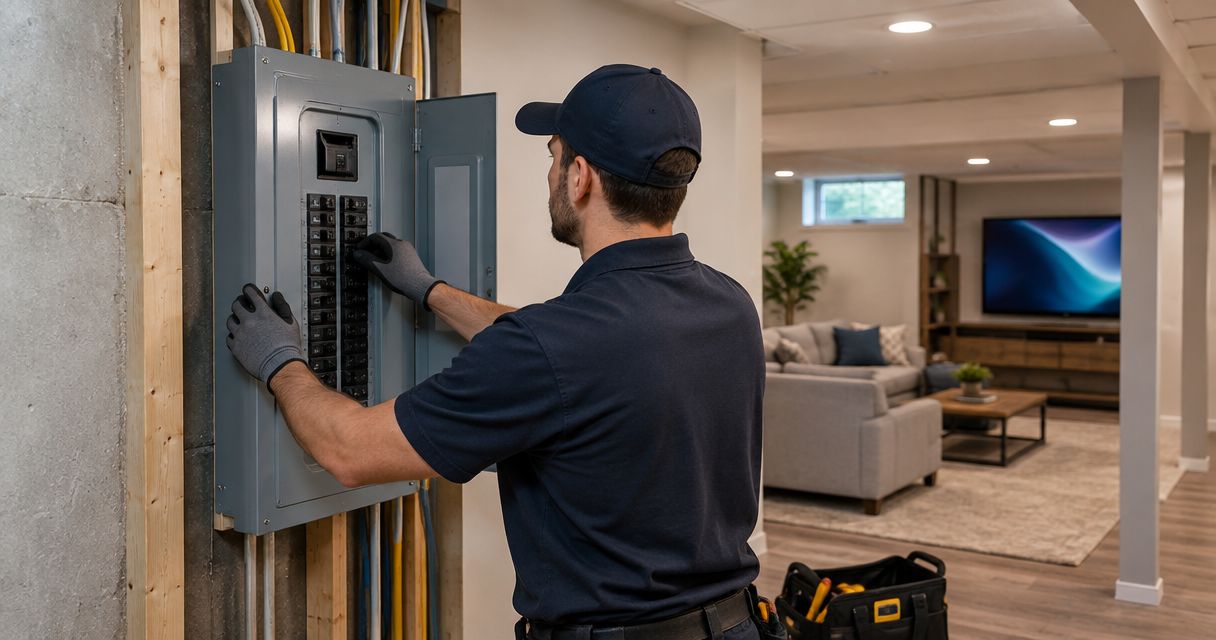
Finishing a basement in Central New Jersey almost always adds more electrical load than the existing panel was sized for, which means a panel upgrade for finished basement work usually has to happen before drywall goes up, not after the fact.
- A 100-amp panel runs out of room fast once a basement adds recessed lighting, a mini-split, and a bathroom.
- Spartan Home Pros recommends a load calculation before permits are filed, not after the space is finished.
- A subpanel covers a single addition; a full 200-amp panel upgrade fits basements adding HVAC plus a bathroom.
- Monmouth, Middlesex, Somerset, and Union County townships require an inspected permit for added circuits and panel changes.
Why this matters for finished basement conversions
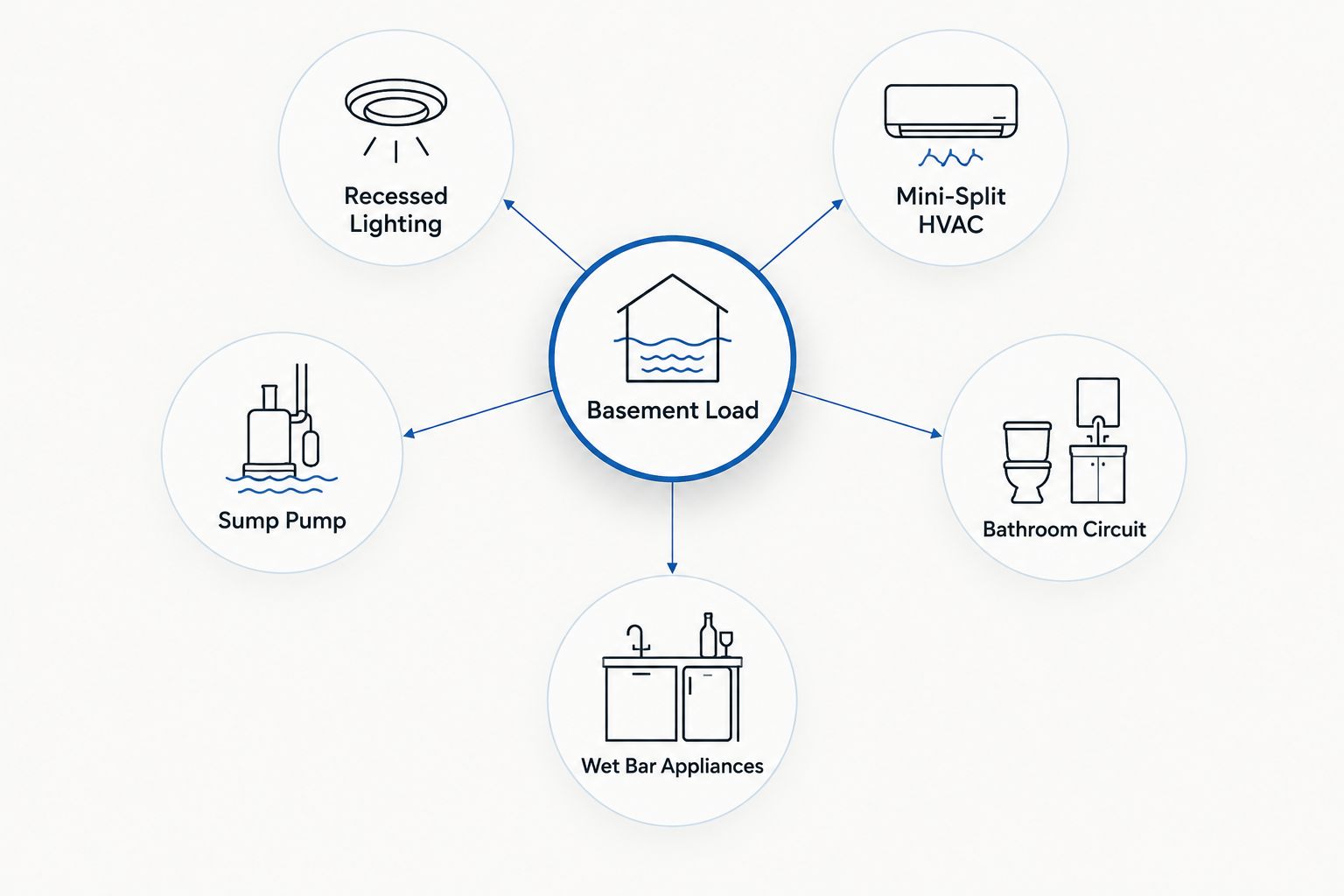
An unfinished basement in Central New Jersey usually runs on a handful of outlets and maybe a sump pump. Turn that same space into a bedroom, home theater, or in-law suite and you're adding recessed lighting, a ductless mini-split or baseboard heat, a bathroom with GFCI protection and an exhaust fan, and sometimes a wet bar with its own appliances.
Most homes built before the 1990s in Monmouth, Middlesex, Somerset, and Union counties still run 100-amp service. That was fine for a house without a finished basement. It's rarely enough once you stack lighting, HVAC, and a bathroom on top of what the kitchen and laundry already draw. Planning an electrical panel upgrade before a renovation starts with this load math, not with picking fixtures.
Township inspectors also treat basement conversions as a trigger for permit review. Any added circuit or amperage change on a habitable space needs an inspected permit in 2026, and panel capacity is usually the first thing flagged.
Calculate your basement's added electrical load
Before anyone touches the panel, list what's actually going into the space.
- List every fixture and appliance going into the finished basement: recessed lights, mini-split or electric baseboard, bathroom exhaust fan and GFCI outlets, sump pump, wet bar fridge or microwave, home theater gear.
- Add up amperage draw per circuit, not just wattage — HVAC equipment and pumps pull more current on startup than they do running steady.
- Compare that total against what's already on the main panel: kitchen, laundry, existing HVAC, and any EV charger or hot tub circuit already installed.
- Build in headroom for at least one future circuit; NJ building departments often want spare breaker slots visible at inspection.
Inspect your existing panel's condition and capacity
- Check the amperage rating stamped inside the panel door — most older Central NJ homes run 100 amps, some still run 60.
- Look for double-tapped breakers, rust, or an outdated brand like Federal Pacific or Zinsco, which flags a safety issue on its own regardless of the basement project.
- Count open breaker slots. A full panel with no room forces either a subpanel or a full replacement.
- Confirm the service wire size feeding the panel; a 100-amp panel fed by 100-amp service can't be reasonably upsized without also upgrading the service entrance.
Spartan Home Pros walks through this inspection as part of determining whether your electrical panel needs an upgrade before quoting basement work.
Decide between a subpanel and a full panel upgrade
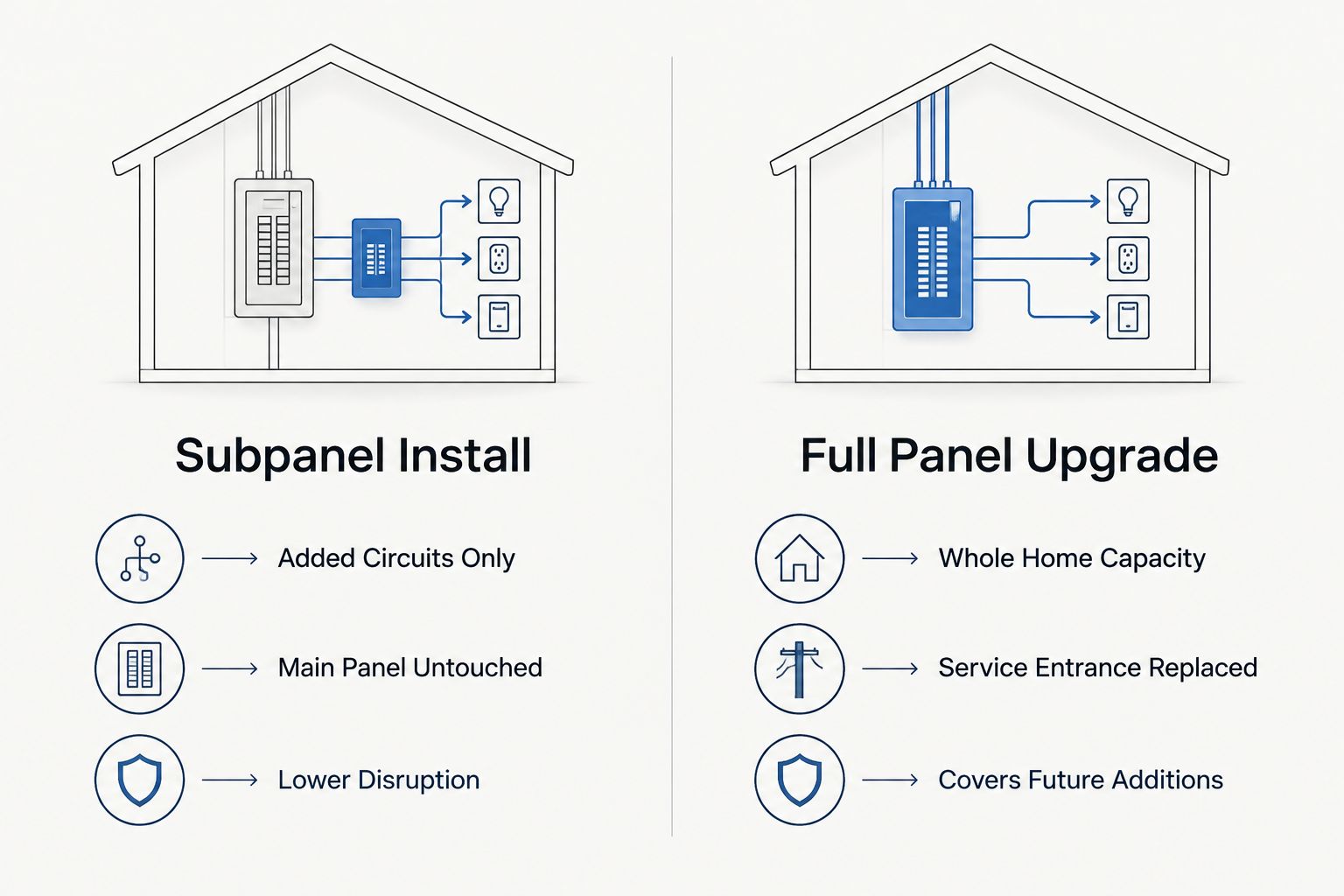
- A subpanel adds breaker space for basement circuits without touching the main panel or the service size.
- A full panel upgrade, typically to 200 amps, replaces the main panel and service entrance, covering the basement plus future additions like an EV charger or generator.
- A subpanel makes sense when the main panel still has room and the basement load is modest — lighting plus one HVAC zone.
- A full upgrade makes sense when the panel is already full, outdated, or the basement adds a bathroom, kitchenette, and HVAC together.
Subpanel installation for NJ home additions covers what a subpanel handles versus what forces a full swap.
Plan basement-specific circuits before wiring starts
- Dedicate a GFCI-protected circuit to any bathroom sink or wet bar sink area.
- Run the sump pump on its own breaker, separate from lighting circuits.
- Size the mini-split or electric heat circuit to the manufacturer's rated amperage, not a guess.
- Split lighting circuits from receptacle circuits so a tripped breaker doesn't kill the whole room.
- Add AFCI protection where NJ code requires it for finished living space.
Pull permits and schedule township inspection
- File an electrical permit before work starts — required in Monmouth, Middlesex, Somerset, and Union counties for panel and circuit changes.
- Match the permit scope to the actual work: panel upgrade, subpanel, and each new circuit type.
- Schedule a rough-in inspection before drywall goes up and a final inspection once devices are installed.
- Keep the permit card and inspection sign-off — it matters at resale and for insurance claims later.
Hire a licensed electrician for the panel and circuit work
- Confirm the contractor holds an active NJ electrical license and pulls the permit under their own name, not yours.
- Ask whether the crew subcontracts the work or uses payroll technicians — Spartan Home Pros does not subcontract panel work, and that accountability matters when something needs a callback.
- Get a written scope covering the panel size, subpanel if used, and every new circuit, priced as a flat number rather than an hourly rate.
- Confirm liability insurance and ask who handles utility coordination if the service size changes.
Get a basement panel load check
A licensed NJ electrician reviews your existing panel before basement work starts.
Test, label, and document the finished panel
- Verify every new breaker trips correctly under load before walls are closed up.
- Label each circuit at the panel clearly — lighting, HVAC, bathroom, sump pump, wet bar — so future work isn't guesswork.
- Keep the permit, inspection sign-off, and panel schedule together for your records.
- Photograph the open panel before the cover goes back on; useful for insurance and any renovation after 2026.
Comparing panel options for a basement conversion
| Option | Best for | Key limitation |
|---|---|---|
| Subpanel addition | Basements adding lighting plus one HVAC zone on a panel with spare capacity | Doesn't fix an already-full or outdated main panel |
| Full panel upgrade (200A) | Basements adding a bathroom, kitchenette, HVAC, and future EV charger or generator | Requires utility coordination and a full permit/inspection cycle |
| Federal Pacific or Zinsco replacement | Any basement conversion where the existing panel brand is a known hazard | Often mandatory regardless of basement scope, adds cost outside the basement budget |
| DIY circuit additions | Nothing in NJ — panel and circuit work needs a licensed electrician pulling the permit | Not legal in most Central NJ townships without a licensed electrician of record |
A finished basement that adds a bathroom and HVAC almost always needs a full panel upgrade, not a subpanel — the load math rarely works out any other way.
Common mistakes homeowners make on basement panel upgrades
- Adding basement circuits before checking whether the main panel has any breaker slots or amperage left.
- Wiring the bathroom or wet bar without GFCI protection, which fails inspection and leaves a shock hazard behind finished walls.
- Skipping the permit because "it's just a basement," then getting flagged during a home sale inspection or insurance claim.
- Sizing the HVAC circuit off a rough guess instead of the manufacturer's rated amperage, which trips breakers under real load.
- Hiring an unlicensed contractor to save money upfront, then paying twice when the work fails inspection.
FAQ
Do I need a panel upgrade to finish my basement in NJ?
Not always — it depends on your existing panel's spare capacity and how much load the basement adds. A basement with just lighting and outlets may only need a subpanel; adding HVAC and a bathroom usually pushes the panel over its limit.
What size panel do I need for a finished basement?
Most Central NJ homes finishing a basement with lighting, HVAC, and a bathroom end up needing 200-amp service if they're still on 100 amps. A load calculation on the existing panel confirms the exact number before any work starts.
Can I add a subpanel instead of replacing the whole panel?
Yes, if the main panel has spare breaker capacity and the basement load is moderate — lighting plus one HVAC zone, for example. A subpanel adds circuits without touching the main service.
Do NJ townships require a permit for basement electrical work?
Yes, Monmouth, Middlesex, Somerset, and Union County townships all require an electrical permit for new circuits and panel changes tied to a habitable finished basement in 2026.
How do I know if my panel is too old to add basement circuits?
Check the amperage rating inside the panel door and look for brands like Federal Pacific or Zinsco, both known for safety issues. A full panel with no open breaker slots also signals it's time for an upgrade rather than an addition.
Does a finished basement bathroom need its own circuit?
Yes, bathroom outlets need GFCI protection on a dedicated circuit, and the exhaust fan typically runs on its own circuit as well. Bundling a bathroom onto an existing basement circuit usually fails inspection.
Can a mini-split HVAC system run off an existing basement circuit?
Rarely — mini-splits need a dedicated circuit sized to the manufacturer's rated amperage. Running it off a shared lighting or outlet circuit causes nuisance tripping under load.
How long does a panel upgrade take before basement drywall can go up?
The panel work itself is usually a one-day job, but the permit application, rough-in inspection, and scheduling around the township add time. Ordering the load calculation early in 2026 keeps this from delaying the drywall schedule.
One last thing
The single most overlooked step in a basement conversion isn't the panel itself — it's the order of operations. Get the load calculation and panel decision finalized before the basement layout is locked in. Moving a wall or adding a bathroom after the electrician has already sized the panel almost always means a second visit and a second permit filing, which costs more time than doing the math up front.


