
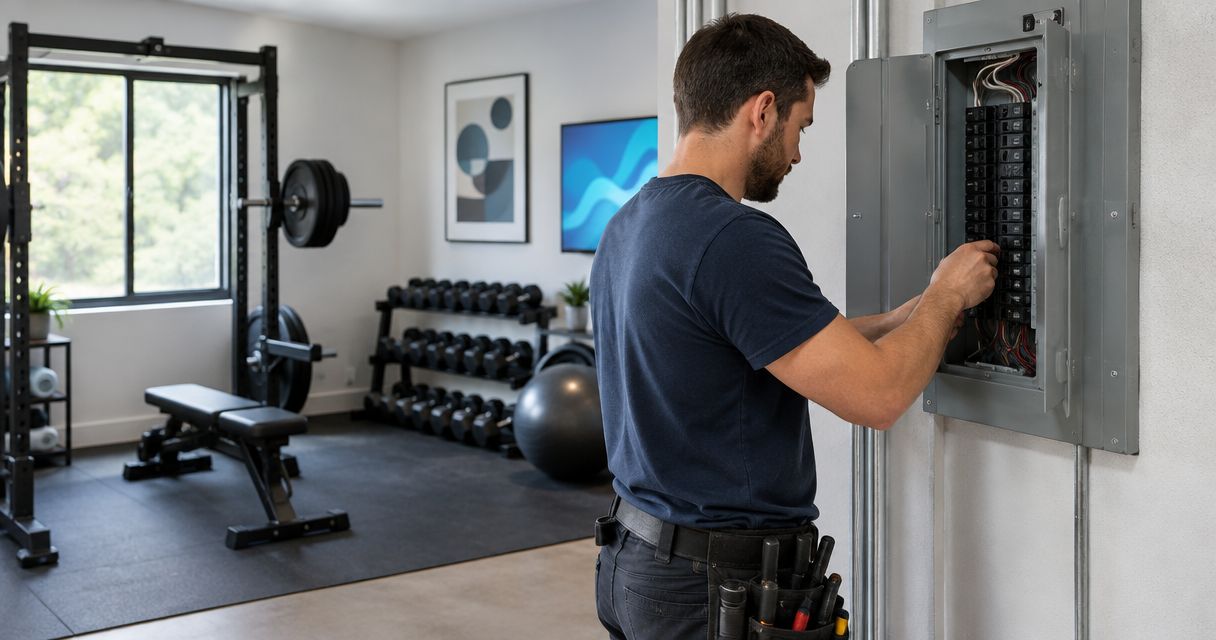
A panel upgrade for home gym spaces means resizing your electrical service so treadmills, power racks, saunas, cold plunge chillers, and mini-split units can each run on a dedicated circuit without tripping a breaker or overheating a shared wire. Most Central New Jersey homes were wired for a bedroom or a den, not a room that pulls the combined load of a small commercial fitness studio.
- A panel upgrade for home gym rooms usually means new dedicated circuits, not just a bigger panel box.
- A 100-amp panel with a sauna, mini-split, and cardio equipment in one room almost always forces a 200-amp upgrade in 2026.
- Subpanel installation off an existing panel with spare capacity solves most single-piece-of-equipment gym additions.
- GFCI protection is required near saunas and cold plunge units — it is code, not an upsell.
- Spartan Home Pros pulls permits and handles inspection for every panel upgrade for home gym conversions in Monmouth, Middlesex, Somerset, and Union counties.
Why this matters for home gym owners
A garage or basement gym in 2026 isn't a treadmill plugged into whatever outlet happens to be closest. It's a treadmill motor, a rack with an attached fan, a TV or sound system, a window AC or mini-split, and increasingly a sauna or cold plunge chiller — all running at the same time, in the same room, often on the same 15-amp circuit that used to power a lamp and a dehumidifier.
That's the load pattern that trips breakers, browns out lights mid-workout, and eventually cooks an outlet. If your panel already shows warning signs, read the signs your panel needs an upgrade before you buy another piece of equipment — a panel that's marginal for a normal house is not going to absorb a gym.
The fix isn't always a full panel replacement. Sometimes it's one new dedicated circuit. Sometimes it's a subpanel. Sometimes the existing panel is old enough — Zinsco, Federal Pacific, or a maxed-out 100-amp box — that the gym conversion is just the reason you finally deal with it in 2026 instead of putting it off another year.
Steps to plan a panel upgrade for your home gym
Inventory your equipment's electrical load
Before calling anyone, write down what's actually going in the room. Most gym equipment lists its amp draw or wattage on a nameplate or in the manual.
- Treadmill or elliptical motor (many draw 15-20 amps under load, more than a hair dryer)
- Power rack accessories: fans, phone chargers, Bluetooth speakers
- Window AC unit or ductless mini-split for the room
- Sauna or cold plunge chiller, if you're adding one
- TV, sound system, or smart mirror
- Any lighting upgrades planned for the space
Check your panel's current amperage and open slots
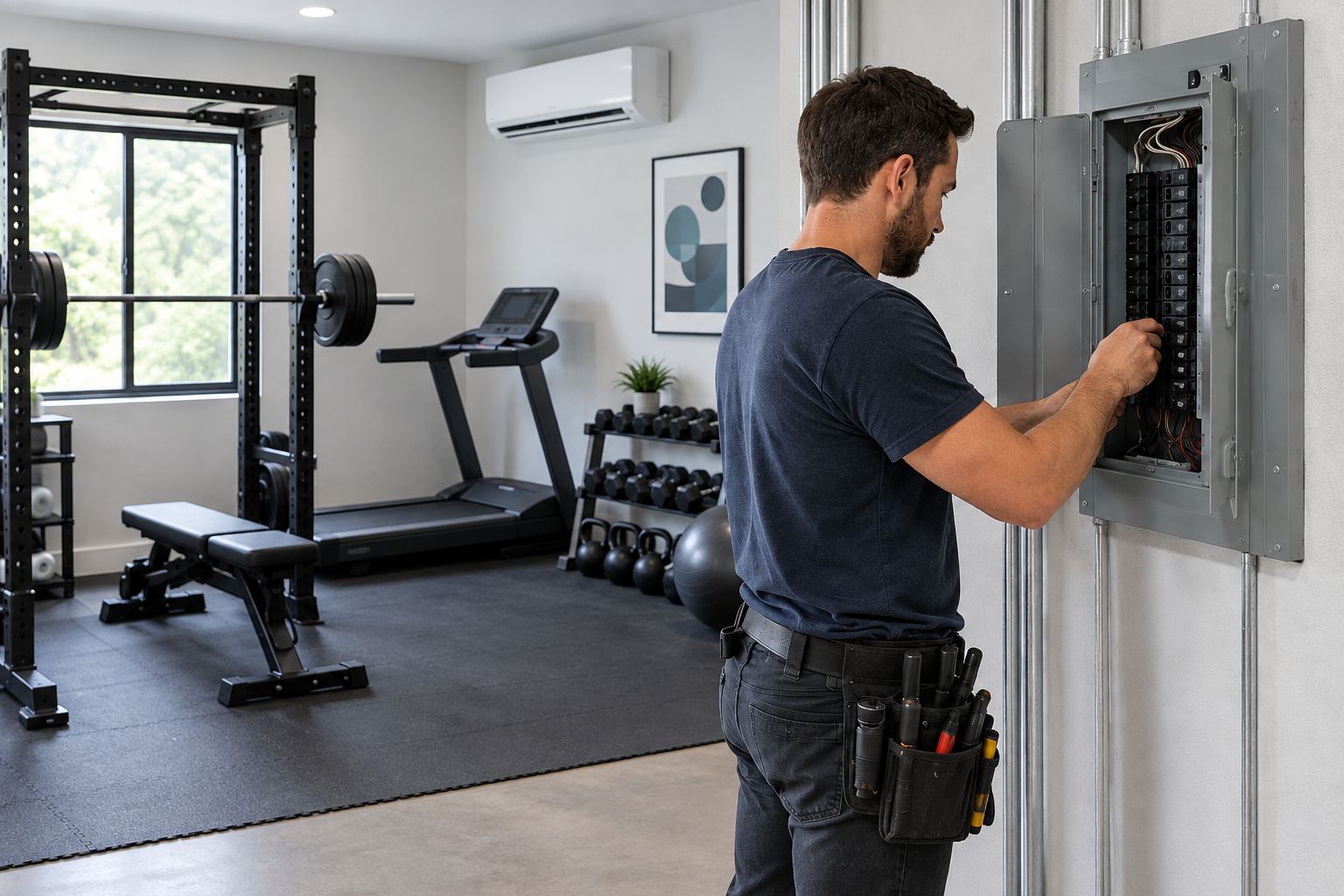
Open the panel door and read the main breaker — it's stamped on the handle, usually 100, 150, or 200 amps. Count the open slots.
- 60-amp and 100-amp panels from before the mid-1990s are common in older Central NJ homes and rarely have room for a gym's added load
- A panel with zero open slots needs a subpanel or a tandem breaker solution before anything else gets added
- Zinsco and Federal Pacific panels are known for breakers that don't trip reliably under overload — a gym is the wrong place to find that out the hard way
- Note the panel's location relative to the gym room; distance affects how much new wire run is needed
Map dedicated circuits for high-draw equipment
Code requires dedicated circuits for certain fixed appliances, and it's good practice for anything that draws more than a few amps continuously.
- Treadmills and heavy cardio equipment typically need their own 20-amp, 120-volt circuit
- Saunas and cold plunge chillers usually need a dedicated 240-volt circuit sized to the unit
- Mini-split or window AC units for the room need a separate circuit from the equipment circuits
- GFCI protection is required for any circuit near water — cold plunge tubs and sauna rooms both qualify
- Sound and lighting can often share a circuit; motors and heating elements never should
Decide between a subpanel and a full panel upgrade
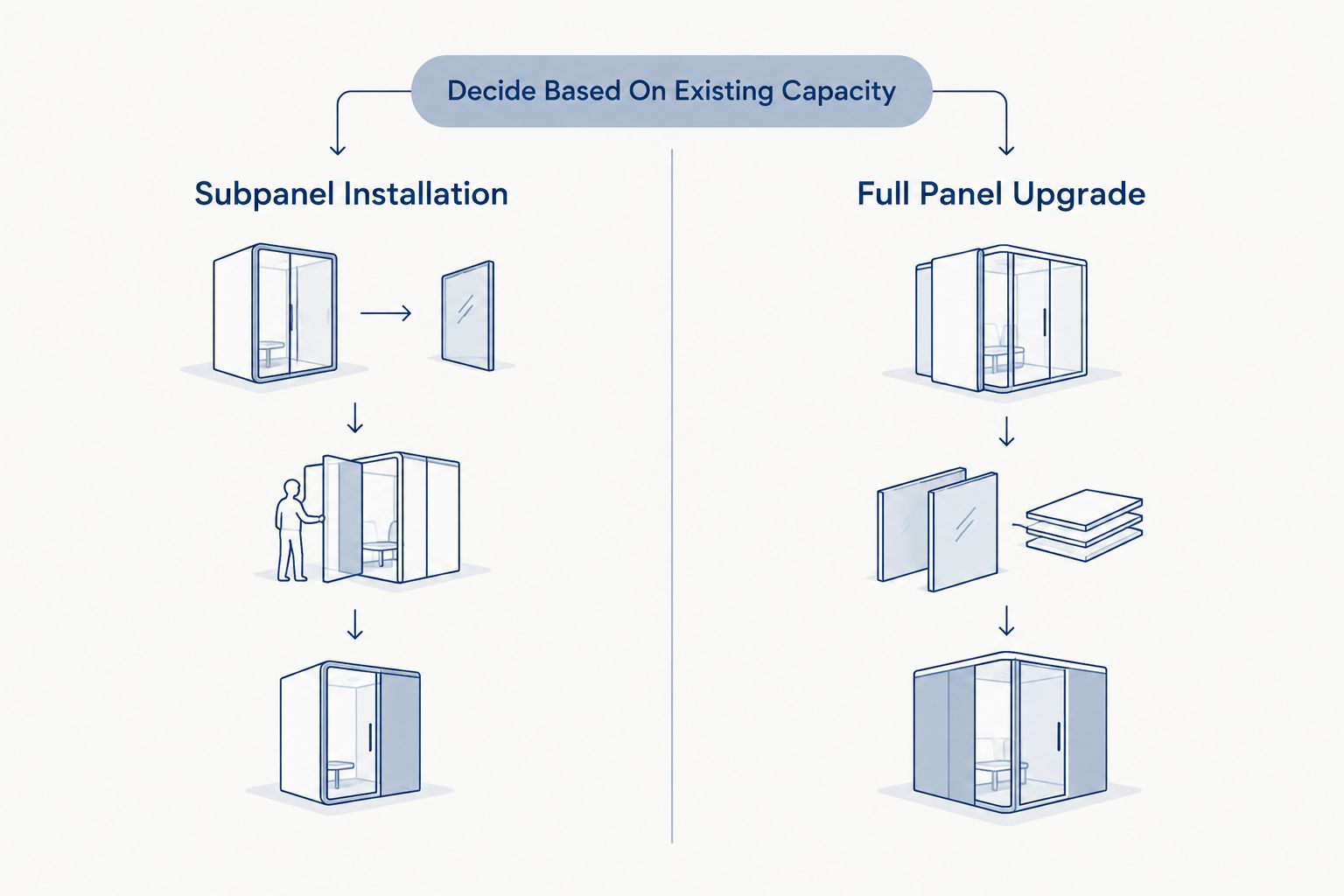
This is the step where a DIY plan usually stops being enough. A subpanel adds breaker space fed from your existing main panel — it works when the main panel has spare capacity to feed it. A full panel upgrade replaces the main panel with a higher-amperage box, usually 200 amps, when the existing service can't support the added draw at all.
- If your main panel is under 80% loaded and has physical space, a subpanel is often the cheaper, faster path
- If your panel is already full, undersized, or a known problem brand, the upgrade has to happen before the subpanel conversation even starts
- Adding a sauna, a mini-split, and cardio equipment in the same project almost always pushes a 100-amp home into upgrade territory
- Spartan Home Pros evaluates the panel and the planned equipment load together before recommending either option — not before, and not as a guess
“If your panel is already full at 100 amps, a home gym with a sauna and a mini-split is the load that finally forces the upgrade.”
Schedule the electrical work with a licensed NJ electrician
Once you know whether you need a subpanel, a panel upgrade, or both, the work itself needs a licensed electrician pulling permits — not a handyman running a new circuit off the nearest open breaker.
- Spartan Home Pros does not subcontract panel work; the technician who assesses the job is the one who wires it
- Permits and township inspection are handled as part of the job, which matters at resale if a home warranty or inspector ever checks panel history
- Every new circuit gets labeled at the panel so you know which breaker feeds the treadmill versus the sauna
- Scheduling around a renovation timeline matters — planning a panel upgrade before a renovation is worth reading if the gym is part of a bigger basement or garage buildout
If the gym room also needs cooling, a ductless mini-split installation is usually wired at the same time as the panel work, since both jobs open the same walls and the same panel.
Plan for what comes after the gym
A lot of gym conversions turn into bigger projects within a year or two — an EV charger in the garage, a hot tub on the patio, a home theater in the basement.
- Ask for a panel with headroom, not just enough capacity for today's equipment
- If a hot tub or cold plunge is even a maybe for 2026 or 2027, wiring it safely from the start is cheaper than retrofitting later
- A 200-amp panel with two or three open slots costs less to install once than to upgrade twice
- Confirm the panel schedule (the label list inside the door) gets updated every time a new circuit is added, not just at the original install
Verify GFCI and AFCI protection after installation
The job isn't done when the breakers are in. Code compliance in a gym room with water or high-draw motors depends on the protection type matching the circuit.
- GFCI protection is required for any circuit within reach of a cold plunge or sauna
- AFCI protection is required on many living-space circuits under current NJ electrical code
- Test GFCI outlets and breakers with the test button monthly — a GFCI that doesn't trip on test isn't protecting anything
- Ask for a copy of the inspection sign-off; keep it with your home records
Comparing your options for a home gym electrical setup
| Option | Best for | Key limitation |
|---|---|---|
| Add dedicated circuits only | A single piece of cardio equipment in an otherwise normal room | Won't cover a sauna, cold plunge, or mini-split added later |
| Subpanel off existing panel | Garage or basement gyms with multiple new circuits and a panel that still has spare capacity | Only works if the main panel isn't already maxed out |
| Full panel upgrade to 200 amps | Full gym build-outs with AC, sauna, and heavy equipment together | Requires permit, utility coordination, and a full day of work |
| Panel upgrade plus subpanel | Detached garage gyms far from the main panel | Largest scope, most wire runs, longest install window |
Verdict: for anything beyond one treadmill, a full panel upgrade for home gym conversions is usually the answer once a sauna, cold plunge, or cooling unit enters the plan — a subpanel only makes sense when the main panel genuinely has room to spare.
Get your panel evaluated before you buy equipment
Spartan Home Pros checks panel capacity and equipment load together, no guessing.
Common mistakes home gym owners make
- Running everything off one circuit. Plugging a treadmill, a fan, and a speaker system into the same outlet strip because it's the only one near the equipment.
- Underestimating combined draw. Adding up the rack fan and the TV but forgetting the mini-split runs continuously during a workout, not just once.
- Skipping GFCI near water. Installing a cold plunge or sauna and assuming the existing outlet is fine because it looks like any other outlet.
- Assuming a 100-amp panel has room. Homes built before the mid-1990s often have 100-amp service that was already close to full before the gym equipment showed up.
- Not pulling permits. Unpermitted panel or circuit work becomes a problem at resale, and some home warranties won't cover unpermitted electrical work at all.
FAQ
Do I need a panel upgrade for a home gym?
Not always — a single cardio machine often just needs one dedicated circuit. A panel upgrade for home gym setups becomes necessary once you add a sauna, cold plunge, mini-split, or multiple heavy pieces of equipment in the same room.
What size circuit does a treadmill need?
Most treadmills need a dedicated 20-amp, 120-volt circuit because the motor draws significantly more current under load than a typical outlet is rated for.
Can I add a subpanel instead of upgrading my whole panel?
Yes, if your main panel still has spare capacity. A subpanel adds breaker space fed from the existing service; it doesn't help if the main panel is already at or near its limit.
Is GFCI protection required for a home sauna or cold plunge?
Yes. Any circuit within reach of water, including a cold plunge tub or sauna room, requires GFCI protection under current electrical code.
How do I know if my panel is too old for a gym conversion?
Zinsco and Federal Pacific panels, and most 60-amp or 100-amp panels installed before the mid-1990s, are common signs a panel needs replacing before adding gym-level load.
Does a home gym panel upgrade need a permit in NJ?
Yes. Panel upgrades and new circuit installations require a permit and township inspection in New Jersey, and skipping that step can cause problems at resale.
What amperage panel do most home gyms need?
A 200-amp panel covers most home gym conversions that include cardio equipment plus a sauna, cold plunge, or mini-split, while a 100-amp panel may work for lighter setups with just one dedicated circuit added.
Can I DIY a dedicated circuit for gym equipment?
Running new circuits and connecting them to the panel is electrical work that requires a licensed electrician and a permit in New Jersey — it isn't a safe or legal DIY project.
One last thing
The piece of equipment that most often forces a panel upgrade for home gym owners in 2026 isn't the treadmill — it's the cold plunge chiller. Chillers run continuously to hold water temperature, and that steady draw on top of a mini-split and cardio equipment is what finally maxes out a 100-amp panel that was fine for the house alone.


