
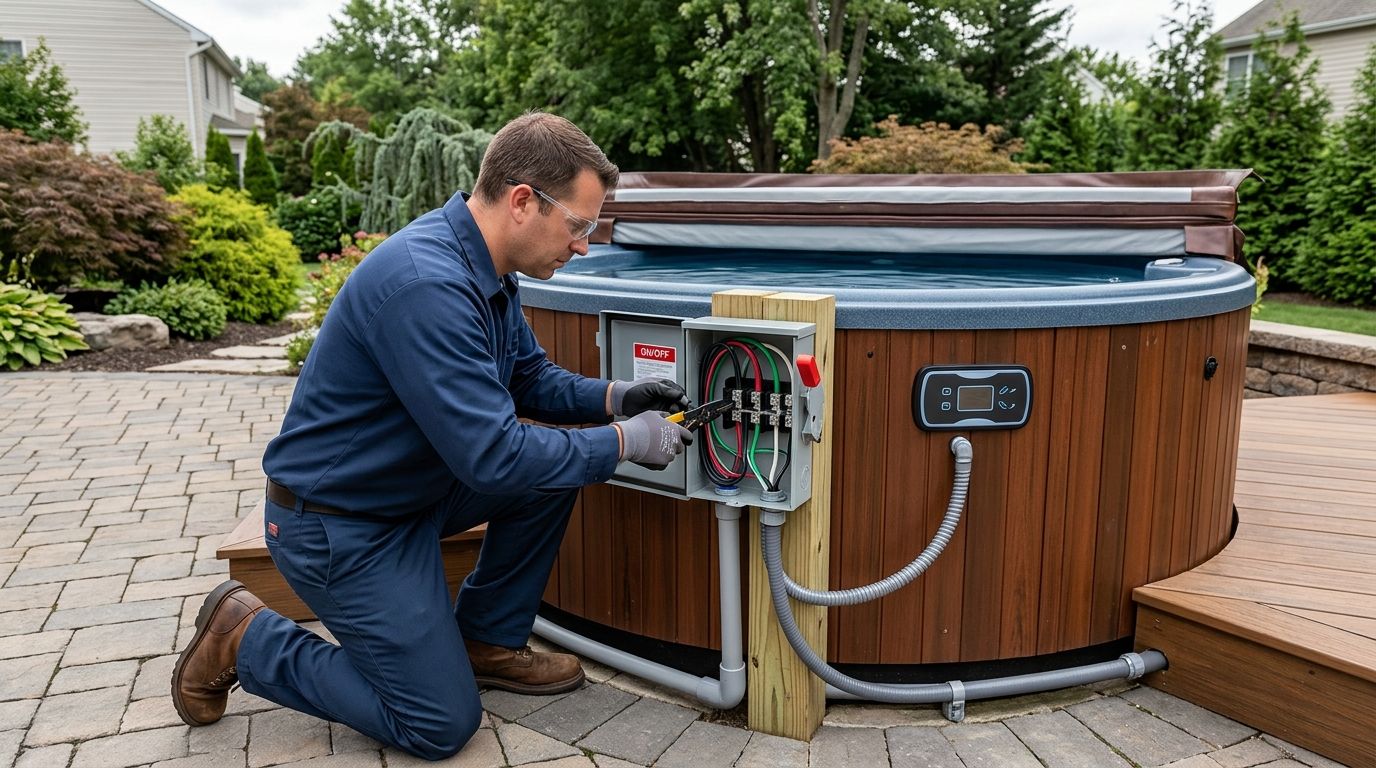
Wiring a hot tub safely in New Jersey means running a dedicated, GFCI-protected circuit sized to the tub's nameplate rating, installed by a licensed electrician who pulls a permit under the NJ Uniform Construction Code. Skip any one of those steps and you have a shock hazard sitting a few feet from standing water, not just a paperwork problem.
- A hot tub needs a dedicated GFCI-protected circuit sized to its nameplate rating, never a shared circuit or extension cord.
- 240-volt hardwired tubs typically run on 40 to 60 amp breakers; 120-volt plug-and-play models still require GFCI protection.
- NJ Uniform Construction Code requires a permit and inspection for hot tub electrical work in 2026 — skipping it can void coverage.
- Spartan Home Pros wires hot tub circuits and handles the panel work behind them across Monmouth, Middlesex, Somerset, and Union counties.
Why This Matters
Water and electricity next to each other is the exact scenario NEC 680 was written for, and NJ inspectors enforce it strictly on hot tub installs in 2026. A tub wired off a shared outlet or a non-GFCI breaker doesn't trip and shut off during a ground fault the way it's supposed to — it just keeps feeding current into whatever is touching the water.
Insurance is the other half of it. Unpermitted electrical work tied to water damage, fire, or a shock injury is a common denial reason on homeowner claims, and a hot tub circuit installed without an electrical permit is exactly the kind of work that gets flagged during a claim review.
How to Wire a Hot Tub Safely: The Step-by-Step Process
Hot tub wiring follows a fixed sequence whether you're in Cranford or Colts Neck, and skipping steps is where DIY jobs fail inspection.
- Read the spec plate. Every hot tub has a nameplate listing required voltage, amperage, and breaker size — this is the number everything else is built around.
- Check panel capacity. A 100-amp panel already running central air, a dryer, and a range may not have room for a 50-amp hot tub circuit without an upgrade.
- Run a dedicated circuit from the panel to a GFCI breaker or a GFCI-protected disconnect — never a shared circuit.
- Mount the disconnect within sight of the tub and at least 5 feet from the water's edge, per NEC 680.12.
- Bond all metal parts — pump, heater, ladder, any metal within 5 feet of the tub — using #8 AWG copper conductor per NEC 680.26.
- Pull the electrical permit before the wire goes in the ground or behind a wall.
- Schedule the rough-in and final inspection — the tub doesn't get filled until the inspector signs off.
| Step | What It Covers | Who Should Handle It |
|---|---|---|
| Panel capacity check | Confirms breaker slots and amperage available | Licensed electrician |
| Dedicated GFCI circuit | Shock protection at the source | Licensed electrician |
| Bonding grid | Equalizes voltage on metal parts near water | Licensed electrician |
| Permit and inspection | Legal sign-off, insurance protection | Municipal inspector |
120-Volt Plug-and-Play Hot Tubs: Still Need a Dedicated GFCI Circuit
A 120-volt tub that plugs into a standard outlet still isn't a DIY job. NEC 680 requires GFCI protection on that circuit regardless of voltage, and the outlet has to be dedicated — nothing else sharing the breaker. Homeowners assume plug-and-play means no electrician, but the circuit still has to be pulled, protected, and permitted the same as a hardwired unit.
Verdict: Wire it as its own circuit with a GFCI breaker, not as an extension of an existing outlet.
240-Volt Hardwired Hot Tubs: 40 to 60 Amp Circuits
Most full-size hot tubs with a heater and two-speed pump draw enough load to require a 240-volt circuit in the 40 to 60 amp range, hardwired directly into a GFCI disconnect rather than plugged into an outlet. This is where panel capacity becomes the real question — a 100-amp panel already carrying HVAC and kitchen loads often can't absorb another 50-amp circuit without a panel upgrade for hot tub and pool installation.
Verdict: Confirm available panel capacity before ordering the tub, not after it's sitting in the driveway.
Why Hot Tub Wiring Requirements Vary
- Heater and pump load — a two-speed pump with a 6kW heater draws far more than a single-speed pump with no heater.
- Distance from the panel — longer wire runs mean larger conductor sizing to avoid voltage drop.
- Existing panel amperage — a 100-amp panel has less room than a 200-amp panel for an added 50-amp circuit.
- Above-ground vs. in-ground installs — in-ground tubs often share bonding requirements with nearby pool electrical wiring.
- Local inspector interpretation — some NJ municipalities require additional disconnect placement documentation at final inspection in 2026.
Can I Wire a Hot Tub Myself in NJ?
No — NJ requires a licensed electrical contractor to pull the permit, and unpermitted hot tub wiring that fails inspection has to be torn out and redone at the homeowner's cost. Beyond the legal requirement, a ground fault near a tub full of people is not a place to find out the wiring was done wrong.
How Far Does a Hot Tub Disconnect Need to Be From the Tub?
At least 5 feet from the water's edge, in a spot visible from the tub, per NEC 680.12. Closer than that and it becomes an unsafe touch point near standing water; the visibility requirement exists so someone can reach and kill power in an emergency without leaving the area.
Do I Need a Permit to Install a Hot Tub in NJ?
Yes — the NJ Uniform Construction Code requires an electrical permit and inspection for any circuit feeding a hot tub, and municipalities are enforcing this at final certificate of occupancy for new pool and spa installs in 2026. Skipping the permit doesn't just risk a fine; it removes the inspection step that catches wiring errors before the tub gets filled.
Get your hot tub wired right
Licensed electricians handle the circuit, bonding, and permit end to end.
FAQ
How to wire a hot tub safely in New Jersey?
Run a dedicated GFCI-protected circuit sized to the tub's nameplate rating, mounted disconnect at least 5 feet from the water, bonded per NEC 680.26, installed by a licensed electrician with a permit and inspection.
What size breaker does a hot tub need?
Most 240-volt hardwired hot tubs need a 40 to 60 amp GFCI breaker, sized to the amperage listed on the tub's nameplate. 120-volt plug-and-play models use a dedicated GFCI-protected outlet instead.
Do 120-volt hot tubs need GFCI protection?
Yes — NEC 680 requires GFCI protection on any hot tub circuit regardless of voltage. A 120-volt tub still needs its own dedicated, GFCI-protected outlet.
Can a 100-amp panel handle a hot tub?
It depends on existing load — a 100-amp panel already running central air and a range often lacks room for a 40 to 60 amp hot tub circuit without an upgrade.
How far does the hot tub disconnect need to be from the water?
At least 5 feet from the water's edge and within sight of the tub, per NEC 680.12, so power can be shut off quickly in an emergency.
Is a permit required to wire a hot tub in NJ?
Yes, the NJ Uniform Construction Code requires an electrical permit and inspection for hot tub circuits, and unpermitted work can affect insurance claims.
Can I wire my own hot tub in NJ?
No — NJ requires a licensed electrical contractor to pull the permit and perform the work; unpermitted DIY wiring that fails inspection has to be redone.
What gauge wire is used for hot tub bonding?
NEC 680.26 requires #8 AWG solid copper conductor to bond metal parts and equipment within 5 feet of the hot tub.
One Last Thing
The wiring itself is rarely what fails a hot tub install — the panel is. A 100-amp panel maxed out by central air, an electric range, and a dryer has no room left for a 40-amp hot tub circuit, and that's the point where a job that should take a day turns into a panel upgrade first. Check available amperage before the tub arrives, not after the breaker won't fit.


