
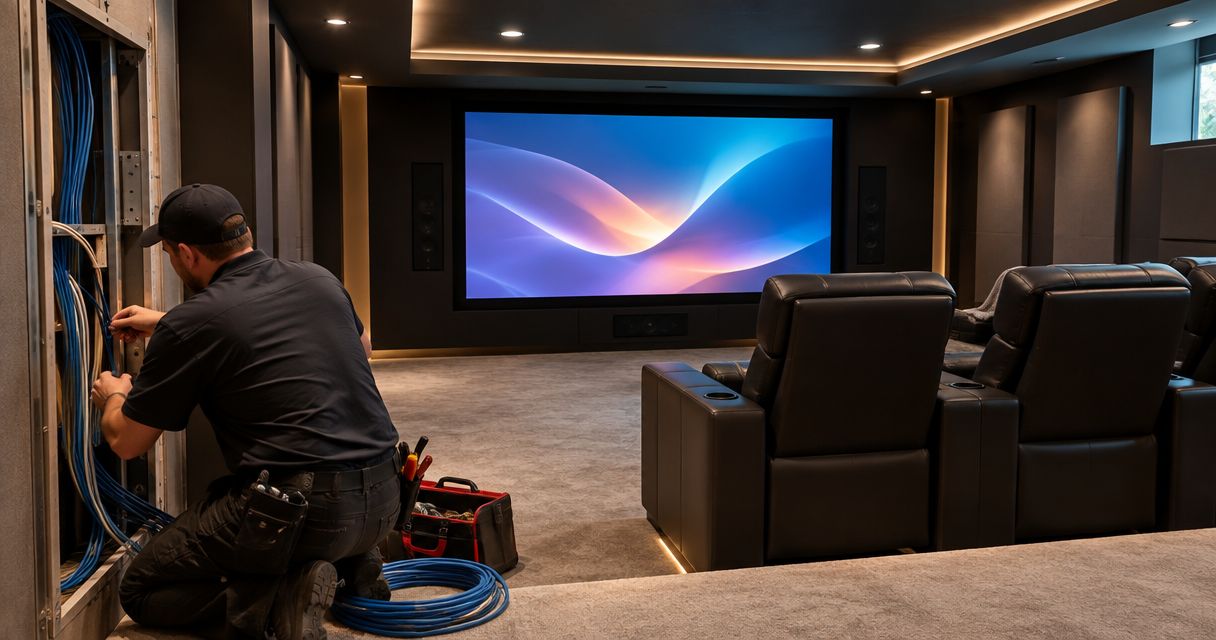
Electrical wiring for a home theater in NJ means a dedicated circuit sized for the AV rack, low-voltage cable kept separate from power wiring, and outlets planned around the screen wall before drywall goes up. Skip any of those three and you get a flickering picture, a breaker that trips during the movie's climax, or a wall you're paying to reopen.
- A dedicated 20-amp circuit for the AV rack stops the picture interference and nuisance trips shared circuits cause.
- Central NJ towns generally require a permit for any new circuit added during a 2026 basement media room build-out.
- Low-voltage speaker and HDMI cable needs 12+ inches of separation from 120V power wiring to avoid hum.
- A Federal Pacific or Zinsco panel needs replacement before it can carry a new home theater circuit safely.
- Spartan Home Pros runs the dedicated circuit, checks panel capacity, and coordinates inspection for Monmouth, Middlesex, Somerset, and Union County projects.
Why electrical wiring matters for home theaters in NJ
A home theater stacks high-draw electronics onto one wall: projector or TV, AV receiver, subwoofer amp, streaming boxes, and sometimes a second amp for in-ceiling speakers. Put all of that on an existing basement circuit that already feeds the sump pump or a refrigerator, and the first thing that fails is the breaker, not the equipment.
Much of the housing stock across Monmouth, Middlesex, Somerset, and Union County was built before 1980, which means a lot of these electrical panel upgrades for finished basement conversions start with a panel that was never sized for a media room in the first place. The wiring plan has to account for what's already on the panel, not just what's going into the new room.
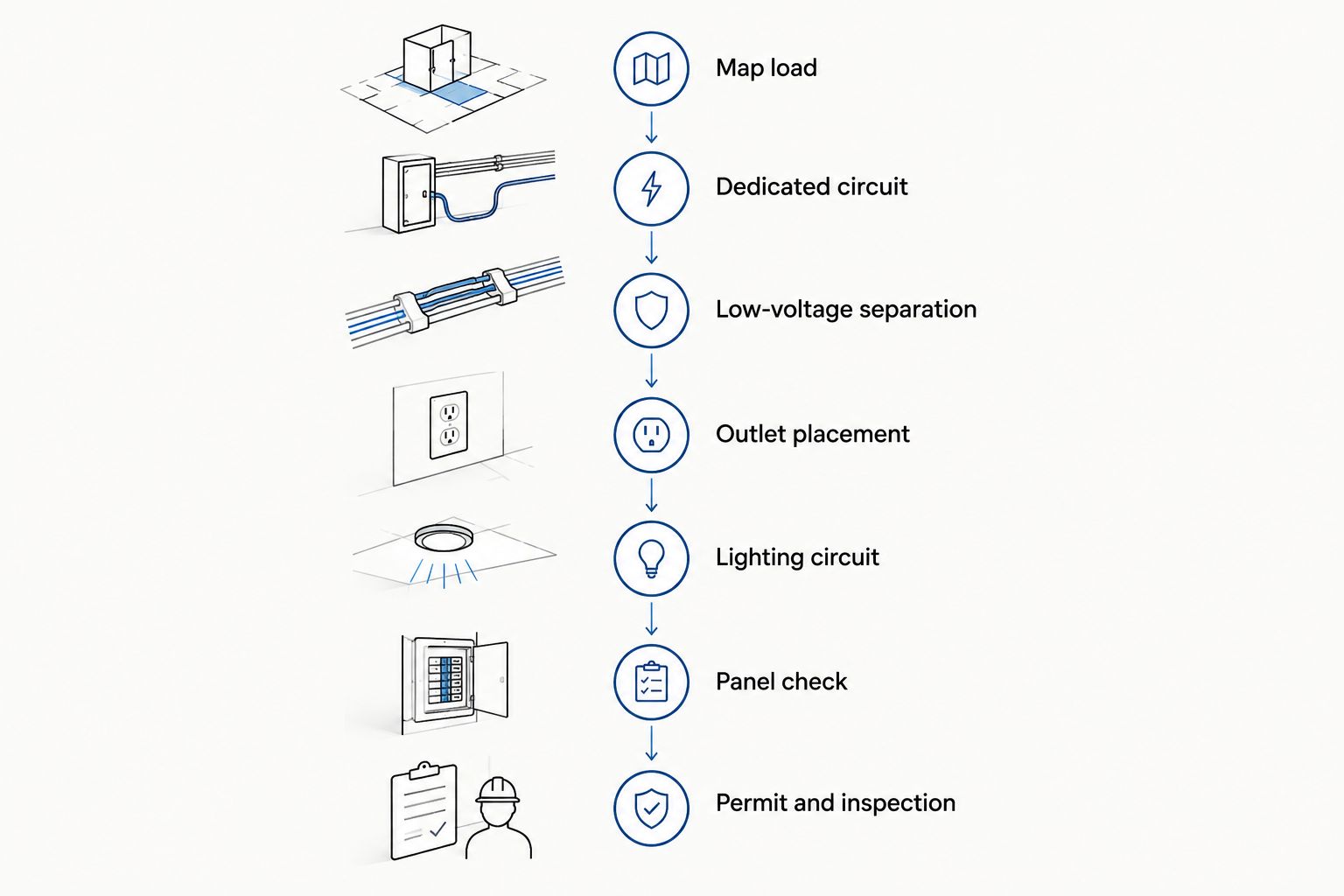
Map your equipment load before you wire anything
Start with a list, not a wire nut. Write down every device that will live in the room and its rough draw before anyone picks up a drill.
- Projector or large-format TV
- AV receiver and amplifier
- Subwoofer amp
- Streaming devices, gaming console, and any networking gear
- In-ceiling or in-wall speaker amp
- A dehumidifier if the room is a basement conversion
Run a dedicated circuit for your AV rack
The free version of this step is arithmetic: add up the load from step one and compare it to what a standard 15-amp circuit can carry before you assume the existing basement circuit has room. Most theaters need their own line.
- A standalone 20-amp, 120V circuit for the AV rack
- A separate circuit for wall or floor outlets behind seating
- No sharing with the sump pump, refrigerator, or another room's outlets
- A clearly labeled breaker at the panel
- Surge protection at the panel level for the AV circuit
When the panel is already full, a subpanel installation for NJ home additions adds the breaker space without a full service upgrade — that's the faster professional path once the DIY math shows there's no room left.
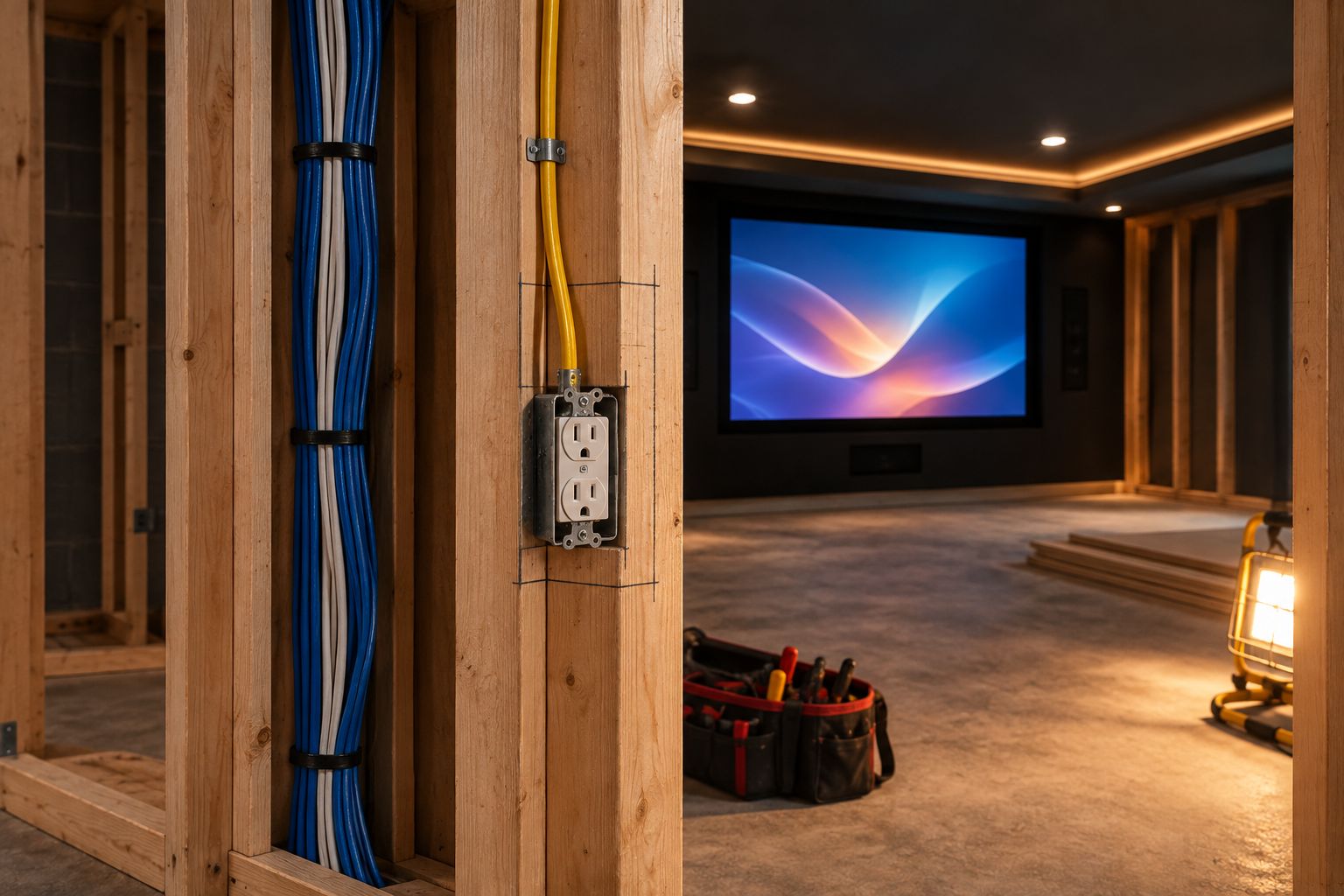
Separate low-voltage runs from power wiring
Speaker and HDMI cable running parallel to a power line for more than a few feet is the most common cause of an audible hum in a finished theater.
- Keep low-voltage cable at least 12 inches from 120V power wiring
- Use a separate stud bay or conduit run whenever possible
- Never share a knockout between power and low-voltage cable
- Ground AV equipment properly at the rack
- Use in-wall rated cable where local code requires it
Place outlets for the screen wall and seating rows
Outlet placement decided after the drywall is up means cutting into a finished wall. Decide it before.
- An outlet directly behind the screen or TV mount
- Outlets along the seating wall for side tables and heated recliners
- A ceiling outlet near a mounted projector
- An outlet for a motorized screen or blackout shades
- One spare outlet for equipment you haven't bought yet
Add a lighting circuit you can dim independently
A media room needs light control separate from the rest of the basement. Recessed cans on their own dimmer switch and a smart control setup both handle this without spilling light onto the screen.
- Dimmable LED recessed cans on their own switch leg
- Low path lighting along the floor for seating rows
- A separate circuit from general basement lighting
- Scene presets tied to a smart control panel, not a single switch
- Light fixtures positioned to avoid glare on the screen surface
Verify your panel has room for the new load
This is the step people skip because it's boring, and it's the one that stalls the project the day the electrician shows up.
- Count available open breaker slots
- Compare total service amperage to the added theater load
- Check for double-tapped breakers already on the panel
- Flag a Federal Pacific or Zinsco panel for replacement before adding anything
- Add a subpanel if the main panel is full but otherwise sound
A panel that needs an upgrade shows warning signs before the theater wiring even starts — flickering lights elsewhere in the house, a breaker that trips under normal load, or a panel brand known for failure. Check this before ordering the projector.
Pull the permit and schedule inspection before drywall
A finished basement doesn't exempt new circuits from a permit in most Central NJ towns.
- Check with the local building department before work starts
- Schedule a rough-in inspection before insulation or drywall goes up
- Keep wiring accessible until the inspector signs off
- Get final sign-off before furniture and equipment move in
- Keep the permit paperwork for resale disclosure later
Who should wire a home theater in NJ
| Option | Best for | Key limitation |
|---|---|---|
| DIY circuit addition | Homeowners comfortable pulling their own permit and running conduit | New circuits and panel work require licensed sign-off in most NJ towns |
| General handyman | Small fixes on an existing circuit, like adding an outlet | Not licensed to add a new circuit or open the panel |
| Low-voltage AV integrator only | Rack wiring and cable management once power is already run | Can't touch the panel or add a dedicated circuit |
| Licensed electrician (Spartan Home Pros) | Homeowners in Monmouth, Middlesex, Somerset, and Union County who want the circuit, panel check, and permit handled as one job | Not the cheapest route for a single extra outlet |
A licensed electrician is the right call the moment the project involves a new circuit or a panel that hasn't been checked in years — a low-voltage integrator alone can't sign off on either.
“If the panel label still says Federal Pacific or Zinsco, that's the project before the home theater project.”
Plan the wiring before the drywall
Panel checks, dedicated circuits, and permits handled as one job.
Common mistakes NJ homeowners make wiring a media room
- Sharing the sump pump circuit. Wiring the AV rack into the same circuit as a sump pump means one movie night trip can flood a basement instead of just pausing the film.
- Drywalling before the rough-in inspection. Finishing the wall before the inspector sees the wiring means reopening it if anything fails.
- Assuming an old panel has room. A 100-amp panel from the 1970s wasn't sized for a theater circuit, and guessing instead of checking leads to a mid-project stall in 2026.
- Running speaker wire next to power wiring. Sharing a stud bay between low-voltage and 120V lines is the top cause of hum in an otherwise well-built system.
- Skipping the permit on a "already finished" basement. Unpermitted circuit work creates a disclosure problem at resale, even years later.
FAQ
Do I need a dedicated circuit for a home theater in NJ?
Yes, most home theaters need at least one dedicated 20-amp circuit for the AV rack to stop nuisance trips and picture interference. A second dedicated circuit is common for outlets behind seating in a 2026 basement build-out.
Is a permit required for home theater wiring in NJ?
Central NJ municipalities generally require a permit any time a new circuit is added to the panel, even inside a finished basement. Skipping it can create a disclosure problem when you sell the home.
How many outlets does a media room need?
A typical media room needs outlets behind the screen, along the seating wall, and near a ceiling-mounted projector at minimum. Add one spare outlet for equipment you haven't bought yet.
Can a home theater share a circuit with other rooms?
It shouldn't. Sharing a circuit with a refrigerator, sump pump, or another room's outlets is the most common cause of tripped breakers during movie nights.
What amperage circuit does a projector or AV receiver need?
A single dedicated 20-amp, 120-volt circuit covers most projectors, receivers, and subwoofer amps in a residential theater. Larger systems with multiple amps may need a second circuit.
Should speaker wire run in the same wall cavity as electrical wiring?
No, keep low-voltage speaker and HDMI cable at least 12 inches from power wiring to avoid hum and interference. Separate stud bays or conduit runs solve this during framing.
Who installs home theater electrical wiring in Central NJ?
Licensed electricians handle the circuit and panel work; some, like Spartan Home Pros, also coordinate the low-voltage AV wiring as part of the same basement or media room project in Monmouth, Middlesex, Somerset, and Union County.
How much power does a home theater system draw?
A projector, AV receiver, subwoofer amp, and streaming devices together typically draw well under the 20-amp limit of a single dedicated circuit, but adding a second amp rack or a bar fridge can push it over.
One last thing
Most home theater wiring problems in Central NJ trace back to the panel, not the AV setup — the projector and receiver rarely fail, but a 1970s panel that never got checked before the room was built does. Check the panel first in 2026, order the equipment second.


