
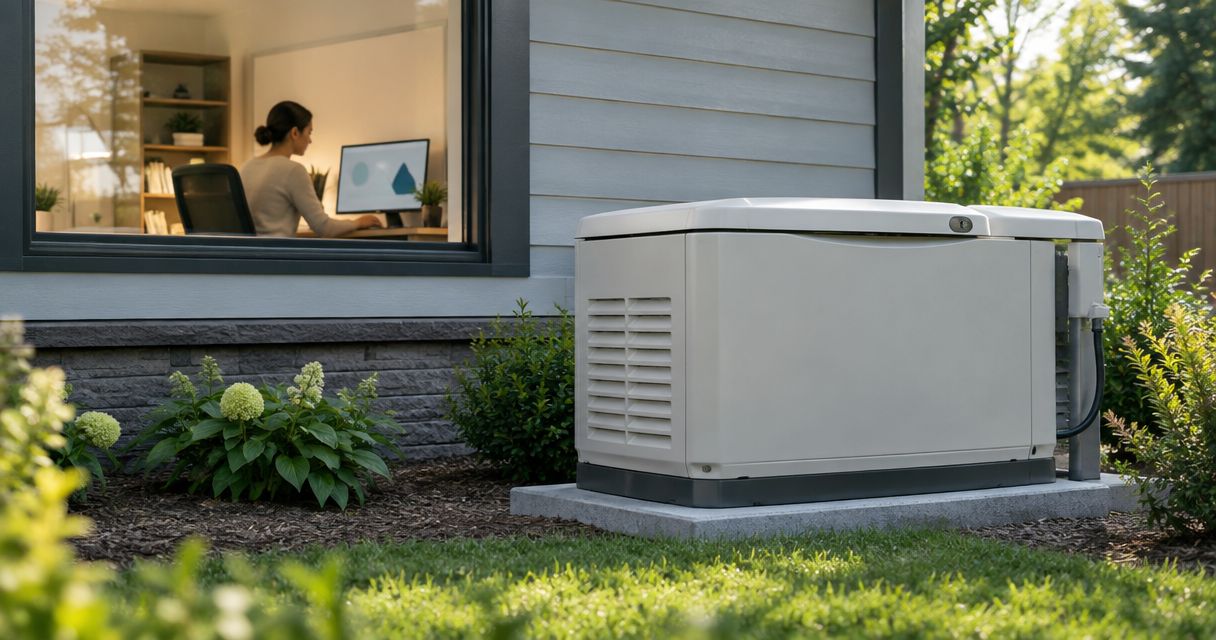
Generator installation for home office workers in Central New Jersey means sizing and wiring a standby or battery system that keeps a router, monitor, and space heater running through a PSE&G or JCP&L outage — not just the refrigerator and a few lights. A remote worker's outage math is different from a typical homeowner's: a two-hour blackout that costs a client call or a VPN session matters more than a warm freezer.
- A 22kW standby generator covers a full Central NJ home office setup plus HVAC and kitchen circuits.
- Battery backup switches to power in under a second; portable generators need manual startup and 10-20 minutes.
- Generator installation for home office reliability depends more on the transfer switch and circuit wiring than on generator size alone.
- Spartan Home Pros wires dedicated office circuits into the protected panel so a blackout doesn't drop your call.
Why generator installation matters for home office workers
A remote employee or a home-based business owner in Monmouth, Middlesex, Somerset, or Union county loses more than comfort during an outage — client calls drop, invoices stall, and a VPN session times out mid-file-transfer. PSE&G and JCP&L restoration after a summer storm can stretch 6 to 24 hours in Central Jersey, and a laptop battery doesn't outlast that once the modem goes dark. Sizing a system correctly starts with knowing your real load, not a guess, which is why sizing a whole-house generator for your NJ home comes before any equipment order.
Unlike a household that just needs the fridge and a hallway light, a home office needs continuous, clean power to a modem, a router, and often a desktop already sitting behind a UPS. A small portable inverter generator can carry that load on paper, but not without you restarting it every few hours and running an extension cord through a window — a setup New Jersey code doesn't allow for a reason.
Confirm what your home office actually draws
Before anyone talks generator size, add up what's actually plugged in during a normal workday.
- List every device on the office circuit: modem, router, monitor, desktop or laptop charger, task lighting, and any space heater or window AC unit
- Check the nameplate wattage on the space heater — most pull 1,500 watts on high, more than a monitor and desktop combined
- Add up simultaneous draw, not device maximums; most home offices run under 1,200 watts excluding heating or cooling
- Note whether the modem and router already sit on a UPS — that buys minutes, not the hours a real outage needs
Decide between whole-house and essential-circuits backup
This is the decision that determines everything downstream, including cost and install time.
- Whole-house standby generators, typically 14kW to 22kW, cover the office plus HVAC, well pump, and kitchen circuits automatically
- Essential-circuits subpanels wire only the office, one refrigerator, and select lighting — a smaller install with lower ongoing fuel draw
- A home battery backup system covers office-only loads with no fuel, no exhaust, and no noise, though runtime is limited without added modules
- If clients or employees interact with your home-based business, whole-house coverage avoids explaining a partial outage on a call
- Spartan Home Pros walks Central NJ homeowners through this decision on-site before recommending equipment, not after it's ordered
Choose the fuel type before you pick a generator model
Fuel availability at your address narrows the model list fast — this is worth settling before comparing brands. The full breakdown lives in natural gas vs. propane for a home generator.
- Natural gas hookups work when PSE&G or Elizabethtown Gas already runs a line to the house — no tank, no refill schedule
- Propane tanks, buried or above-ground, suit homes without gas service but need a seasonal refill plan
- Dual-fuel portable units switch between gasoline and propane, useful as a bridge before a whole-house install
- Battery backup skips fuel entirely, recharging from the grid or a paired solar array
Size the generator to your panel, not just your office
- An electrician needs your panel's amperage — 100A, 150A, or 200A — to confirm it can even accept a transfer switch
- Homes with 100-amp service built before 1990 often need a panel upgrade before any generator install can proceed
- Oversizing wastes fuel and money; undersizing trips the generator's breaker the first time the AC compressor and a space heater run together
- Load calculations must account for short-cycling appliances like a well pump or AC compressor, which draw 2 to 3 times their running wattage on startup
Install a transfer switch that isolates office circuits
A generator without the right switch is a generator that fails you at the worst moment. Details on switch types are covered in generator transfer switch installation.
- An automatic transfer switch senses the outage and switches power in under 10 seconds, no one touching a breaker
- A manual transfer switch costs less to install but requires someone home to flip it during the outage
- Wiring the office circuit into the protected panel keeps the modem and desktop up through the automatic switch delay
- Running extension cords from a portable generator through a window is a fire and carbon monoxide risk New Jersey code prohibits
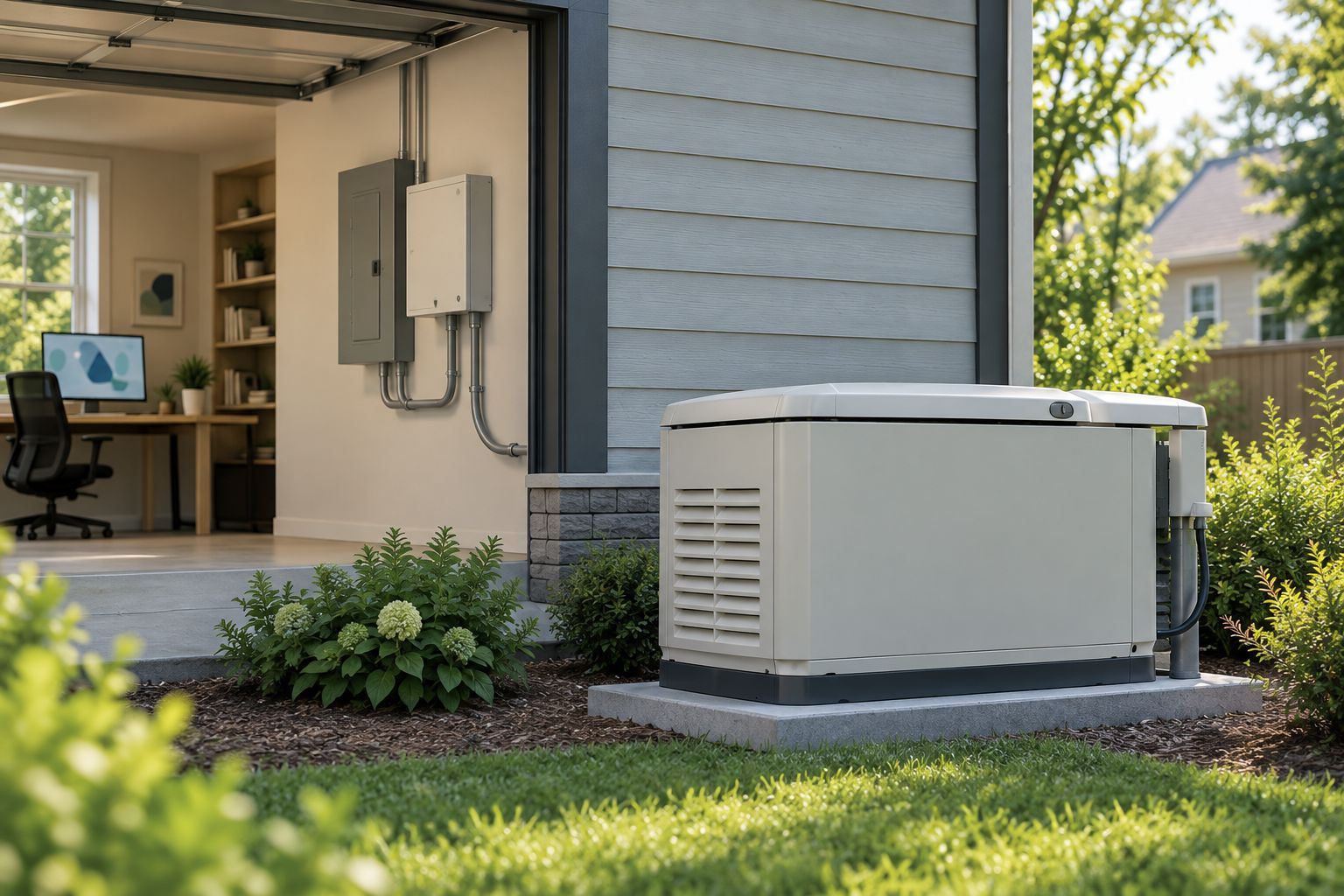
Schedule the install and the township permit inspection
- New Jersey requires a permit and inspection for any standby generator tied to the electrical panel
- Whole-house units need a pad set back from windows and doors per the manufacturer's clearance specs
- Propane or natural gas hookups need a licensed gas fitter or plumber sign-off alongside the electrical permit
- Spartan Home Pros pulls the permit and schedules the township inspection as part of the install — homeowners don't call the building department
Test and maintain the system after installation
- Run the self-test cycle weekly; most Generac and Kohler units do this automatically and flag a dead battery before a storm
- Change the oil and air filter on a whole-house unit roughly once a year or every 100 to 200 run hours
- Battery backup systems need a firmware and charge check, not an oil change — confirm the app shows full charge before hurricane season
- Keep 3 feet of clearance around the exhaust and intake year-round, including after landscaping work
Get your home office backup sized right
Spartan Home Pros scopes panel, fuel, and circuit wiring before quoting a system.
Once the fuel type and coverage level are settled, the remaining choice is which category of backup power fits a home office budget and space. The diagram below lays out the decision path most Central NJ homeowners work through.
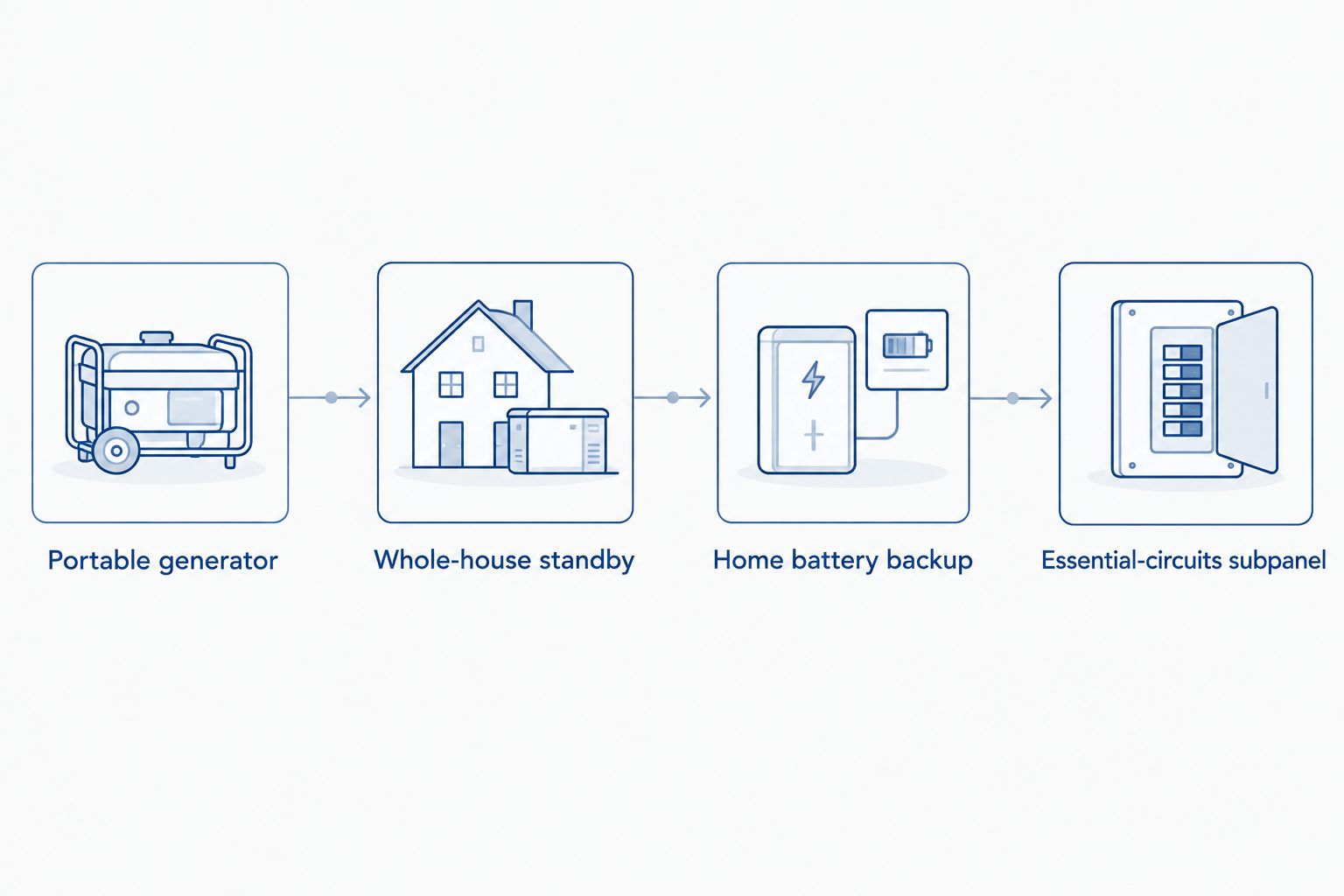
Backup power options for a NJ home office
| Option | Best for | Key limitation |
|---|---|---|
| Portable generator | Short outages, a budget bridge before a permanent install | Manual startup, no automatic office coverage, carbon monoxide risk if run indoors or through a window |
| Whole-house standby generator | Home offices needing full-house coverage including HVAC | Requires a gas or propane fuel line, a permit, and outdoor pad space |
| Home battery backup | Silent, no-fuel office-only backup for shorter outages | Limited runtime without a paired solar array or added battery modules |
| Essential-circuits subpanel | Budget-conscious homeowners who only need office plus fridge | Doesn't cover HVAC, so a summer outage gets uncomfortable fast |
Verdict: a whole-house standby generator is the strongest fit for a Central New Jersey home office that also carries HVAC and family use; a home battery backup wins when the office is the only load that matters and quiet, fuel-free operation is the priority.
Mistakes NJ home office workers make with backup power
- Sizing for the whole house without confirming the office circuit is actually wired into the protected panel
- Buying a portable generator and running it without a transfer switch, then improvising an extension cord through a window
- Skipping the load calculation and undersizing the unit, so the AC compressor trips the generator during a July outage
- Assuming a desktop UPS is enough backup — most hold 5 to 15 minutes, not a multi-hour storm outage
- Delaying the township permit and inspection, which stalls the install during peak storm season when everyone else is calling too
FAQ
What size generator do I need for a home office in NJ?
Most home offices draw under 1,200 watts before heating or cooling, but the generator has to be sized to the whole panel, not just the office. A 14kW to 22kW whole-house unit covers office plus HVAC and kitchen circuits in a typical Central NJ home.
Is a battery backup enough for a home office, or do I need a whole-house generator?
A home battery backup covers office-only loads silently and without fuel, which works for shorter outages. For multi-day storm outages that also need HVAC running, a whole-house standby generator is the more reliable choice.
Does a home office generator need a permit in New Jersey?
Yes. Any standby generator tied to the electrical panel requires a township permit and inspection in New Jersey, and fuel hookups need a separate gas or plumbing sign-off.
How fast does a generator switch on during a power outage?
An automatic transfer switch detects the outage and switches power in under 10 seconds. A manual transfer switch requires someone home to flip it, and a portable generator needs 10 to 20 minutes of manual startup.
Can I run my home office on a portable generator?
Only with a proper transfer switch and outdoor placement — running extension cords through a window is a fire and carbon monoxide risk under New Jersey code. A portable unit works as a short-term bridge, not a permanent office backup.
What's the difference between natural gas and propane for a home generator?
Natural gas runs off the existing utility line with no tank or refill schedule, while propane needs a tank and seasonal refill planning. Natural gas only works if the utility already services the address.
How much maintenance does a whole-house generator need after installation?
Most units run a weekly self-test automatically, and the oil and air filter need changing roughly once a year or every 100 to 200 run hours. Battery backup systems need a firmware and charge check instead of an oil change.
Will a generator protect my internet and Wi-Fi router during an outage?
Only if the modem and router are wired into the protected circuit on the transfer switch panel. A generator running the rest of the house while the modem sits on an unprotected outlet still leaves the office offline.
One last thing
The most common home-office backup failure Spartan Home Pros sees in Central NJ in 2026 isn't generator size — it's a modem left off the protected circuit, so the whole system runs and the internet still goes down. Confirm the modem and router are on the protected panel before the inspector ever shows up, not after the first outage proves it wrong.


