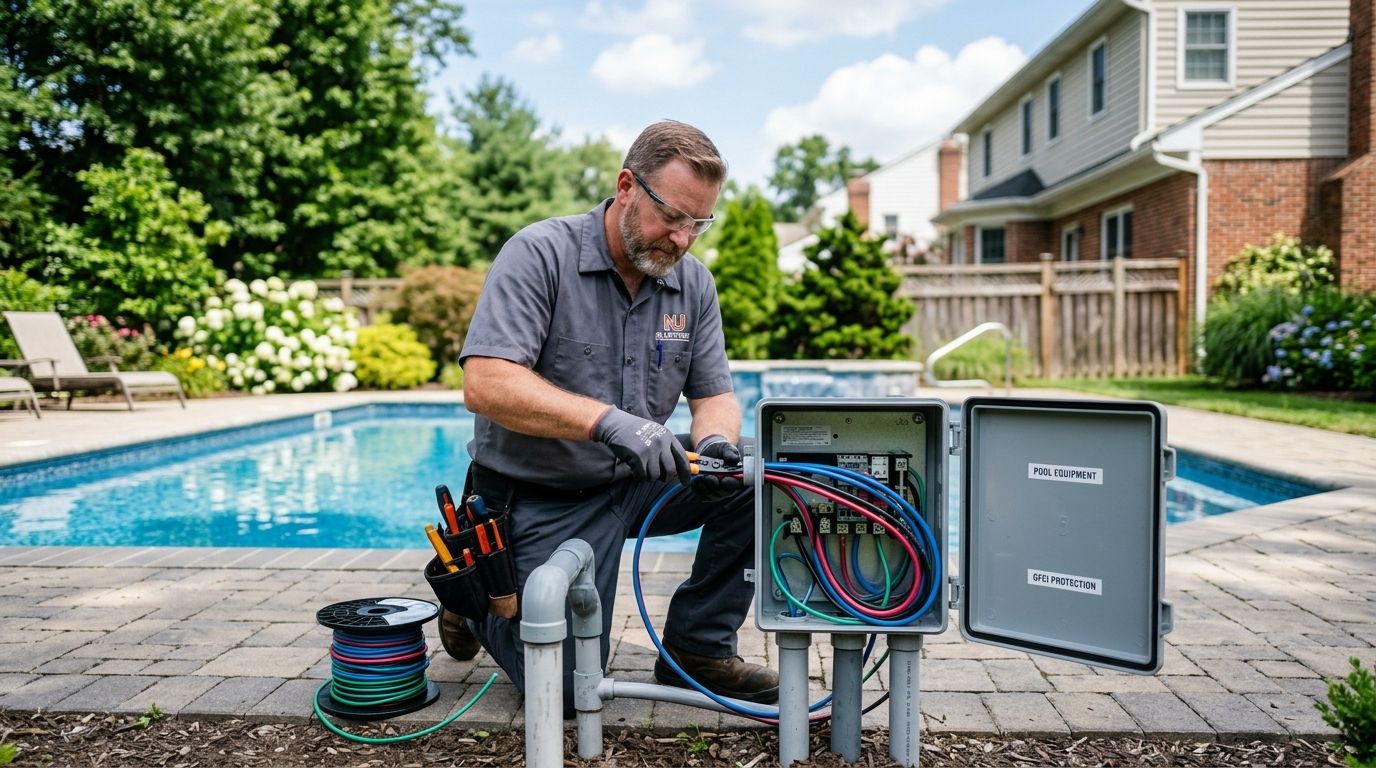
Pool electrical wiring for NJ homeowners covers the dedicated circuits, GFCI protection, and bonding that NEC Article 680 requires before a pool, hot tub, or spa can pass local inspection. This work sits apart from ordinary home wiring because it happens near water, carries higher amperage loads for pumps and heaters, and gets inspected against a stricter code section than a kitchen or bedroom circuit ever will.
Homeowners in Monmouth, Middlesex, Somerset, and Union counties run into the same wall almost every time: a 100-amp or 150-amp panel from the 1980s or 1990s that was never sized for a pool pump, a heater, and pool lighting on top of central air and a range. Adding pool loads to that panel without an hot tub and pool electrical panel upgrade is the single most common reason a NJ township inspector fails a pool wiring job on the first visit.
- Pool electrical wiring NJ homeowners need starts with a load calculation, not a wire pull — undersized panels fail inspection first.
- NEC Article 680 requires GFCI protection on pool pumps, heaters, and lighting within 20 feet of the water.
- A disconnect switch must sit within sight of pool equipment but at least 5 feet from the water's edge.
- Spartan Home Pros pulls permits and handles panel upgrades tied to pool and hot tub installs across Central NJ.
Why pool electrical wiring matters for NJ homeowners
A pool or hot tub adds real electrical load to a house that was sized decades before anyone planned to put water in the backyard. A single-speed pump alone can draw 10-15 amps; a variable-speed pump, a gas or electric heater, pool lighting, and a hot tub on the same property push many older 100-amp services past their limit before a single interior appliance turns on.
NJ townships inspect pool wiring against NEC 680 specifically, which is stricter than the general electrical code most residential work follows. Bonding grids, GFCI breakers rated for pool equipment, and disconnect placement all get checked separately from the rest of the house. A wiring job that would pass in a garage or basement gets rejected outright near a pool if bonding is missing or the disconnect sits too close to the water.
The most reliable read on whether your NJ home is ready for pool electrical work is a load calculation on your existing panel — not a guess based on how old the panel looks or how many breakers are left in the box.
Check your panel capacity before adding pool loads
A licensed electrician runs a load calculation that adds up every existing circuit plus the new pump, heater, and lighting circuits the pool will need. This step happens before any wire gets pulled, because it determines whether the existing panel can carry the new load or needs to be replaced.
- Pull your current panel's amperage rating (60, 100, 150, or 200 amps) off the main breaker label
- List every major existing load: central air, electric range, dryer, water heater
- Add the pool's expected draw: pump, heater, lighting, and any future hot tub
- Flag a panel under 150 amps as a likely upgrade candidate before pool work starts
- Confirm your township's permit office requires a load calc submission (most Central NJ townships do)
Update your panel if the math doesn't work
If the load calculation shows the existing panel can't absorb the pool circuits safely, the panel gets upgraded before any pool wiring is installed — not after. Running pool circuits off an overloaded panel is exactly the failure pattern that trips breakers mid-swim season and fails re-inspection.
- Confirm whether the panel itself needs replacement or just a subpanel addition near the pool equipment pad
- Ask whether your existing panel brand is on any known recall or failure list (Zinsco and Federal Pacific panels almost always need replacement regardless of pool plans)
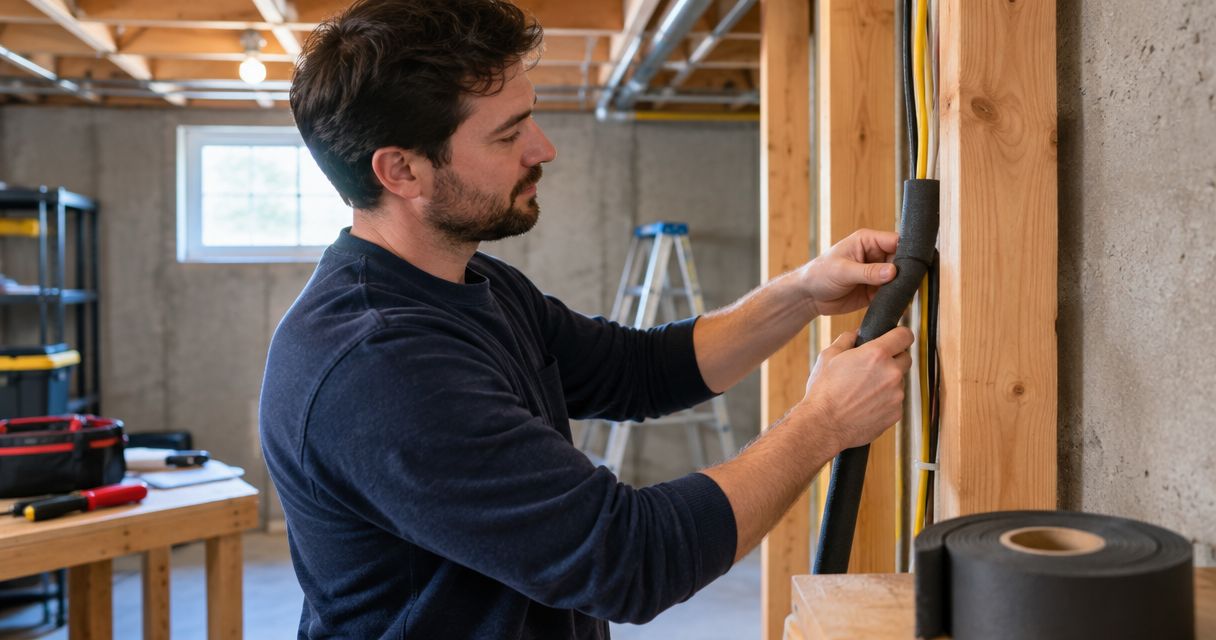
- Check if aluminum branch wiring feeds the existing panel — it changes the upgrade scope
- Get the permit pulled under the electrician's license, not a homeowner self-permit, if you want the inspection to move faster
Plan dedicated circuits for pump, heater, and lighting
Every major piece of pool equipment gets its own dedicated circuit sized to its nameplate amperage — pumps, heaters, and pool or spa lighting don't share a breaker in a code-compliant install. Sharing circuits is the second most common reason NJ inspectors reject a first pass.
- Size the pump circuit to the pump's nameplate, not a generic 20-amp guess
- Run a separate circuit for any electric pool heater — these often need 40-60 amp double-pole breakers
- Keep pool and spa lighting circuits at 12 volts or below when fixtures sit within 5 feet of the water per NEC 680
- Label every pool-related breaker clearly in the panel schedule for the inspector and for future service calls
Install GFCI protection to code
GFCI protection is not optional anywhere near pool electrical equipment — NEC 680 requires it on pumps, heaters, and any receptacle within 20 feet of the water's edge. This is the single most-checked item on a NJ pool electrical inspection.
- Confirm the pump circuit runs through a GFCI breaker rated for that equipment's amperage, not a standard GFCI outlet
- Add GFCI protection to any receptacle serving pool equipment, even ones you think are far enough from the water
- Test every GFCI monthly during swim season — a tripped breaker that won't reset usually signals moisture intrusion in the wiring, not a nuisance trip
- Extend the same GFCI logic indoors: a GFCI outlet installation near an indoor spa or wet bar follows the same code logic as the pool pad
Bond every metal pool component
NEC 680.26 requires an equipotential bonding grid connecting the pool structure, ladders, handrails, the pump motor, and any metal within 5 feet of the pool wall. Skipping this step is invisible until someone gets a shock from a metal ladder, and it's one of the harder items to retrofit after concrete is poured.
- Bond the rebar or bonding grid before any concrete deck pour, not after
- Connect metal ladders, diving boards, and handrails to the bonding grid with listed connectors
- Bond the pump motor frame even when it's plastic-housed, since the motor itself is metal
- Verify bonding continuity with a multimeter before backfilling or pouring concrete over buried connections
Add a disconnect within sight of the equipment
A readily accessible disconnect switch has to sit within sight of the pool pump and heater, but NEC 680 also requires it be at least 5 feet from the water's edge. Getting this distance wrong is a common DIY mistake that forces a re-install.
- Mount the disconnect where it's visible from the equipment pad, not tucked around a corner
- Measure the 5-foot minimum from the pool's actual water edge, not the deck edge
- Use a disconnect rated for outdoor, wet-location service
- Confirm the disconnect de-energizes all pool equipment circuits, not just the pump
Bring in a licensed electrician for the install
DIY pool wiring is legal in parts of NJ with a homeowner permit, but the combination of bonding grids, GFCI sizing, and disconnect placement trips up most homeowners on the first inspection. Spartan Home Pros pulls the permit, runs the load calculation, and handles the panel upgrade and pool circuits as one job rather than passing you between a panel guy and a pool electrician.
- Confirm the electrician is licensed in NJ and carries the permit under their own license number
- Ask whether panel upgrade and pool wiring get scheduled together or as separate visits
- Get the inspection scheduled by the contractor, not left to you to coordinate with the township
- Check that the same crew handles both the panel work and the pool-side wiring — a split job is where bonding and GFCI mismatches happen
Get your panel checked before pool season
Spartan Home Pros handles the load calc, panel upgrade, and pool wiring as one permitted job.
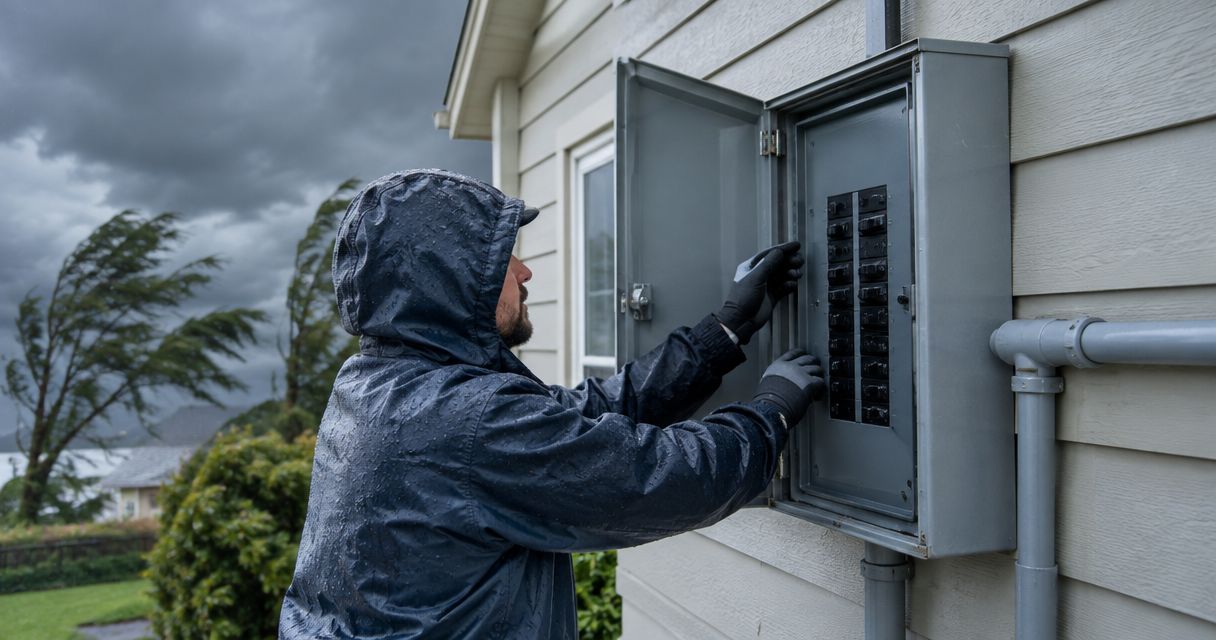
Maintain wiring for NJ's storm and moisture exposure
Central Jersey's humidity, coastal salt air near Monmouth County, and seasonal nor'easters put more strain on outdoor pool wiring than a dry-climate install ever sees. Corrosion at connection points and moisture intrusion at GFCI breakers are the top two service calls on pool wiring after the first two or three seasons.
- Inspect outdoor junction boxes for corrosion every spring before startup
- Reseal conduit entries after any deck or landscaping work near the pool pad
- Replace GFCI breakers that trip repeatedly rather than resetting them indefinitely
- Schedule a post-storm check if the pool equipment pad flooded or took direct wind damage
Comparing your options for pool electrical wiring in NJ
| Option | Best for | Key limitation |
|---|---|---|
| Homeowner self-permit DIY | Simple GFCI receptacle swaps, no panel change | Bonding grid and load calc errors are common and cause failed inspections |
| General residential electrician | Small towns with straightforward panels | May not carry NEC 680 pool-specific experience or bonding-grid detail |
| Licensed pool-focused electrician (Spartan Home Pros) | Full pool circuit, panel upgrade, and bonding work in one permitted job | Requires scheduling around pool contractor's pour and equipment delivery dates |
Common mistakes NJ homeowners make with pool wiring
- Skipping the load calculation and assuming the existing panel has "enough breakers left" without checking amperage math
- Pouring the deck before the bonding grid is inspected, which forces cutting concrete to fix a bonding failure
- Placing the disconnect inside the 5-foot water-edge buffer because it seemed more convenient to reach
- Using a standard GFCI outlet instead of a GFCI breaker rated for the pump's full amperage
- Assuming a home addition's electrical work covers the pool too — pool circuits get inspected under a separate NEC section even when the signs your panel needs an upgrade overlap with an addition project
FAQ
Do I need a permit for pool electrical wiring in NJ?
Yes. Every NJ township requires a permit and inspection for pool electrical work under NEC Article 680, separate from any pool construction permit.
What size panel do I need for a pool and hot tub in NJ?
Most homes adding a pump, heater, and hot tub need at least a 150-amp panel, and many older 100-amp homes require a full upgrade to 200 amps once existing loads are factored in.
Is GFCI protection required for pool pumps?
Yes. NEC 680 requires GFCI protection on pool pumps, heaters, and any receptacle or lighting fixture within 20 feet of the water's edge.
How far does a pool disconnect switch need to be from the water?
At least 5 feet from the pool's water edge, while still staying within sight of the pump and heater equipment.
Can I install pool wiring myself in New Jersey?
Homeowners can pull a self-permit for some pool electrical work, but bonding grids and GFCI sizing are where most DIY jobs fail inspection.
Why did my pool wiring fail inspection?
The most common reasons are a missing or incomplete bonding grid, a disconnect placed too close to the water, or GFCI protection missing on a pump or heater circuit.
Does an older NJ home need a panel upgrade before adding a pool?
Often yes — homes on 100-amp service from before the 1990s frequently can't absorb pump, heater, and lighting loads without an upgrade.
How long does pool electrical wiring take to install?
A single panel upgrade plus pool circuit install typically runs one to two working days, not counting the inspection scheduling that follows.
One last thing
The bonding grid is the step homeowners skip most often because it's invisible once the deck is poured — and it's also the step NJ inspectors check first. If your pool contractor pours concrete before the electrician signs off on bonding continuity, you're looking at cutting concrete to fix it, not a quick patch. Confirm the bonding inspection happens before the pour, every time, in 2026 and beyond.