
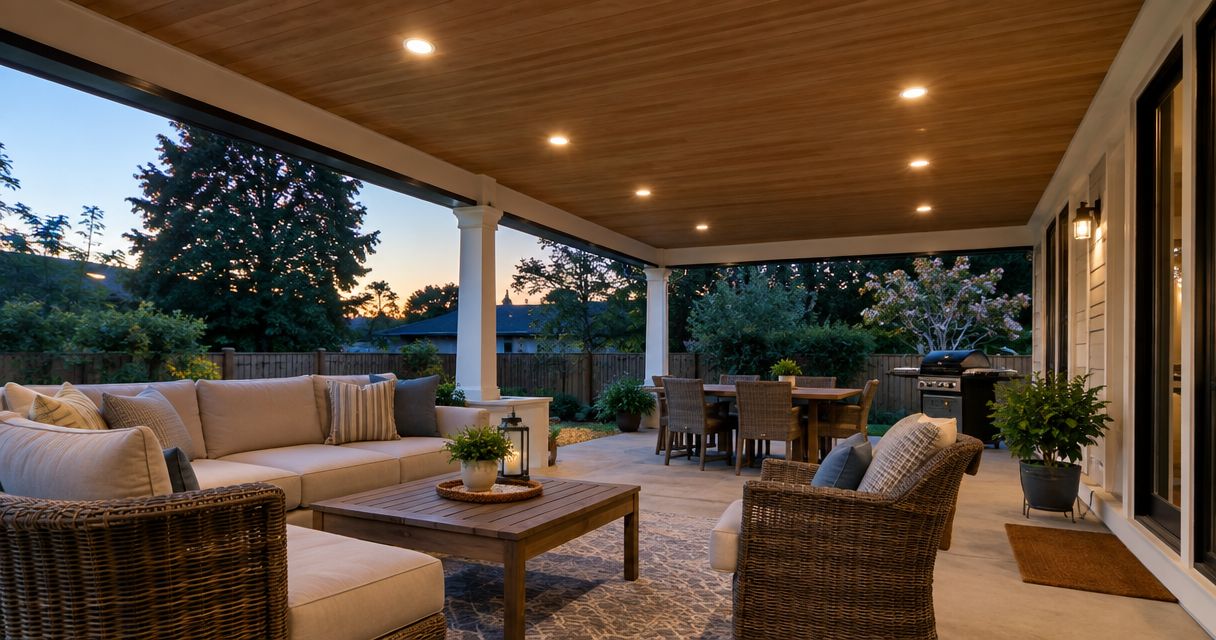
Recessed lighting for covered porches puts flush, low-profile fixtures into the porch ceiling to light entryways, seating areas, and steps without a fixture hanging down to catch wind, rain, or a six-foot-four guest's forehead. A covered porch isn't a living room ceiling: it sits outside the thermal envelope, takes weather even under a roof, and usually runs on an older or lighter circuit than the rest of the house.
- Recessed lighting for covered porches requires wet-rated or damp-rated housings under NEC 410.10 — standard indoor cans are not code-legal outdoors.
- IC-rated (insulation contact) housings are required if the porch ceiling has insulation above it, which most Central NJ additions do.
- Spartan Home Pros installs porch recessed lighting on a dedicated 15-amp or 20-amp circuit so it doesn't share load with an outdoor outlet or ceiling fan.
- A 4 to 6 foot fixture spacing is the standard starting point for even light across a porch ceiling before adjusting for beams or posts.
- DIY porch recessed lighting without a permit is common in NJ — and it's the reason most insurance claims on outdoor electrical fires get denied.
Why recessed lighting installation matters for covered porches
A covered porch is technically an outdoor space even though it feels sheltered, and the National Electrical Code treats it that way. Fixtures rated for dry interior locations corrode, short, or trip a GFCI repeatedly once wind-driven rain or condensation reaches the housing — a failure mode that shows up as flickering or a dead can within a season or two, not immediately.
Central New Jersey adds its own stress: humid summers, freeze-thaw winters, and salt air within a few miles of the shore in Monmouth County. Any of those speeds up corrosion on a fixture that isn't rated for the location it's in. Getting the recessed lighting installation right the first time on a porch matters more than it does inside a bedroom, because a callback means opening a finished ceiling twice.
Determine your porch ceiling type
What's above the porch ceiling decides which housing you're legally allowed to use. A porch with an unfinished attic or bonus room above it needs insulation-contact-rated housings; a porch under an open soffit with no insulation doesn't.
- Check for insulation above the ceiling — if there's a room or attic above, assume IC-rated is required
- Note the ceiling material — beadboard, drywall, and tongue-and-groove wood each cut differently and some (like beadboard) need extra bracing around the can
- Measure ceiling depth — shallow porch ceilings (under 6 inches) may need low-profile or slim recessed fixtures instead of standard cans
- Look for existing wiring — a porch light box or ceiling fan already there can sometimes feed a new circuit run
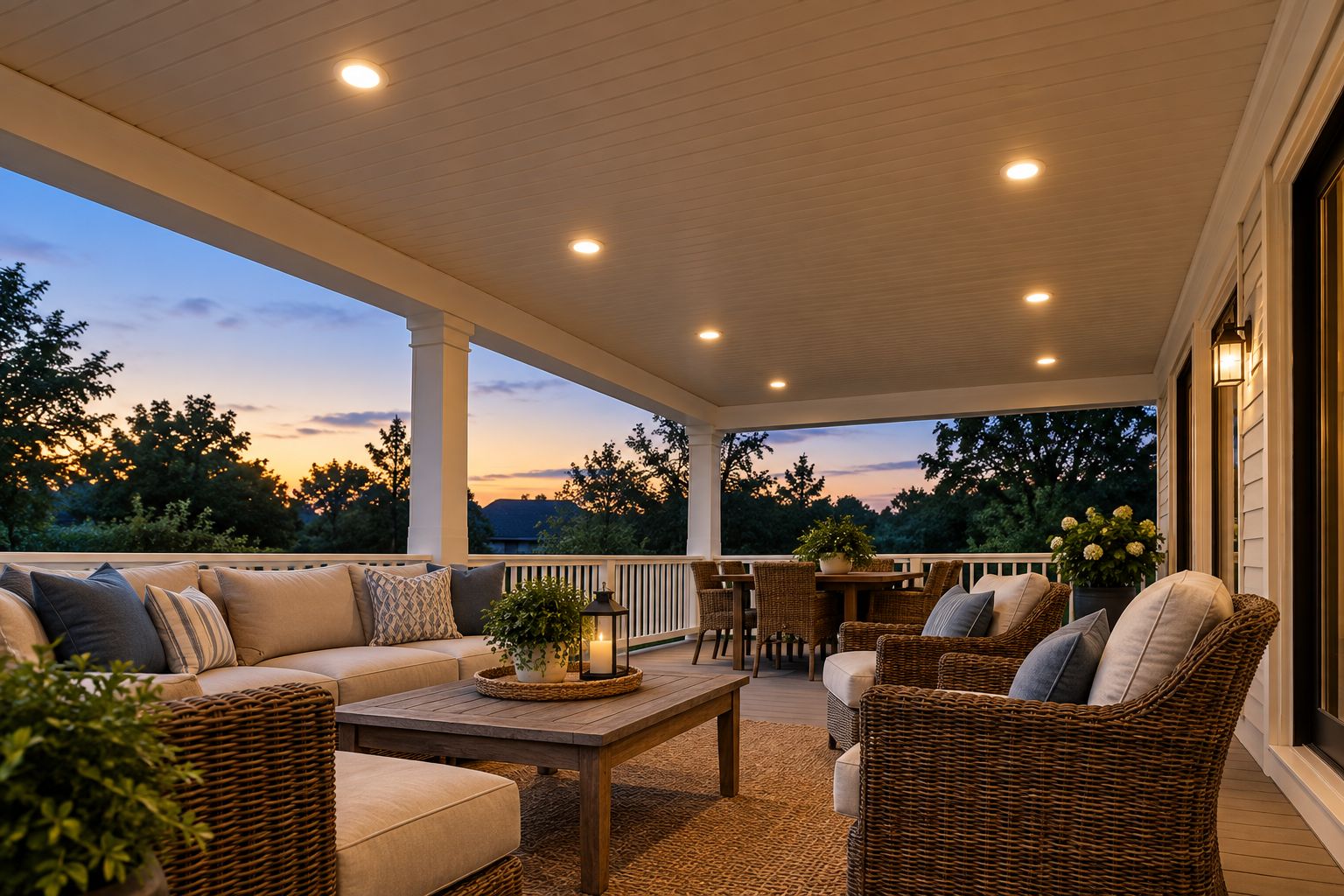
Confirm wet-rating and code requirements
NEC 410.10 splits outdoor fixtures into wet-location and damp-location ratings, and a covered porch almost always needs one or the other depending on how exposed it is to blowing rain.
- Wet-rated for any porch edge, overhang under 2 feet deep, or a spot that catches rain at an angle
- Damp-rated for the interior of a deep, fully covered porch that never gets direct rain
- Sealed gasket trims matter as much as the housing — an unsealed trim on a wet-rated can still lets moisture in
- GFCI protection on the circuit, required for outdoor lighting circuits in most Central NJ jurisdictions
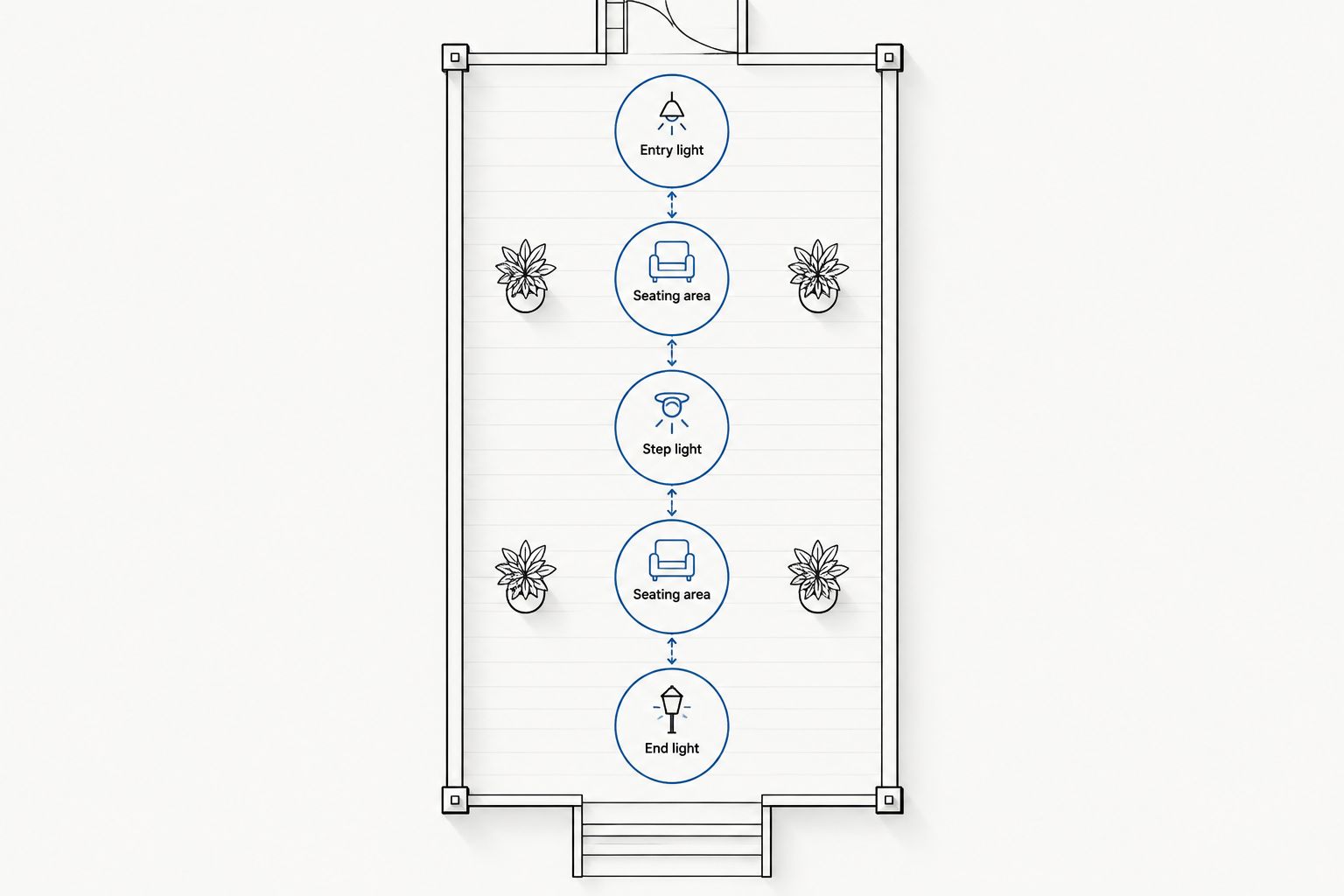
Map out your fixture layout
Porches are narrow and rectangular, which makes even spacing easier than in a living room but easy to get wrong at the ends.
- Start with 4 to 6 foot spacing as a baseline, tightening it near seating areas and steps
- Center a row down the porch's long axis rather than trying to match interior room lines
- Pull fixtures 2 feet off beams and posts so trims don't clash with structural elements
- Add a fixture directly over steps or the front door for a safety-lighting purpose, not just ambiance
Check your electrical panel capacity
Before any layout gets wired, the circuit has to have room. Older Central NJ homes on 100-amp panels sometimes have no spare capacity once a porch light, an outdoor outlet, and a ceiling fan are all pulling from the same run.
- Confirm the porch's existing circuit amperage — most lighting circuits run 15-amp or 20-amp
- Count what else shares that circuit — outdoor outlets, doorbell transformers, security cameras all add draw
- Check panel age and brand — Federal Pacific and Zinsco panels common in older NJ homes often can't safely take an added circuit
- Get a licensed load calculation rather than guessing — this is the point where a homeowner doing their own layout should call a professional instead of pulling permits solo
This is where Spartan Home Pros' recessed lighting installation crews usually get called in: not to design the layout, but to confirm the panel can carry it and to pull the permit correctly the first time. A licensed electrician checks panel capacity in under an hour; guessing wrong means an inspector failing the job after the ceiling is already closed up.
Pick housing type: remodel vs. new construction
Whether the porch ceiling is already finished changes which housing type gets installed.
- Remodel (retrofit) housings for an existing finished porch ceiling — installed through a cut hole, no ceiling demo needed
- New construction housings for a porch being built or the ceiling being replaced — nailed to joists before the ceiling goes up
- Airtight-rated trims reduce condensation buildup inside the can, a bigger issue outdoors than indoors
- Baffle or reflector trims cut glare for anyone sitting directly under the fixture at porch furniture height
Add dimmers or smart controls
A porch used for evening seating benefits from dimming more than a hallway does, and outdoor-rated smart controls now handle porch circuits without extra wiring.
- Outdoor-rated dimmer switches, not standard indoor dimmer models
- Smart switches or in-wall smart dimmers tied into a phone app or voice assistant
- Photocell or timer control so porch lights turn on at dusk automatically
- Separate switching for entry vs. seating zones if the layout has more than 3-4 fixtures
Schedule licensed installation and inspection
Most Central NJ municipalities require a permit and inspection for any new electrical circuit, including porch lighting run off a new breaker. Skipping that step is the single most common way a DIY porch lighting project turns into a problem at resale.
- Pull the permit before work starts, not after
- Schedule the rough-in inspection before the ceiling is closed
- Get a final inspection once fixtures and trims are in
- Keep the permit paperwork for future insurance or resale questions
Recessed lighting options for covered porches
| Option | Best for | Key limitation |
|---|---|---|
| DIY wet-rated retrofit kit | Homeowners with an existing circuit and basic electrical comfort | No load calculation or permit pull — liability sits entirely on the homeowner |
| Handyman install | Small, single-fixture swaps on an already-rated circuit | Not licensed for new circuit work in most NJ towns |
| Licensed electrician (Spartan Home Pros) | Full porch layouts, panel capacity checks, and permitted new circuits | Requires scheduling a site visit rather than a same-day box-store fix |
| Landscape or surface-mount fixture instead | Porches where the ceiling can't take a cut for recessed cans | Not flush-mounted, changes the porch's look |
Verdict: for a covered porch with a new circuit, insulation above the ceiling, or more than two fixtures, licensed recessed lighting installation is the right call — DIY retrofit kits work only on a single fixture replacement where the wet-rating and circuit are already confirmed.
Plan your porch lighting layout
Spartan Home Pros checks panel capacity and pulls the permit for you.
Common mistakes homeowners make with porch recessed lighting
- Using indoor-rated cans because they were already on hand — they corrode or trip a GFCI within a season on an exposed porch
- Skipping the IC rating check when there's a bonus room or attic above the porch, which is a fire-code violation, not a style choice
- Overloading an existing outdoor outlet circuit instead of running a dedicated line for the lighting
- Spacing fixtures evenly without accounting for porch posts and beams, leaving dark gaps where a post blocks the light
- Skipping the permit because the porch feels like a small job — it's the same code review as any other new circuit in 2026
FAQ
What's the best recessed lighting for a covered porch?
Wet-rated LED recessed cans with a sealed gasket trim are the standard choice for covered porches, since damp-rated fixtures alone don't cover exposure to blowing rain. IC-rated housings are also required if there's insulation or a room above the porch ceiling.
Is recessed lighting better than a surface-mount porch light?
Recessed lighting gives a cleaner ceiling line and won't hang into head height, but surface-mount fixtures are the only option when the ceiling can't take a cut for a can. For most flat porch ceilings with clearance above, recessed wins on look and even coverage.
Do I need a permit for porch recessed lighting in New Jersey?
Yes, most Central New Jersey municipalities require an electrical permit and inspection for any new lighting circuit, including a porch retrofit. Skipping the permit can cause problems at resale or with an insurance claim later.
How far apart should recessed lights be on a porch ceiling?
A 4 to 6 foot spacing is the standard starting point for a covered porch ceiling, tightened near seating areas, entry doors, and steps. Spacing should shift 2 feet away from beams or support posts rather than following a rigid grid.
Can I put recessed lighting on an existing porch light circuit?
Only if that circuit has spare capacity, which a licensed electrician checks with a load calculation. Many older Central NJ porch circuits are already carrying an outdoor outlet or ceiling fan and can't safely take more fixtures.
What's the difference between wet-rated and damp-rated recessed lights?
Wet-rated fixtures are built to handle direct exposure to rain and moisture, required for porch edges and shallow overhangs. Damp-rated fixtures are only for areas fully protected from direct water contact, like the interior of a deep, fully enclosed porch.
Does a covered porch need GFCI protection for lighting?
Most Central NJ jurisdictions require GFCI protection on outdoor lighting circuits, including covered porches. A licensed electrician confirms the exact requirement for the specific town during the permit process.
How much does recessed lighting installation cost for a porch?
Cost depends on the number of fixtures, whether a new circuit is needed, and panel capacity, so pricing varies by project. Getting a load calculation and site visit is the only way to get an accurate number for a specific porch.
One last thing
The detail most homeowners skip is checking what's directly above the porch ceiling before picking a fixture — a finished bonus room upstairs means IC-rated housings are non-negotiable, and that single check determines which product line is even legal to install. Spartan Home Pros confirms that during the same visit as the panel capacity check, so it's one trip instead of two.


