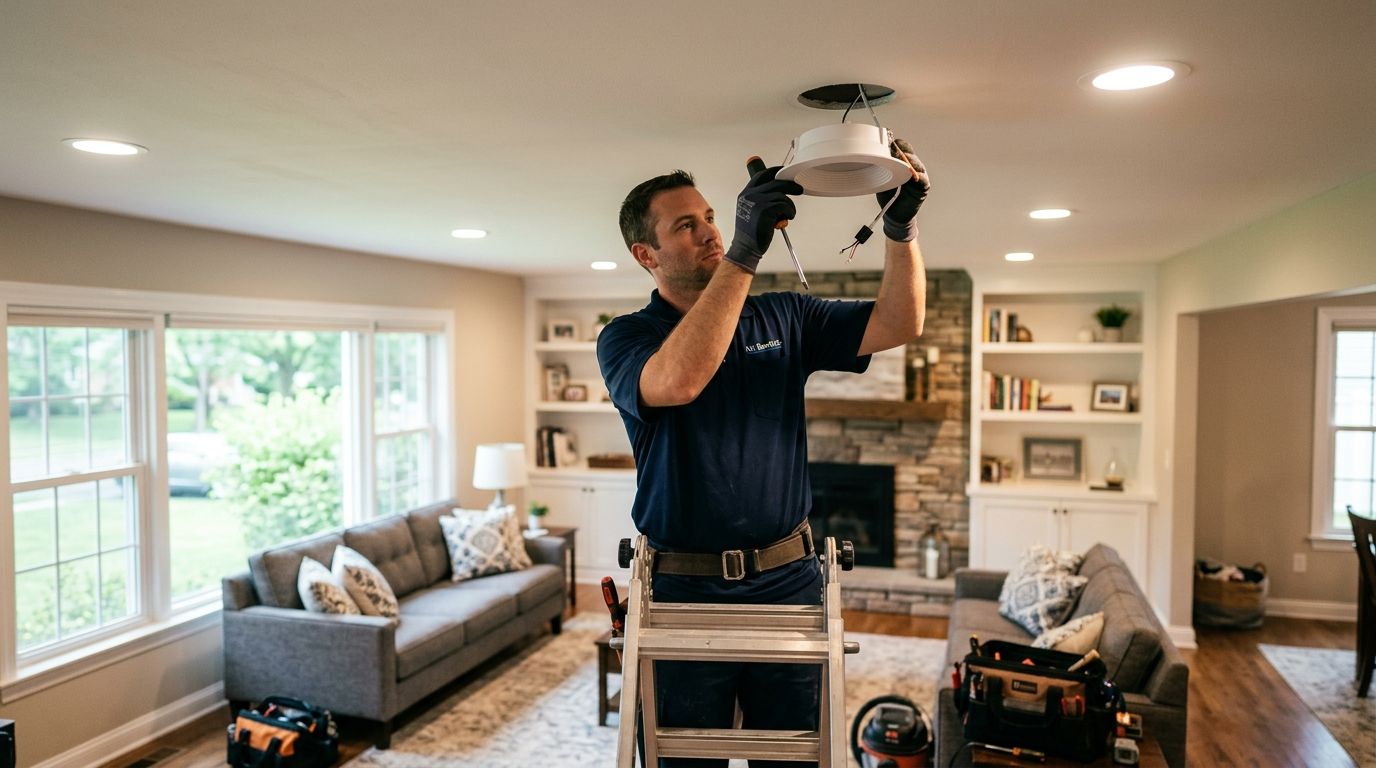
Recessed lighting installation for Marlboro NJ homeowners means cutting 4-inch to 6-inch can housings into an existing ceiling, running new circuits or taps off the panel, and sealing each fixture against the attic above -- with the goal of even light without a row of visible fixtures. Marlboro's housing stock runs from 1970s split-levels still carrying Zinsco or FPE panels to newer colonials with 200-amp service, and that mix changes what the job actually involves before anyone touches a drywall saw.
- Recessed lighting installation in Marlboro NJ starts with a panel and circuit check, not the can layout.
- IC-rated, airtight housings are required wherever attic insulation touches the fixture -- most 1970s Marlboro homes need them.
- Marlboro Township inspects new circuit runs for recessed lighting, so a permit is not optional.
- Mixing 2700K and 4000K cans in the same ceiling is the single most common DIY mistake in this project.
Why recessed lighting matters for Marlboro homeowners
Marlboro's mix of 1970s split-levels, 1990s colonials, and newer construction means no two recessed lighting jobs start from the same panel. A split-level built before 1985 often carries 100-amp service that's already close to capacity once a furnace, central AC, and an electric range are accounted for -- adding a new circuit for six or eight can lights can be the thing that tips it over. Recessed lighting installation for NJ homeowners covers the general process, but Marlboro specifically means checking panel headroom and attic insulation type before quoting a layout.
Monmouth County towns, Marlboro included, require an electrical permit for new circuit work, and that's exactly what most recessed lighting jobs involve. Skipping it doesn't just risk a fine -- it shows up when a buyer's attorney asks for permit history at closing.
Assess your existing panel and circuit capacity
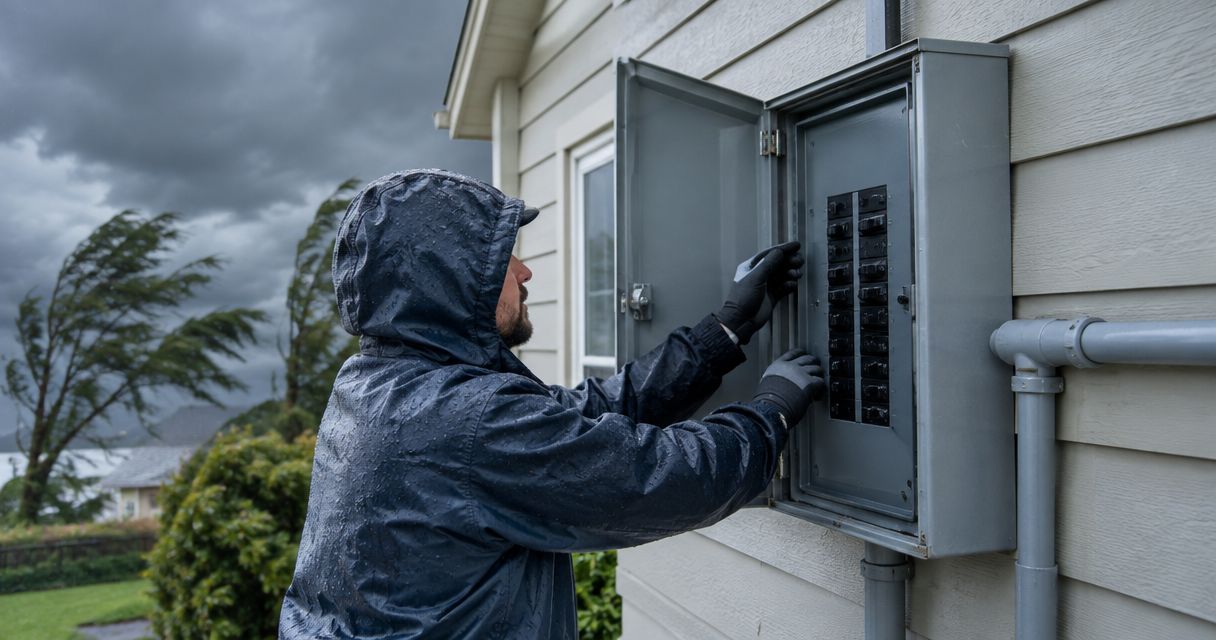
Before any can gets cut into the ceiling, the panel gets checked. This step decides whether the job is a straightforward lighting add or a lighting-plus-panel conversation.
- Count available amps in your panel -- 100-amp service installed before the 1980s often has little room left
- Check for double-tapped breakers or a Zinsco or FPE panel, both common in Marlboro homes from that era and both worth flagging regardless of the lighting project
- Confirm whether the new cans will run on their own 15-amp circuit or tie into existing lighting
- Note attic access and insulation depth -- it determines which housings are usable
If the panel comes back marginal, how to know if your electrical panel needs an upgrade walks through the signs before you commit to a lighting plan that the panel can't support.
Plan your recessed lighting layout room by room
Layout, not fixture count, is what makes a recessed lighting job look finished instead of scattered.
- Space cans roughly 4 to 6 feet apart for even general lighting; tighten that spacing over counters or task areas
- Keep the first row of cans 2 to 3 feet off the wall to avoid shadowing cabinets or artwork
- Run separate switch legs for kitchen task lighting versus living room ambient lighting
- Check joist direction before cutting -- it determines whether you need old-work or new-work housings
How to plan a recessed lighting layout for any room goes deeper on spacing math if you're doing an open-concept kitchen or great room.
Choose IC-rated, airtight housings for insulated ceilings
Most Marlboro attics have blown-in or batt insulation touching the ceiling from above, and that changes what housing is code-legal.
- IC-rated (insulation contact) housings are required anywhere attic insulation touches the can
- Airtight housings reduce attic air leakage at each penetration, a real issue in older homes with loose blown-in insulation
- Match housing depth to ceiling cavity; shallow retrofit housings exist for homes with less than 6 inches of clearance
- Pick trim style -- baffle, reflector, or wall-wash -- based on the room's use, not just appearance
Match trim and color temperature to the room
Color temperature consistency matters more than most homeowners expect, especially in open floor plans where two rooms are visible from one spot.
- 2700K to 3000K reads warm and suits living rooms and bedrooms
- 3500K to 4000K reads neutral and works well over kitchen counters and bathroom vanities
- Stick to one color temperature per room -- mixing 2700K and 4000K cans in the same ceiling is the most common DIY mistake
- CRI 90+ bulbs are worth the difference if you're matching cabinet or countertop colors
Add dimming and smart controls
- Confirm LED cans are dimmable before buying a dimmer -- non-dimmable LEDs flicker or buzz on a standard dimmer
- Match the dimmer to the LED driver type listed on the can's spec sheet
- Wire multi-way switching for rooms with more than one entrance
- Choose smart switches over smart bulbs if you want dimming without replacing bulbs later
Pull the permit and schedule an inspection
- Marlboro Township requires an electrical permit for new circuits and most recessed lighting additions
- A licensed electrician pulls the permit, schedules the rough-in inspection, and closes it out after final inspection
- Keep the permit card and inspection sign-off with your home records -- buyers' attorneys ask for it at closing
- Any contractor who says the permit is optional for new circuit work is wrong for Monmouth County towns in 2026
Hire a licensed electrician for the wiring and inspection
DIY works fine for swapping a bulb or trim ring in an existing can. It doesn't work for cutting new holes, running new circuits, or pulling a permit -- that's licensed electrician territory.
Spartan Home Pros installs recessed lighting for homeowners across Monmouth, Middlesex, Somerset, and Union counties as a licensed crew that does not subcontract the work out. One visit covers the panel check, the layout, and the permit filing together, instead of three separate calls.
Comparison: ways to get recessed lighting installed
| Option | Best for | Key limitation |
|---|---|---|
| DIY LED retrofit trim into an existing can | Swapping bulbs or trim in fixtures you already have | Adds no new fixtures or circuits, no capacity gain |
| Handyman-installed new cans | Small single-room jobs on a panel with known headroom | Usually not licensed for new circuit work; permit often skipped |
| Licensed electrician, new circuit plus cans | Whole-room or whole-floor plans, older panels, remodels | Requires an on-site scope before a firm quote |
| Panel upgrade combined with recessed lighting | Homes already flagged for 100-amp service or double taps | Longer timeline than lighting alone |
Verdict: for anything beyond swapping an existing bulb, licensed installation with a panel check first is the option that avoids a failed inspection later.
“If a ceiling has 2700K cans over the sofa and 4000K cans over the kitchen island six feet away, that's the tell of a DIY job every time.”
Common mistakes Marlboro homeowners make
- Assuming a split-level has panel headroom -- many built in the 1970s carry 100-amp service already close to capacity once a furnace, AC, and range are counted
- Skipping the permit because "it's just lighting" -- Monmouth County towns including Marlboro inspect new circuit runs, not just service upgrades
- Placing cans directly above cabinets instead of over the counter edge -- shadows the countertop instead of lighting it
- Mixing color temperatures room to room without checking sightlines from an open kitchen into the living room
- Using non-IC-rated housings under blown-in attic insulation, a fire code issue that gets flagged at inspection
FAQ
How much does recessed lighting installation cost in Marlboro NJ?
Cost depends on can count, whether new circuits are needed, and the condition of the existing panel. An on-site quote after the panel check gives a firm number instead of a phone estimate.
Do I need a permit for recessed lighting in Marlboro NJ?
Yes. Marlboro Township, like most Monmouth County towns, requires a permit and inspection for new circuit work, which most recessed lighting jobs involve.
How many recessed lights do I need for a kitchen?
Space cans roughly 4 to 6 feet apart for general lighting, tighter over counters and task areas. Exact count depends on ceiling height and room size.
Can my old panel handle new recessed lighting?
It depends on available amperage and panel condition. Homes with 100-amp service, Zinsco panels, or double-tapped breakers should get checked before a lighting plan is finalized.
What's the difference between IC-rated and non-IC-rated housings?
IC-rated housings are built to safely contact attic insulation without overheating. Non-IC-rated housings need clearance from insulation and are a code violation if installed without it.
Should I choose 2700K or 4000K for recessed lighting?
2700K to 3000K reads warm and suits living rooms and bedrooms. 3500K to 4000K reads neutral and works better over kitchen counters and bathroom vanities.
Can recessed lighting go into a finished basement ceiling?
Yes, with housings sized for the ceiling cavity depth and attention to any existing insulation or ductwork above the drop ceiling.
Is recessed lighting installation a DIY job?
Swapping trim or bulbs in an existing can is DIY-friendly. Cutting new holes, running new circuits, and pulling a permit is licensed electrician work.
One last thing
The detail that trips up the most Marlboro homeowners isn't the fixture choice -- it's the attic above it. A can housing rated for insulation contact costs the installer almost nothing extra to spec correctly the first time, but a non-IC-rated can buried under blown-in insulation is one of the more common items flagged at a 2026 rough-in inspection, and it means pulling fixtures back out to swap them.