
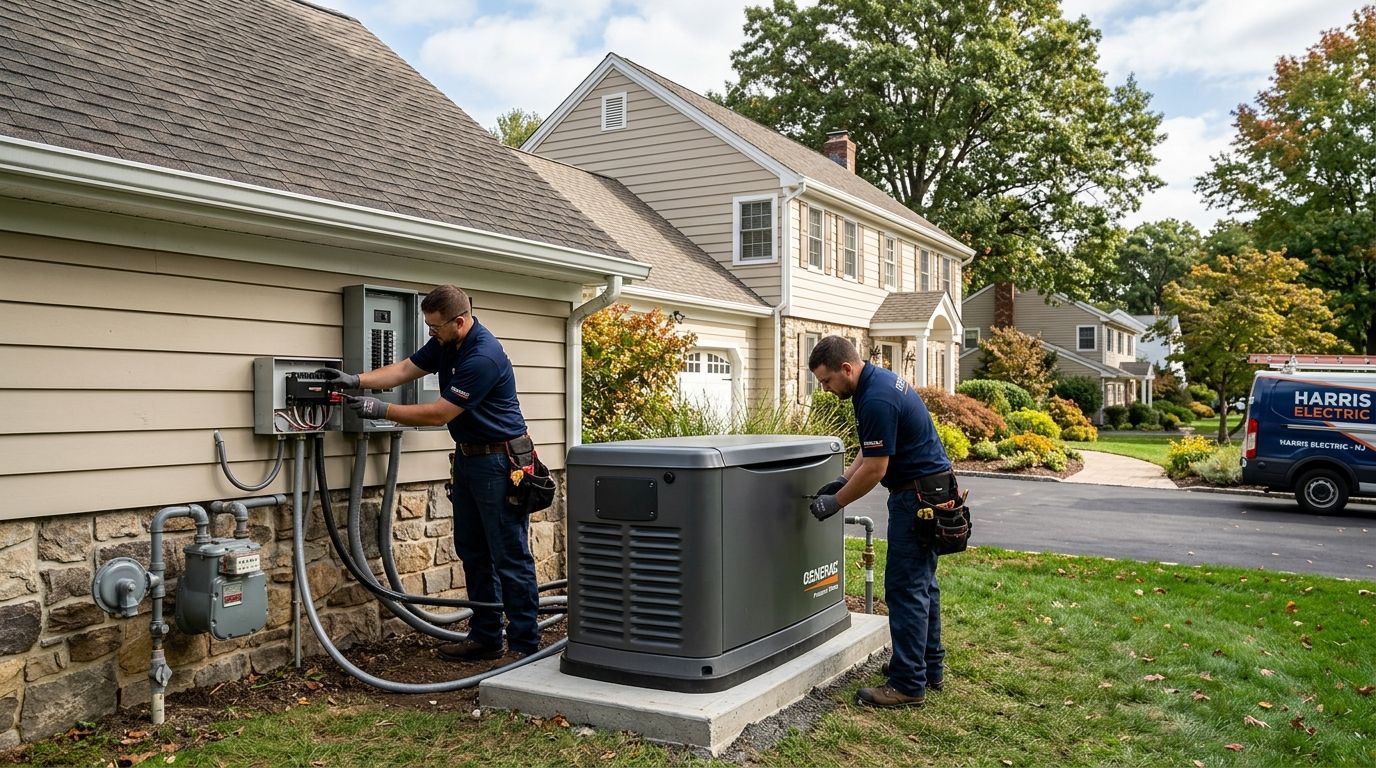
Warren Township NJ homeowners install whole house generators to keep the well pump, sump pump, and HVAC system running when storms drop trees on the township's wooded, mostly overhead power lines. Warren sits on Somerset County's western edge with private wells on most lots, so a power outage doesn't just mean dark rooms — it means no running water and no septic pump either.
- Whole house generator installation in Warren Township NJ must account for well pump and septic pump loads most townships skip.
- Standby propane suits properties where no natural gas main reaches the lot line.
- Township setback and noise rules can delay installation by weeks if checked too late.
- Spartan Home Pros runs the load calculation, panel check, and transfer switch install with its own licensed electricians, no subcontractors.
Why whole house generator installation matters for Warren Township
Warren Township's tree canopy and overhead distribution lines mean storm outages here tend to run longer than in denser parts of Central New Jersey. A downed limb on a wooded feeder line takes hours to clear, and that is before a repair crew reaches the road.
Because many Warren Township homes run on private wells, a stalled well pump means no drinking water and no flushing. Septic systems with ejector pumps face the same problem: no power, no pump, no drainage. That one fact changes how a generator gets sized here compared with a home on municipal water and sewer.
Whole house generator installation for New Jersey homeowners covers the general process. The steps below adjust it for Warren Township's well-water lots, larger setbacks, and mixed gas and propane service in 2026.
Size your generator for well and septic loads
A generic whole-house sizing chart misses the two loads that matter most on a Warren Township lot. Both a submersible well pump and a septic ejector pump draw a starting surge far above their running wattage, and that surge is what stalls an undersized unit during the first real storm.
- List the well pump horsepower and starting amps, not just running amps
- Add septic ejector or sump pump loads as separate line items
- Decide between whole-home coverage and an essential-circuits panel
- Include HVAC, refrigeration, and at least one kitchen circuit in essential loads
- Confirm irrigation pump draw if the property runs a well-fed system
Size a whole house generator walks through the load calculation before you commit to a unit.
Confirm your well and pressure tank setup
Most Warren Township properties run a submersible pump on a pressure tank. Smaller tanks cycle the pump more often, which means more starting surges per hour during an outage.
- Note the pump horsepower from the pump tag or the well permit
- Check the pressure tank size and typical cycle rate
- Ask whether a backup pressure switch or float switch is installed
- Confirm outdoor spigots and irrigation share the same well line
Check your electrical panel and service capacity
A generator only works if the panel behind it can carry the transfer switch and the load. Older Warren Township homes often still run 100-amp service, which limits what an automatic transfer switch can safely support.
- Confirm whether the home has 100-amp or 200-amp service
- Check panel space for a transfer switch and generator breaker
- Flag obsolete or recalled equipment such as Zinsco or Federal Pacific
- Have a licensed electrician verify grounding and bonding before hookup
An undersized or outdated panel gets replaced before generator work starts, not after the unit is sitting on the pad.
Pick a fuel source that matches your property
Natural gas service does not reach every part of Warren Township. Properties away from the developed corridors often run propane or oil, which changes both the generator selection and the tank decision.
- Confirm whether a natural gas main already reaches the property line
- Budget for an above-ground or buried propane tank if it does not
- Compare standby brands such as Generac and Kohler on propane performance
- Ask for fuel consumption at full load, not just at idle
Best whole house generator brands for New Jersey homes compares the major standby brands on propane versus natural gas operation.
Handle Warren Township permit and placement rules
Warren Township enforces setback distances from property lines and structures, plus noise limits that affect where a standby unit can sit on a wooded lot. Skipping this step delays installations by weeks.
- Confirm required setback from property lines, windows, and structures
- Check clearance requirements against the lot's tree cover
- Verify the local noise limit against the unit's rated decibel output
- File the permit before booking the installation date
- Schedule the township inspection once the unit is wired and fuel-connected
Budget for the full installation, not just the unit
The generator is one line item. The concrete pad, fuel line run, transfer switch, permit fees, and any panel work are separate — and conduit runs get long on large wooded lots.
- Price the pad, fuel line, and transfer switch as separate items
- Add panel upgrade cost if the service cannot support the switch
- Factor longer conduit runs on larger Warren Township parcels
- Ask what falls under warranty versus billed labor
Budget for generator installation breaks these line items down for New Jersey installs in 2026.
Schedule installation and startup testing
This is where the contractor's process matters more than the badge on the enclosure. Spartan Home Pros handles the load calculation, panel inspection, and transfer switch wiring with its own payroll electricians rather than subcontracting the electrical scope.
- Require a full load calculation before any wiring begins
- Confirm the gas or propane line is pressure-tested before startup
- Insist on a startup test that simulates a real outage
- Have both automatic and manual transfer modes demonstrated on site
A startup that skips the automatic transfer simulation is why some homeowners discover the unit does not actually engage during the next outage.
Set a maintenance schedule from day one
A standby generator that sits untested for a year is a coin flip during the next nor'easter. Documented annual service is what separates a unit that runs from one that fails on the night it matters.
- Book annual service ahead of storm season
- Test the automatic transfer switch monthly, not annually
- Check battery condition; dead batteries are a leading no-start cause
- Keep the propane tank filled through the winter months
Compare backup power options for Warren Township homes
| Option | Best for | Key limitation |
|---|---|---|
| Portable gas generator | Short outages, tight budgets | Manual setup, no automatic transfer, few circuits |
| Standby natural gas generator | Homes with an existing gas main | Depends on gas service staying intact during the event |
| Standby propane generator | Warren Township lots with no gas main | Requires an on-site tank and periodic refills |
| Battery and solar backup | Quiet operation, short outages, EV households | Limited runtime for high-draw loads like well pumps |
Standby propane fits most Warren Township properties without a gas main, because an on-site tank keeps running regardless of what the storm did to the neighborhood's distribution network.
Common mistakes Warren Township homeowners make
- Sizing for the house, not the well. Ignoring the well and septic pump starting wattage is the top reason a whole-house unit cannot run the whole house.
- Assuming natural gas is available. Plenty of Warren Township lots run propane or oil, and confirming fuel access after the unit ships creates delays.
- Skipping the setback check. Township setback and noise rules can force a relocation after installation.
- Treating maintenance as optional. A generator untested since install day is a common no-start during ice storms.
- Hiring unlicensed help for the electrical scope. Panel and transfer switch work outside code fails inspection and can void manufacturer warranties.
“A generic whole-house sizing chart misses the two loads that matter most on a Warren Township lot: the well pump and the septic ejector pump.”
Get your generator sized correctly
Licensed NJ electricians run the load calculation and panel check before you buy anything.
FAQ
How much does whole house generator installation cost in Warren Township NJ?
Cost depends on generator size, fuel line length, and whether the electrical panel needs an upgrade first. Ask a licensed installer for current pricing, since wooded Warren Township lots vary the labor scope considerably.
Do Warren Township homes need propane or natural gas for a standby generator?
It depends on whether a natural gas main reaches the property line. Many Warren Township lots outside the developed corridors run propane or oil, which requires an on-site tank.
Can a whole house generator run a private well pump?
Yes, but only if the generator is sized for the pump's starting wattage rather than its running wattage. Undersized units stall the moment the pump engages.
Does Warren Township require a permit for generator installation?
Yes. Warren Township enforces setback and noise rules for standby generators, and the installation needs a permit plus inspection before final sign-off.
How often should a whole house generator be serviced?
Annual service before storm season plus a monthly automatic transfer switch test catches most failures before a real outage. Battery condition is the item most often skipped.
What size generator does a typical Warren Township home need?
Sizing depends on well pump horsepower, HVAC load, and whether you want whole-home or essential-circuit coverage. A load calculation is the only reliable way to answer it.
Is a portable generator enough for a Warren Township home?
A portable unit covers short outages but has no automatic transfer and rarely enough capacity for a well pump alongside HVAC and refrigeration during a multi-day storm outage.
Does an old electrical panel need replacing before generator installation?
If the panel is under capacity, outdated, or a recalled brand such as Zinsco or Federal Pacific, it typically needs replacement before a transfer switch can be added safely.
One last thing
The detail most Warren Township homeowners miss is not the generator brand. It is the well pump's starting wattage. A unit sized off square footage alone routinely stalls the moment the pump kicks in, which means the whole-house generator never actually ran the whole house on the one night it mattered. Get the pump horsepower and starting amps confirmed before any sizing conversation begins in 2026.


